january
december
Belle Lettres / Belletrism
‘A piece of prose writing that is belletristic in style is characterized by a casual, yet polished and pointed, essayistic elegance. The belletristic is sometimes contrasted with the scholarly or academic: it is supposed to be free of the laborious, inert, jargon-ridden habits indulged by professors’
reading
- Joan Eardley and the Untidy, Tidal Nature of Painting, Natalie Lawler
screenshot/ notes
- Vienna Belvedere museum, anti-glare lighting
- An Eulenloch, ‘owl hole’
- Weihnactchtsbaumanhänger - German, Christmas tree ornament
- No es pituko, Chilean ‘It ain’t fancy’
- Manifesta Biennial
- JC Leyendecker
- Passmore Edwards
- Bariolâtes
- Richard Brautigan, Sombrero Fallout
- How Much Do You Love Me, 2005, The Taste of Things, 2023, Vladimir & Rosa, 1971, Jean-Luc Godard & Jean-Pierre Gorin, A Room with a View, 1985 James Ivory, Brideshead Revisited, Portrait of a Young Girl at the End of the 60s in Brussels
- Thérèse of Lisieux
- Cartridge pleats
- Calcio London
- Mark Rylance, Spirit of Place
- Peter Hutton, Study of a River
- Teo Hernandez films
![]()
november
Frangas non flectes
![]()
![]()
![]()
![]()
![]()
![]()
![]()
![]()
![]()
![]()
![]()
![]()
![]()
![]()
![]()
![]()
![]()
![]()
![]()
‘And so, being young and dipt in folly
I fell in love with melancoly’
Edger Allan Poe, Romance
‘dead to rights’
Certain, without a doubt, caught in the act or irrefutably accused
Art light feeling
The powerful, emotional experience evoked by art through the intentional use and manipulation of light. Light in art is a fundamental tool that artists use to define form, guide the viewer's focus, set the mood, and create a sensory-rich, often immersive, experience
![]()
october
![]() Slow Horses, S1 E6
Slow Horses, S1 E6
Hassan That’s not a Norman castle
Curly Yes it fucking it is
H It’s a folly
C It’s a what?
H A folly, a fake
C Fake how, its still a castle
H It’s around 150 years old, built to look older
C Why would people build ruins, that makes no sense
H becasue they wanted to impress people, becasue they thought that it was romantic, because they thought it was English
C It is English
H It’s fake
Wimpole tower
‘The Gothic Tower, designed to look like a picturesque medieval ruin, is based on a sketch by the architect Sanderson Miller in 1749 for his patron, Lord Hardwicke, the owner of Wimpole. The design was later realised in an amended form under the supervision of the great landscape designer Lancelot ‘Capability’ Brown from 1768-72. In the following centuries, the ruin suffered extensive and gradual damage with many important characteristics being completely eroded while public access to the Tower and landscape was near enough impossible’
aspergillus section restricti
‘A new type of “extreme” mould is sweeping through Denmark’s museums, threatening some of the nation’s most important paintings and cultural objects, conservators have warned. Described as an “epidemic for Golden Age paintings”, the highly resistant mould covers objects in a white coating and has been detected in 12 of the country’s museums, including the National Museum of Denmark and Skagens Museum. Known as aspergillus section restricti, it belongs to a group of fungi that can survive in extreme environments such as the deep ocean or near volcanoes’
Mast year
‘A mast year is when trees and shrubs produce an unusual abundance of fruits, nuts, and seeds, known as “mast.” Instead of a scattering of acorns or the usual crop of berries, mast years bring thick carpets of nuts and seeds, heavy branches of fruit, and a feast for wildlife across our landscapes The strategy is known as predator satiation. In normal years, squirrels, mice, and other seed-eating animals consume most of the crop. But in a mast year, there’s so much food that the animals can’t possibly eat it all, so some seeds inevitably escape and grow into new saplings’
screenshot notes
- Milan Kundera, The Book of Laughter and Forgetting
- Sein-zum-Tode, Heidegger
- ‘Pulling a Geographic’ AA term for trying to change by moving and reinventing
- Papier maché recipe: equal parts flour and warm water or pva and water, salt for preservation
- From a Tokyo side street, a gallery wins by refusing to compete, The New York Times
- Ex Libris, The New York Public Library (2017)
- Marmoreal- made of or compared to marble
- Traditional Celtic marriage vows
- Geology’s ‘Missing chapter’
- White Night (1959), Dracula (1992), Local Hero (1983), Starve Acre (2023)
- Bungaroosh
- Orlando (film) - Quinta de Regaleira, Sintra
- Reclaiming Artisitc Research, Lucy Cotter
- Curator Conversations, Tim Clark
attended
- Pick a Pipe, archive workshop, The Pipe Factory and Strangefield
- The Divine Comedy, GRCH
- Looking for Love in the Archives..., Ashanti Harris, re:reading public talk programme Glasgow University
- Afternoon Hearsay, Peng Zuqiang, The Common Guild
reading
- A Haunted House, Virginia Woolf
- The Paris Review 253
- The Waves, Virginia Woolf
- Me & Other writing, Marguerite Duras
read
- The Medium is the Message, Marshall McCluhan
- The pixel chix upstairs light & the longing of un-enterable spaces, Dazy Chains
- Moon Boots, Na Mee
watched
- The abandoned dance hall that couldn't stay dead, Kendra Gaylord
- Carol Rhodes: The Deluge, Painting Nerds
- A Portrait of Ga, Margaret Tait
- Slow Horses, S1-4
![]()
september
![]() House, Chicago
House, Chicago
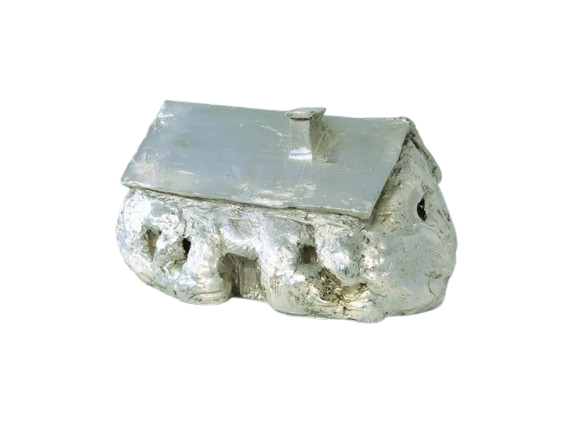
‘In 1872, when the “leavings ” of the fire could be had for the asking or the trouble of picking them up, a man named Rettig1 conceived the idea of building a small cottage out of such material as a melted mixture of stone, iron and other metals. The queer structure was built at North Park avenue and Central street’
The Standard Guide to Chicago for the Year 1891
reading
- The Paris Review 253
- The Waves, Virginia Woolf
read
- National Gallery in London and Hugh Lane Gallery in Dublin reach 'collegiate' agreement over disputed art collection, The Art Newspaper
- In Defence of Anachronism: or, W.G. Sebald Interviews me, Lindsey Drager
- Lifting the Veil, Margaret Fosmoe
watched
- Fingersmith, Aisling Walsh, 2005
- The Moth, Catherine Cookson
- The mysterious life of Oregon’s Opal Whiteley, Oregon Experience from the Oregon Public Broadcasting archive
- Life on the last lighthouse, Tuesday Documentary, World of Work, BBC Archive
attended
- Freedom to Run, film screening
- Cat Stevens
-Rowena Wise
- City Nation Place UK conference
- Small Acts of Love, Citizens Theatre
- Has Art Pricing Gotten Out of Hand?, Artlogic conference
- What is Contemporary Art in the Age of AI?, Artlogic conference
- Beyond the Headlines: Resilience and Reinvention in the Gallery World, Artlogic conference
- Is Social Capital the Gallery’s Real Business Proposition?, Artlogic conference
- ‘Common Honesty’: William Morris related collections, Mitchell Library
- Galleries navigating Discretion in an Era of Disclosure, Artlogic conference
- I shall call you crocus! The creative life force of Jessie Marion King, Glasgow Resource Centre
- Richard Armitage and Denise Mina in conversation, Bloody Scotland
screenshot notes
- Wilson town
- Brian Dillon, Ambivalence
- Marina Caron, List Center new Assistant Curator
- Providence falls
- Dalkeith country park
- Amaranthus ‘one that does not wither’
- Jung, ‘Wounded healer’ concept
- E. M. Cioran, A Short History of Decay
- Mono-ha, Japanese and Korean ‘school of things’ movement
- Middleheim museum, Antwerp
- Lismore castle
- Sweet November, The Cider House Rules, Autumn in New York, Election, Mona Lisa Smile, Picnic at Hanging Rock, Amour (2012), Bel Ami (2012), The Lovers on the Bridge (1991), Under the Tuscan Sun, The Piano Teacher, Les Rendez-vous de Paris
- Roman bridge, Strathclyde Park
- Muckross Abbey, Killarney
- 1670 (show)
- ANTI- Contemporary Art Festival, Finland
- Senator Clark’s Folly
- Classiebawn Castle
- Hans Ulrich Obrist, Sharp Tongues, Loose Lips, Open Eyes, Ears to the Ground
![]()
august
![]()
‘We will need to trust each other, because today, it’s as if every safe place has melted into the sameness of water. We are searching for the boats we forgot to build’
Barry Lopez, Embrace Fearlessly the Burning World
Go mbéimid beó ar an am seo arís
May we be here this time next year
“You ate that first one and its flesh was sweet / Like thickened wine: summer’s blood was in it / Leaving stains upon the tongue and lust for / Picking.”
Seamus Heaney, Blackberry Picking, 1966
Robert Macfarlane: Is A River Alive?
with Cal Flyn, Edinburgh Book Festival
![]()
PE2131: Grant Scottish rivers, including the River Clyde, the legal right to personhood petition link
reading:
read:
- To the Lighthouse, Virginia Woolf
- The Age of Innocence, Edith Wharton
- Good Work, Paul Becker
- The Premonition, Banana Yoshimoto
- The Lighted Window, Peter Davidson
watched:
- Sorry, Baby, Eva Victor
- The Gilded Age, Season 3
- Ammonite, Francis Lee
- Flowers, Series 1-2 (rewatch), Will Sharpe
- Welcome to the Dollhouse, Todd Solondz
- A Quiet Passion, Terence Davies
- Age of Innocence, Martin Scorsese
misc attended: - The Front List: Asako Yuzuki, Edinburgh Book Festival
- Mike Nelson, Humpty Dumpty, Fruitmarket Gallery
- Simon Munnery, Edinburgh Fringe
- Robert Macfarlane: Is A River Alive?, talk chaired by Cal Flyn, Edinburgh Book Festival
- Public Service Broadcasting, Kelvingrove Bandstand
- Elbow, Kelvingrove Bandstand
![]()
Edgar Degas, Jockey Blessé, 1896-1898
‘we learn a lot about ourselves the moment we lose our balance. In the cannon of philosophical pratfalls, a tumble taken by Michael de Montaigne, and recounted in his essay Of Excercies and Practice is among the most instructive ... “me thought, my selfe had no other hold of me, but of my lip-ends. I closed mine eyes, to helpe (as me seemed) to send it forth” ... What the author of the Essays had lost as he hit the ground was not exactly consciousness as such Montaigne still thinks, and knows what he thinks, but his actual “selfe”’
Brian Dillon, Feeling Feelings, Objects in This Mirror
Belle Lettres / Belletrism
‘A piece of prose writing that is belletristic in style is characterized by a casual, yet polished and pointed, essayistic elegance. The belletristic is sometimes contrasted with the scholarly or academic: it is supposed to be free of the laborious, inert, jargon-ridden habits indulged by professors’
reading
- Joan Eardley and the Untidy, Tidal Nature of Painting, Natalie Lawler
screenshot/ notes
- Vienna Belvedere museum, anti-glare lighting
- An Eulenloch, ‘owl hole’
- Weihnactchtsbaumanhänger - German, Christmas tree ornament
- No es pituko, Chilean ‘It ain’t fancy’
- Manifesta Biennial
- JC Leyendecker
- Passmore Edwards
- Bariolâtes
- Richard Brautigan, Sombrero Fallout
- How Much Do You Love Me, 2005, The Taste of Things, 2023, Vladimir & Rosa, 1971, Jean-Luc Godard & Jean-Pierre Gorin, A Room with a View, 1985 James Ivory, Brideshead Revisited, Portrait of a Young Girl at the End of the 60s in Brussels
- Thérèse of Lisieux
- Cartridge pleats
- Calcio London
- Mark Rylance, Spirit of Place
- Peter Hutton, Study of a River
- Teo Hernandez films
november
Frangas non flectes
‘And so, being young and dipt in folly
I fell in love with melancoly’
Edger Allan Poe, Romance
‘dead to rights’
Certain, without a doubt, caught in the act or irrefutably accused
Art light feeling
The powerful, emotional experience evoked by art through the intentional use and manipulation of light. Light in art is a fundamental tool that artists use to define form, guide the viewer's focus, set the mood, and create a sensory-rich, often immersive, experience
october

Hassan That’s not a Norman castle
Curly Yes it fucking it is
H It’s a folly
C It’s a what?
H A folly, a fake
C Fake how, its still a castle
H It’s around 150 years old, built to look older
C Why would people build ruins, that makes no sense
H becasue they wanted to impress people, becasue they thought that it was romantic, because they thought it was English
C It is English
H It’s fake
Wimpole tower
‘The Gothic Tower, designed to look like a picturesque medieval ruin, is based on a sketch by the architect Sanderson Miller in 1749 for his patron, Lord Hardwicke, the owner of Wimpole. The design was later realised in an amended form under the supervision of the great landscape designer Lancelot ‘Capability’ Brown from 1768-72. In the following centuries, the ruin suffered extensive and gradual damage with many important characteristics being completely eroded while public access to the Tower and landscape was near enough impossible’
aspergillus section restricti
‘A new type of “extreme” mould is sweeping through Denmark’s museums, threatening some of the nation’s most important paintings and cultural objects, conservators have warned. Described as an “epidemic for Golden Age paintings”, the highly resistant mould covers objects in a white coating and has been detected in 12 of the country’s museums, including the National Museum of Denmark and Skagens Museum. Known as aspergillus section restricti, it belongs to a group of fungi that can survive in extreme environments such as the deep ocean or near volcanoes’
Mast year
‘A mast year is when trees and shrubs produce an unusual abundance of fruits, nuts, and seeds, known as “mast.” Instead of a scattering of acorns or the usual crop of berries, mast years bring thick carpets of nuts and seeds, heavy branches of fruit, and a feast for wildlife across our landscapes The strategy is known as predator satiation. In normal years, squirrels, mice, and other seed-eating animals consume most of the crop. But in a mast year, there’s so much food that the animals can’t possibly eat it all, so some seeds inevitably escape and grow into new saplings’
screenshot notes
- Milan Kundera, The Book of Laughter and Forgetting
- Sein-zum-Tode, Heidegger
- ‘Pulling a Geographic’ AA term for trying to change by moving and reinventing
- Papier maché recipe: equal parts flour and warm water or pva and water, salt for preservation
- From a Tokyo side street, a gallery wins by refusing to compete, The New York Times
- Ex Libris, The New York Public Library (2017)
- Marmoreal- made of or compared to marble
- Traditional Celtic marriage vows
- Geology’s ‘Missing chapter’
- White Night (1959), Dracula (1992), Local Hero (1983), Starve Acre (2023)
- Bungaroosh
- Orlando (film) - Quinta de Regaleira, Sintra
- Reclaiming Artisitc Research, Lucy Cotter
- Curator Conversations, Tim Clark
attended
- Pick a Pipe, archive workshop, The Pipe Factory and Strangefield
- The Divine Comedy, GRCH
- Looking for Love in the Archives..., Ashanti Harris, re:reading public talk programme Glasgow University
- Afternoon Hearsay, Peng Zuqiang, The Common Guild
reading
- A Haunted House, Virginia Woolf
- The Paris Review 253
- The Waves, Virginia Woolf
- Me & Other writing, Marguerite Duras
read
- The Medium is the Message, Marshall McCluhan
- The pixel chix upstairs light & the longing of un-enterable spaces, Dazy Chains
- Moon Boots, Na Mee
watched
- The abandoned dance hall that couldn't stay dead, Kendra Gaylord
- Carol Rhodes: The Deluge, Painting Nerds
- A Portrait of Ga, Margaret Tait
- Slow Horses, S1-4
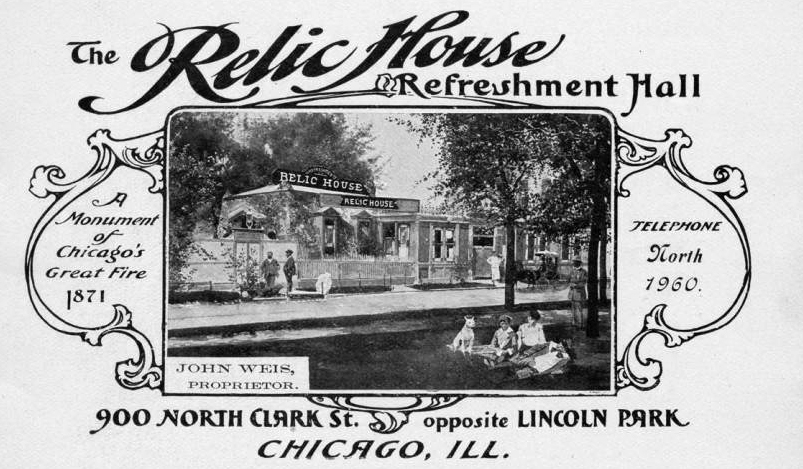
‘In 1872, when the “leavings ” of the fire could be had for the asking or the trouble of picking them up, a man named Rettig1 conceived the idea of building a small cottage out of such material as a melted mixture of stone, iron and other metals. The queer structure was built at North Park avenue and Central street’
The Standard Guide to Chicago for the Year 1891
reading
- The Paris Review 253
- The Waves, Virginia Woolf
read
- National Gallery in London and Hugh Lane Gallery in Dublin reach 'collegiate' agreement over disputed art collection, The Art Newspaper
- In Defence of Anachronism: or, W.G. Sebald Interviews me, Lindsey Drager
- Lifting the Veil, Margaret Fosmoe
watched
- Fingersmith, Aisling Walsh, 2005
- The Moth, Catherine Cookson
- The mysterious life of Oregon’s Opal Whiteley, Oregon Experience from the Oregon Public Broadcasting archive
- Life on the last lighthouse, Tuesday Documentary, World of Work, BBC Archive
attended
- Freedom to Run, film screening
- Cat Stevens
-Rowena Wise
- City Nation Place UK conference
- Small Acts of Love, Citizens Theatre
- Has Art Pricing Gotten Out of Hand?, Artlogic conference
- What is Contemporary Art in the Age of AI?, Artlogic conference
- Beyond the Headlines: Resilience and Reinvention in the Gallery World, Artlogic conference
- Is Social Capital the Gallery’s Real Business Proposition?, Artlogic conference
- ‘Common Honesty’: William Morris related collections, Mitchell Library
- Galleries navigating Discretion in an Era of Disclosure, Artlogic conference
- I shall call you crocus! The creative life force of Jessie Marion King, Glasgow Resource Centre
- Richard Armitage and Denise Mina in conversation, Bloody Scotland
screenshot notes
- Wilson town
- Brian Dillon, Ambivalence
- Marina Caron, List Center new Assistant Curator
- Providence falls
- Dalkeith country park
- Amaranthus ‘one that does not wither’
- Jung, ‘Wounded healer’ concept
- E. M. Cioran, A Short History of Decay
- Mono-ha, Japanese and Korean ‘school of things’ movement
- Middleheim museum, Antwerp
- Lismore castle
- Sweet November, The Cider House Rules, Autumn in New York, Election, Mona Lisa Smile, Picnic at Hanging Rock, Amour (2012), Bel Ami (2012), The Lovers on the Bridge (1991), Under the Tuscan Sun, The Piano Teacher, Les Rendez-vous de Paris
- Roman bridge, Strathclyde Park
- Muckross Abbey, Killarney
- 1670 (show)
- ANTI- Contemporary Art Festival, Finland
- Senator Clark’s Folly
- Classiebawn Castle
- Hans Ulrich Obrist, Sharp Tongues, Loose Lips, Open Eyes, Ears to the Ground
august

‘We will need to trust each other, because today, it’s as if every safe place has melted into the sameness of water. We are searching for the boats we forgot to build’
Barry Lopez, Embrace Fearlessly the Burning World
Go mbéimid beó ar an am seo arís
May we be here this time next year
“You ate that first one and its flesh was sweet / Like thickened wine: summer’s blood was in it / Leaving stains upon the tongue and lust for / Picking.”
Seamus Heaney, Blackberry Picking, 1966
Robert Macfarlane: Is A River Alive?
with Cal Flyn, Edinburgh Book Festival
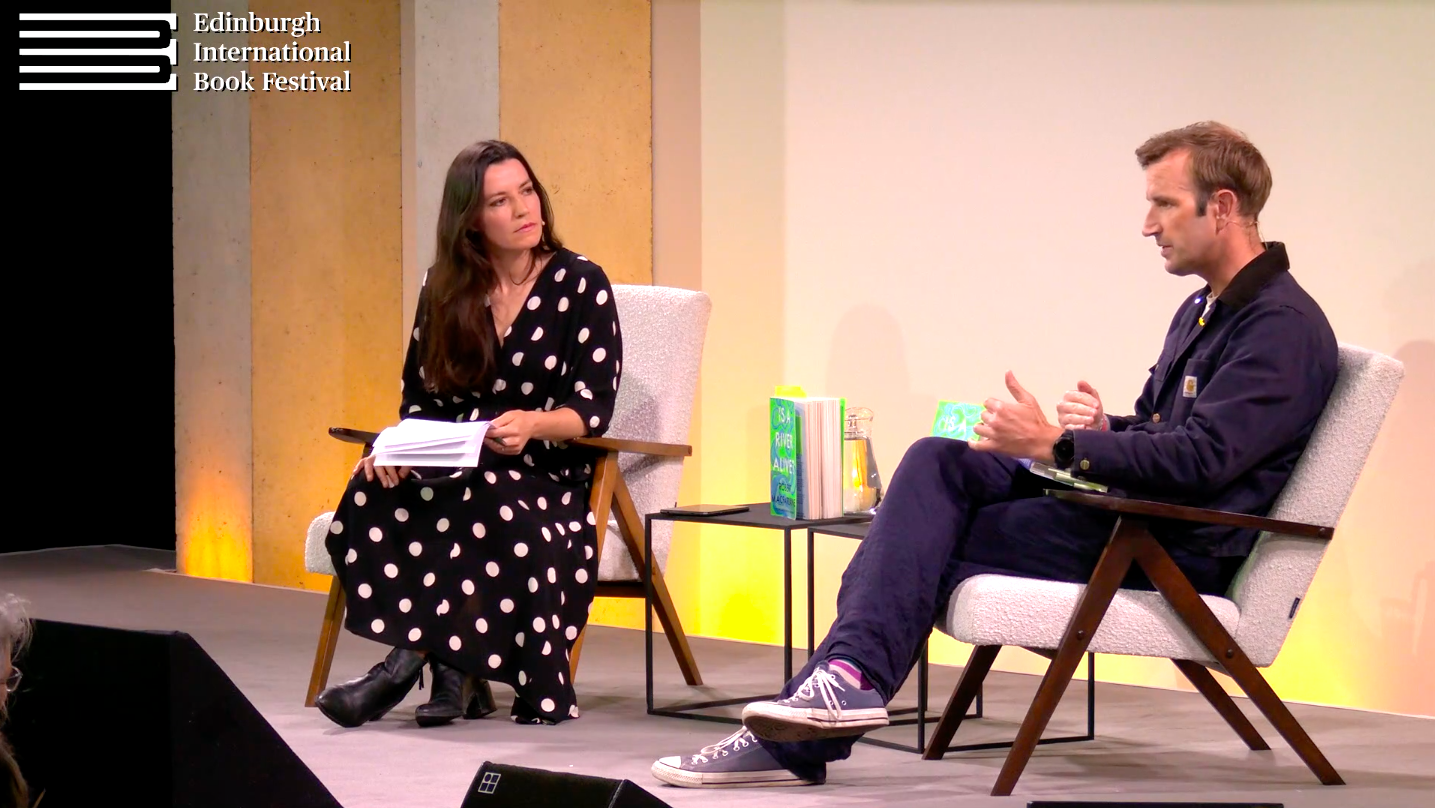
PE2131: Grant Scottish rivers, including the River Clyde, the legal right to personhood petition link
reading:
- Snow Business, Philipa Snow
- Is Greed Good Again?, Emily Cox, Apollo Magazine
- The rocky history of Lismore Castle, Robert O’Byrne, Apollo Magazine
- Period problem: when should a house museum stop the clock? Edward Behrens, Apollo Magazine
- Death and Memory on the Coast: The Early Medieval Chapel and Cemetery of St Patrick, Heysham
- Is Greed Good Again?, Emily Cox, Apollo Magazine
- The rocky history of Lismore Castle, Robert O’Byrne, Apollo Magazine
- Period problem: when should a house museum stop the clock? Edward Behrens, Apollo Magazine
- Death and Memory on the Coast: The Early Medieval Chapel and Cemetery of St Patrick, Heysham
read:
- To the Lighthouse, Virginia Woolf
- The Age of Innocence, Edith Wharton
- Good Work, Paul Becker
- The Premonition, Banana Yoshimoto
- The Lighted Window, Peter Davidson
watched:
- Sorry, Baby, Eva Victor
- The Gilded Age, Season 3
- Ammonite, Francis Lee
- Flowers, Series 1-2 (rewatch), Will Sharpe
- Welcome to the Dollhouse, Todd Solondz
- A Quiet Passion, Terence Davies
- Age of Innocence, Martin Scorsese
misc attended: - The Front List: Asako Yuzuki, Edinburgh Book Festival
- Mike Nelson, Humpty Dumpty, Fruitmarket Gallery
- Simon Munnery, Edinburgh Fringe
- Robert Macfarlane: Is A River Alive?, talk chaired by Cal Flyn, Edinburgh Book Festival
- Public Service Broadcasting, Kelvingrove Bandstand
- Elbow, Kelvingrove Bandstand

Edgar Degas, Jockey Blessé, 1896-1898
Brian Dillon, Feeling Feelings, Objects in This Mirror
Cultural Capital and Habitus
Pierre Bourdieu‘s two particularly important theoretical concepts: Cultural Capital and Habitus. Cultural capital, according to Bourdieu, is gained mainly through an individual‘s initial learning, and is unconsciously influenced by the surroundings (Bourdieu, 2000). In the case of habitus, it relates to the resource of knowledge (Bourdieu 1990). Knowledge is about the way how people view and understand the world, which is gained via a specific culture that an individual lives in.
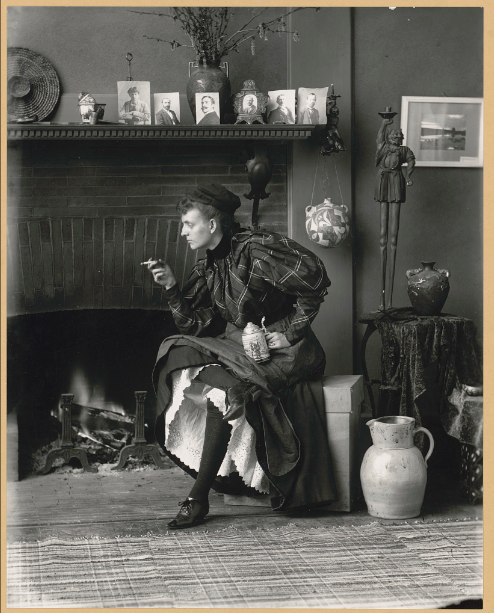
Frances Benjamin Johnston
‘After her studies, in 1883, at the Julian Academy in Paris and at the Art Students League in Washington, Frances Benjamin Johnston learnt photographic techniques with Thomas William Smillie, at the Smithsonian Institution, equipped with a Kodak camera offered her by George Eastman. In the 1890s, she produced major series of portraits of senior dignitaries in the American government, including The White House (1893). In 1899, she was chosen as a member of the jury of the prestigious Philadelphia Photographic Society and, five years later, she joined the Photo-Secession group headed by Alfred Stieglitz’
![]() Frances Benjamin Johnston, full-length portrait, seated in front of fireplace, facing left, holding cigarette in one hand and a beer stein in the other, in her Washington, D.C. studio
Frances Benjamin Johnston, full-length portrait, seated in front of fireplace, facing left, holding cigarette in one hand and a beer stein in the other, in her Washington, D.C. studio
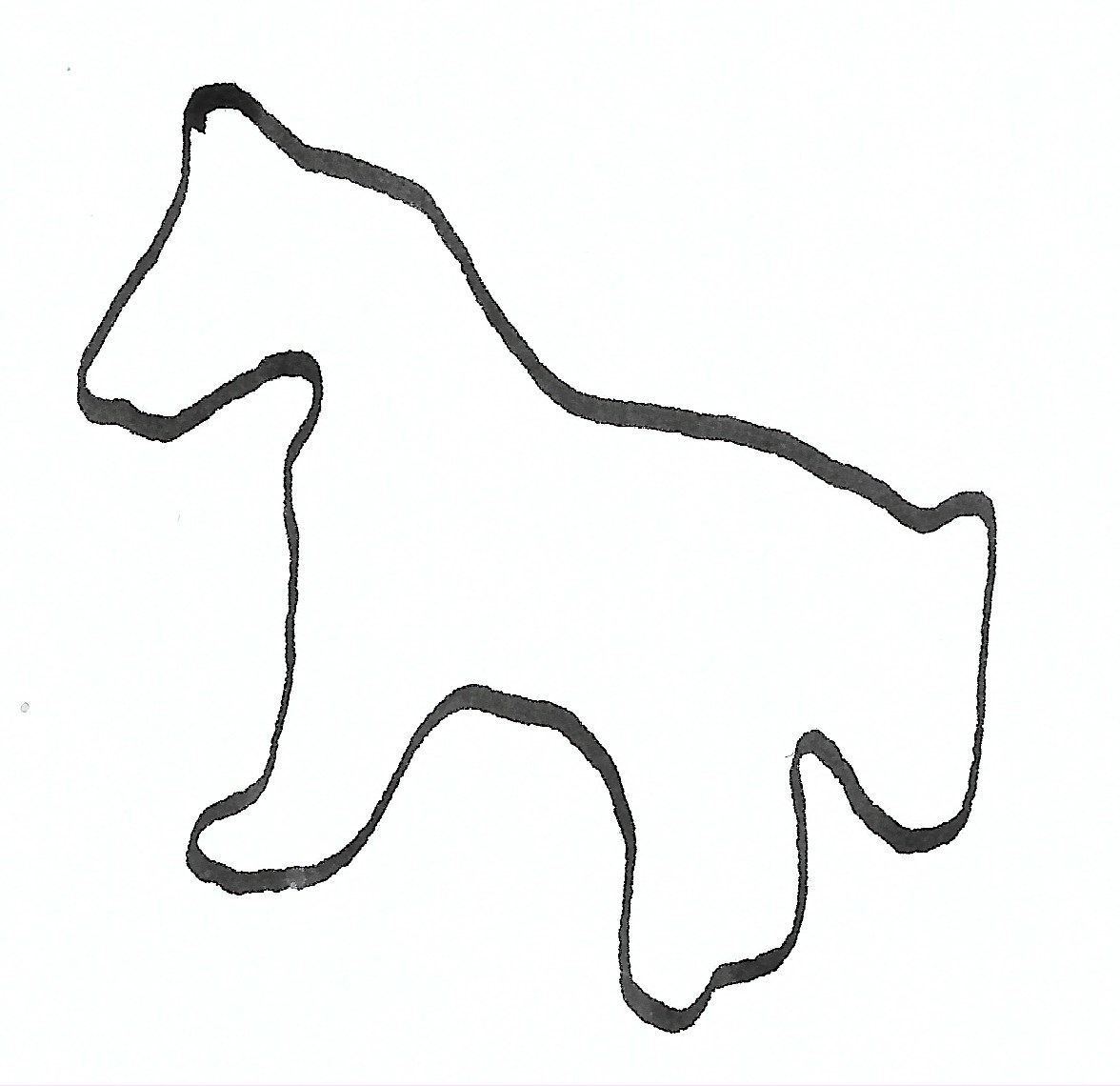
Theravada
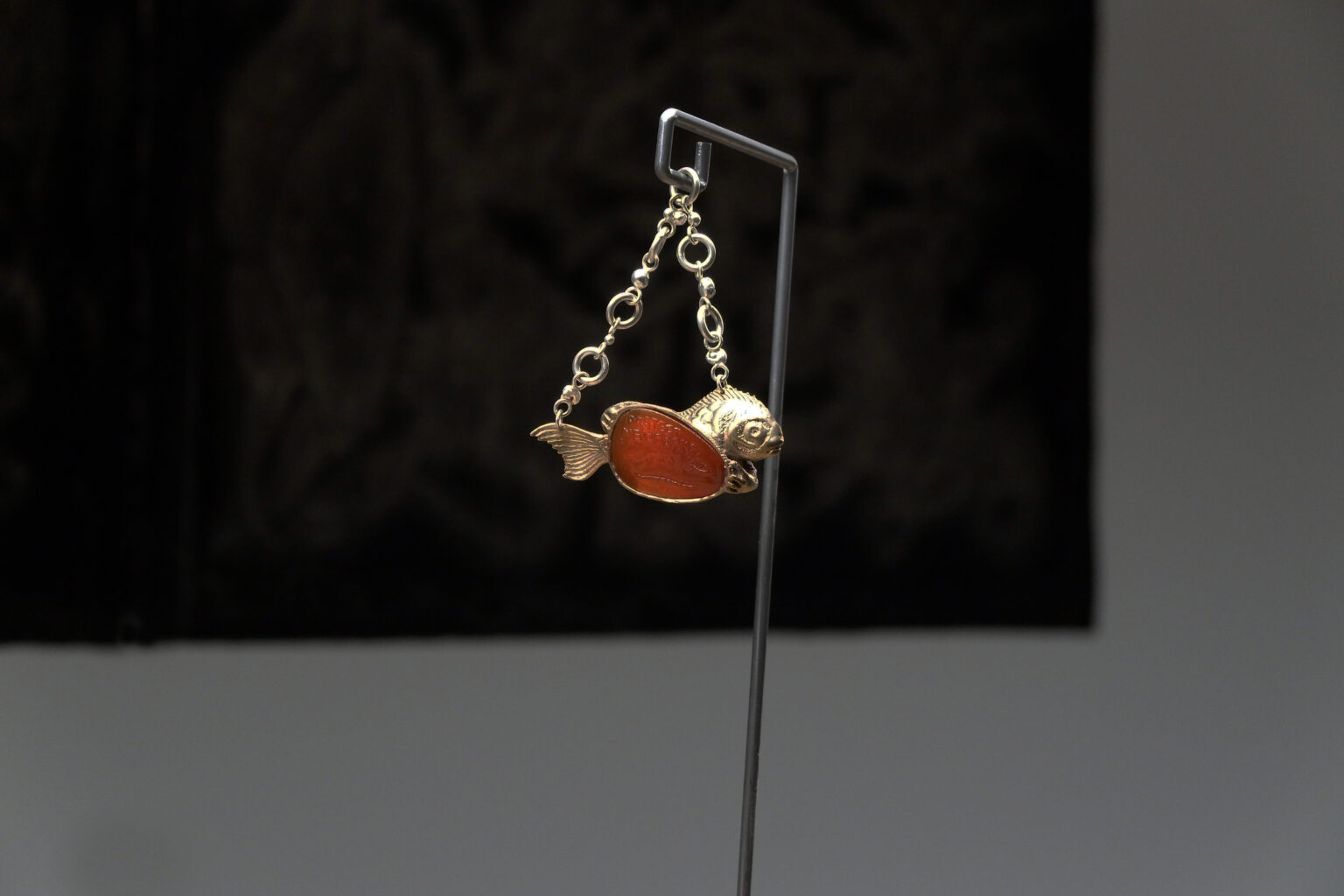
‘In the context of Theravada, "your grip" is described as the strength and firmness with which Gambhiracari holds the fish. This concept emphasizes the importance of a secure hold, symbolizing control and care in one's actions’
![]()
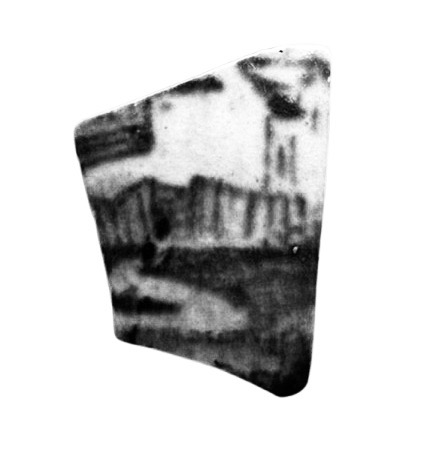
Autotheory
‘A genre where a first-person account of the author's life is woven with critical theory and philosophical research’
Koso buro, also known as a Japanese enzyme bath, is a therapy where you are submerged in a warm mixture of fermented rice bran and cedar sawdust
screenshot / notes
- Edmund de Waal, An Archive
- Crolla la torre dei Conti Rome
- No More Painting reading group, Embassy gallery
- Zofia Rydet @ The Photographers gallery
- Shannon Cartier Lucy @ Soft Opening
- Tom Poelmans @ KIOSK
- Peter Doig @ Serpentine
- Birgit Jürgenssen & Noelia Towers @ Slip House
Milton Avery The Figure @Karma
- Natasha Stagg, Grand Rapids
- George Stage shipcrash (internal banisters visible in documentary photographs)
- Anaïs Nin, A Spy in the House of Love
- John Piper, Meeting House tapestry, University of Sussex
- Olivia Laing, Painting, Writing, Texting
- Vasa museum, Stokholm
- Am I Ok? (2022), Primal Fear (1996), Girls & Boys (2025), Onegin (1999) Days of Heaven (1978)
- Ethiopian ‘church forests’
- Guinness brownie recipe
attended
- Smerz
- Ken Currie and Ken Normand, Aye Write talk
- The Wylieum museum
- Cloch head
- W2 x Henry’s Sunday Session
reading
- The Paris Review 253
- Sincerity and Objectification: With Special Reference to the Work of Charles Reznikoff
- Taiwanese Folk Art Paper Funeral Offerings on Display in France
read
- A Haunted House, Virginia Woolf
watched
- The Black Tower, John Smith
- Fallen Leaves, Aki Kaurismäki (2023)
- I Hired a Contract Killer, Aki Kaurismäki (1990)
-Orlando, Sally Potter (1992)
![]()
![]() Une Semaine de Bonté, Max Ernst
Une Semaine de Bonté, Max Ernst
‘Une semaine de bonté is a surrealistic novel by Max Ernst, originally published in five volumes in 1934, showcasing his innovative collage technique. The work explores themes of eroticism and catastrophe through a series of collages that combine existing illustrations with new elements, reflecting the socio-political climate of the time. Each section of the novel corresponds to a day of the week, with unique elements and examples, culminating in a rich tapestry of visual and textual art’ Dimanche- la boue (mud)
Lundi - L’eau (water)
Mardi - Le feu (Fire)
Mercredi - Le sang (blood)
Jeudi - Le noir (blackness)
Vendredi - La vue (sight)
Samedi - Inconnu (unknown)
The Missing Post Office (2025), Clement Lefer
Pierre Bourdieu‘s two particularly important theoretical concepts: Cultural Capital and Habitus. Cultural capital, according to Bourdieu, is gained mainly through an individual‘s initial learning, and is unconsciously influenced by the surroundings (Bourdieu, 2000). In the case of habitus, it relates to the resource of knowledge (Bourdieu 1990). Knowledge is about the way how people view and understand the world, which is gained via a specific culture that an individual lives in.
Frances Benjamin Johnston
‘After her studies, in 1883, at the Julian Academy in Paris and at the Art Students League in Washington, Frances Benjamin Johnston learnt photographic techniques with Thomas William Smillie, at the Smithsonian Institution, equipped with a Kodak camera offered her by George Eastman. In the 1890s, she produced major series of portraits of senior dignitaries in the American government, including The White House (1893). In 1899, she was chosen as a member of the jury of the prestigious Philadelphia Photographic Society and, five years later, she joined the Photo-Secession group headed by Alfred Stieglitz’
Theravada
‘In the context of Theravada, "your grip" is described as the strength and firmness with which Gambhiracari holds the fish. This concept emphasizes the importance of a secure hold, symbolizing control and care in one's actions’
Autotheory
‘A genre where a first-person account of the author's life is woven with critical theory and philosophical research’
Koso buro, also known as a Japanese enzyme bath, is a therapy where you are submerged in a warm mixture of fermented rice bran and cedar sawdust
screenshot / notes
- Edmund de Waal, An Archive
- Crolla la torre dei Conti Rome
- No More Painting reading group, Embassy gallery
- Zofia Rydet @ The Photographers gallery
- Shannon Cartier Lucy @ Soft Opening
- Tom Poelmans @ KIOSK
- Peter Doig @ Serpentine
- Birgit Jürgenssen & Noelia Towers @ Slip House
Milton Avery The Figure @Karma
- Natasha Stagg, Grand Rapids
- George Stage shipcrash (internal banisters visible in documentary photographs)
- Anaïs Nin, A Spy in the House of Love
- John Piper, Meeting House tapestry, University of Sussex
- Olivia Laing, Painting, Writing, Texting
- Vasa museum, Stokholm
- Am I Ok? (2022), Primal Fear (1996), Girls & Boys (2025), Onegin (1999) Days of Heaven (1978)
- Ethiopian ‘church forests’
- Guinness brownie recipe
attended
- Smerz
- Ken Currie and Ken Normand, Aye Write talk
- The Wylieum museum
- Cloch head
- W2 x Henry’s Sunday Session
reading
- The Paris Review 253
- Sincerity and Objectification: With Special Reference to the Work of Charles Reznikoff
- Taiwanese Folk Art Paper Funeral Offerings on Display in France
read
- A Haunted House, Virginia Woolf
watched
- The Black Tower, John Smith
- Fallen Leaves, Aki Kaurismäki (2023)
- I Hired a Contract Killer, Aki Kaurismäki (1990)
-Orlando, Sally Potter (1992)
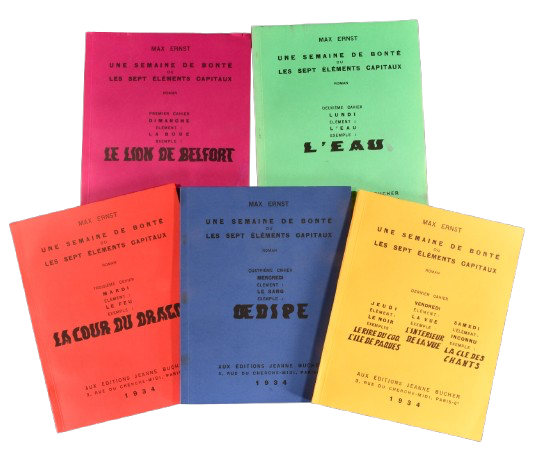
‘Une semaine de bonté is a surrealistic novel by Max Ernst, originally published in five volumes in 1934, showcasing his innovative collage technique. The work explores themes of eroticism and catastrophe through a series of collages that combine existing illustrations with new elements, reflecting the socio-political climate of the time. Each section of the novel corresponds to a day of the week, with unique elements and examples, culminating in a rich tapestry of visual and textual art’ Dimanche- la boue (mud)
Lundi - L’eau (water)
Mardi - Le feu (Fire)
Mercredi - Le sang (blood)
Jeudi - Le noir (blackness)
Vendredi - La vue (sight)
Samedi - Inconnu (unknown)
The Missing Post Office (2025), Clement Lefer


Corvus
‘The constellation Corvus is named for the crow or raven, a bird associated with Apollo. Apollo sends the Raven to fetch water (Hydra) in the god’s cup (Crater). The procrastinating Raven got back late because he waited for some figs to ripen before returning. Ravens, crows, and rooks, go ‘kraa kraa’. The call of the crow is a nasal caw compared to the deep, guttural croak of the raven, although both species have extensive and varied vocal repertoires. The cawing of the ravens or crows was heard as “Cras! Cras!” by Latin speakers, and was thought to mean “Tomorrow! Tomorrow!” We get the word procrastination, “postpone until the morrow”, from Latin cras’
The ship of Theseus
‘Also known as Theseus’ paradox, is a thought experiment that raises the question of whether an object that has had all of its components replaced remains fundamentally the same object. The paradox is most notably recorded by Plutarch in Life of Theseus from the late first century. Plutarch asked whether a ship that had been restored by replacing every single wooden part remained the same ship’
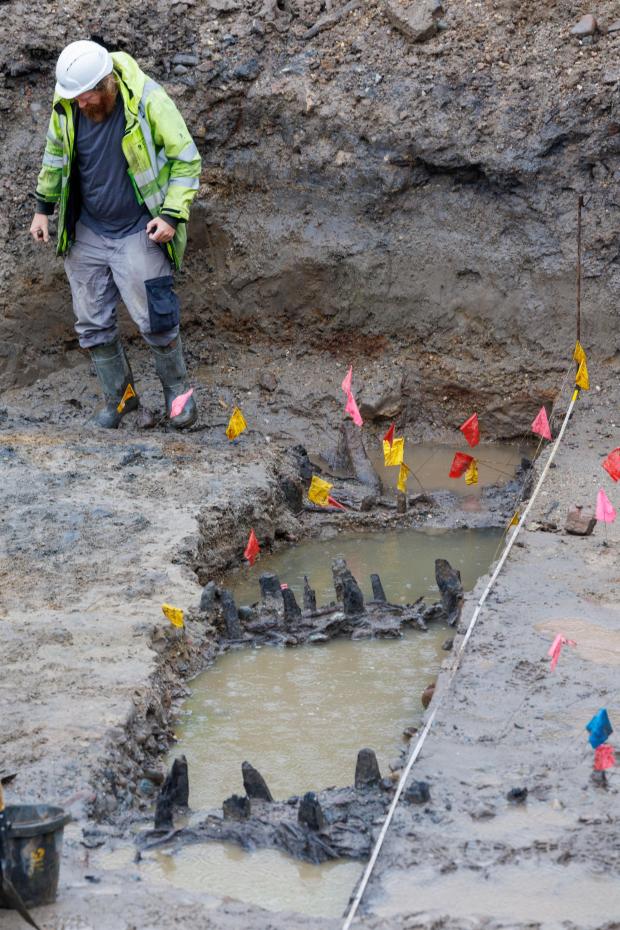
‘Archaeologists uncovered the remains of early suburbs four and a half meters under a building site in Spoutmouth, Gallowgate. Well-preserved wooden posts with woven fencing and medieval pottery were discovered by the GUARD Archaeology team, who were called in to assist after workers came across the objects’
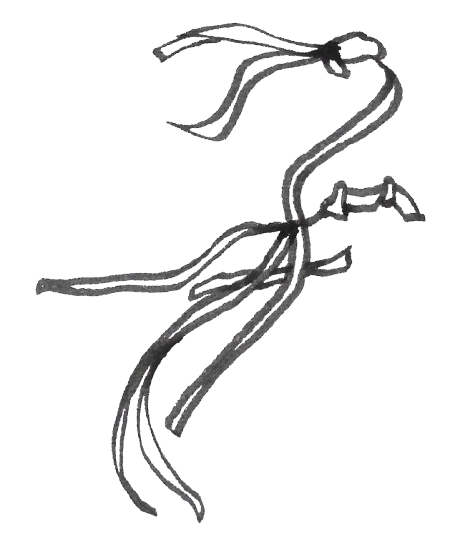
Buster Keaton’s house stunt, Steamboat Bill, Jr. 1928
AML/ KYC
‘In the UK and EU, there is a broad, consistent framework, but each regulator applies it differently,” Rena explained. “Interestingly, in the UK, if an artist sells directly to a collector, they are not subject to AML regulations. However, if they sell through a gallery, they are.” This illustrates the complexity of the regulations, as individual transactions may fall under different legal requirements depending on the intermediary involved.
In contrast, the U.S. has chosen to limit its AML regulations to antiquities, leaving the broader art market to operate according to "best practices" without a clear definition of what those practices should entail. Rena also noted that regions like Hong Kong, mainland China, and South Korea have yet to introduce formal regulations, posing potential risks for European and American galleries dealing with international clients’
Disclosure documents required for gallery to client sales above the £8,000 sale value threshold:
AML Anti-money laundering
KYC Know Your Client
The battle of Glasgow
‘On 9 March 1914, women battled police in Glasgow during Emmeline Pankhurst’s speaking tour of Scotland. The famous suffragette had been temporarily released from prison to nullify her hunger strike, but now the police sought to rearrest her so she would serve the remainder of her sentence. What they didn’t expect was an organised bodyguard. Pankhurst’s protectors had barbed wire concealed in flower bouquets and clubs concealed in dresses. Some had undertaken martial arts training, and they carried at least one gun. The Glasgow Herald reported that “Unparalleled scenes of disorder took place. The police stormed the platform and for several minutes a fierce struggle took place between them and Mrs Pankhurst’s supporters, several persons being injured. Flower pots and chairs were thrown at the constables, who were obliged to draw their batons. In the course of the mêlée the excitement was intensified by a woman firing several blank rounds from a revolver.”’
‘Across what distance in time do the elective affinities and correspondences connect? How is it that one perceives oneself in another human being, or, if not oneself, then one’s own precursor?’
W G Sebald, The Rings of Saturn, 1995
Katie Paterson, Afterlife, 2025
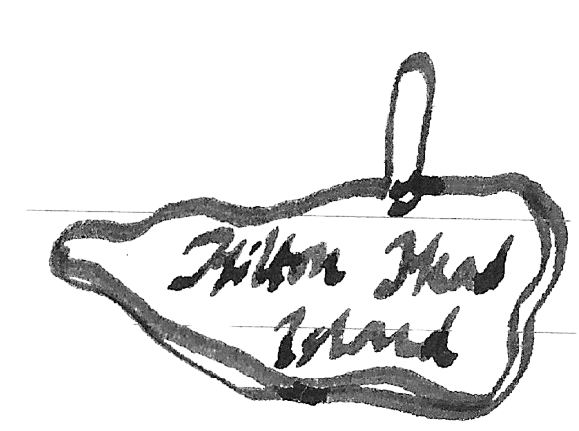
‘He was in a grey-green somnolence which embraced them all’
Virginia Woolf, To the Lighthouse, 1927
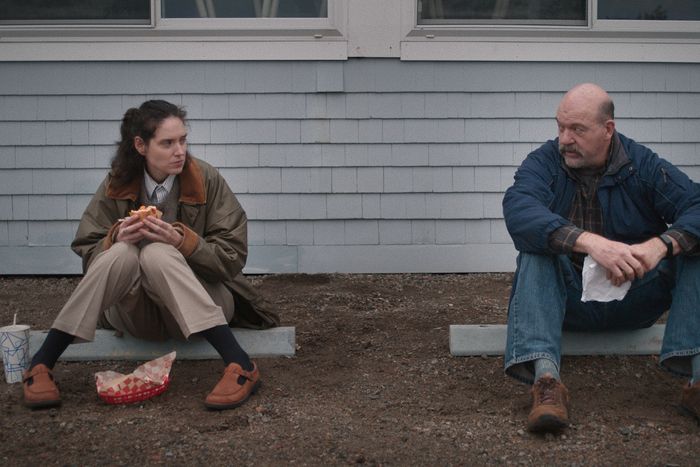
Sorry, Baby, 2025
july
Virtus semper virdis

Eyam
In August of 1665, the plague reached the Peak District village of Eyam via contaminated cloth received from London by the village tailor. The new vicar William Mompesson persuaded the inhabitants of Eyam to self-impose a quarentine, lasting for 14 months. A cordon sanitaire of large flat stones was created beyond the borders of the village. Meat and grain brought from neighbouring villages was left by the stones and, in exchange, the villagers left coins in bowls of vinegar in hollows of the stones.
Lovers Emmot Syddall and Rowland Torre met at the stream every week to see each other and shout across the water, as Rowland lived on the other side of the cordon. According to the story, one day Emmott no longer showed, she had passed at the age of 22
Embodied carbon / Operational carbon
Embodied carbon- the manufacture, transport and installation of construction materials
Operational carbon- the building’s energy consumption
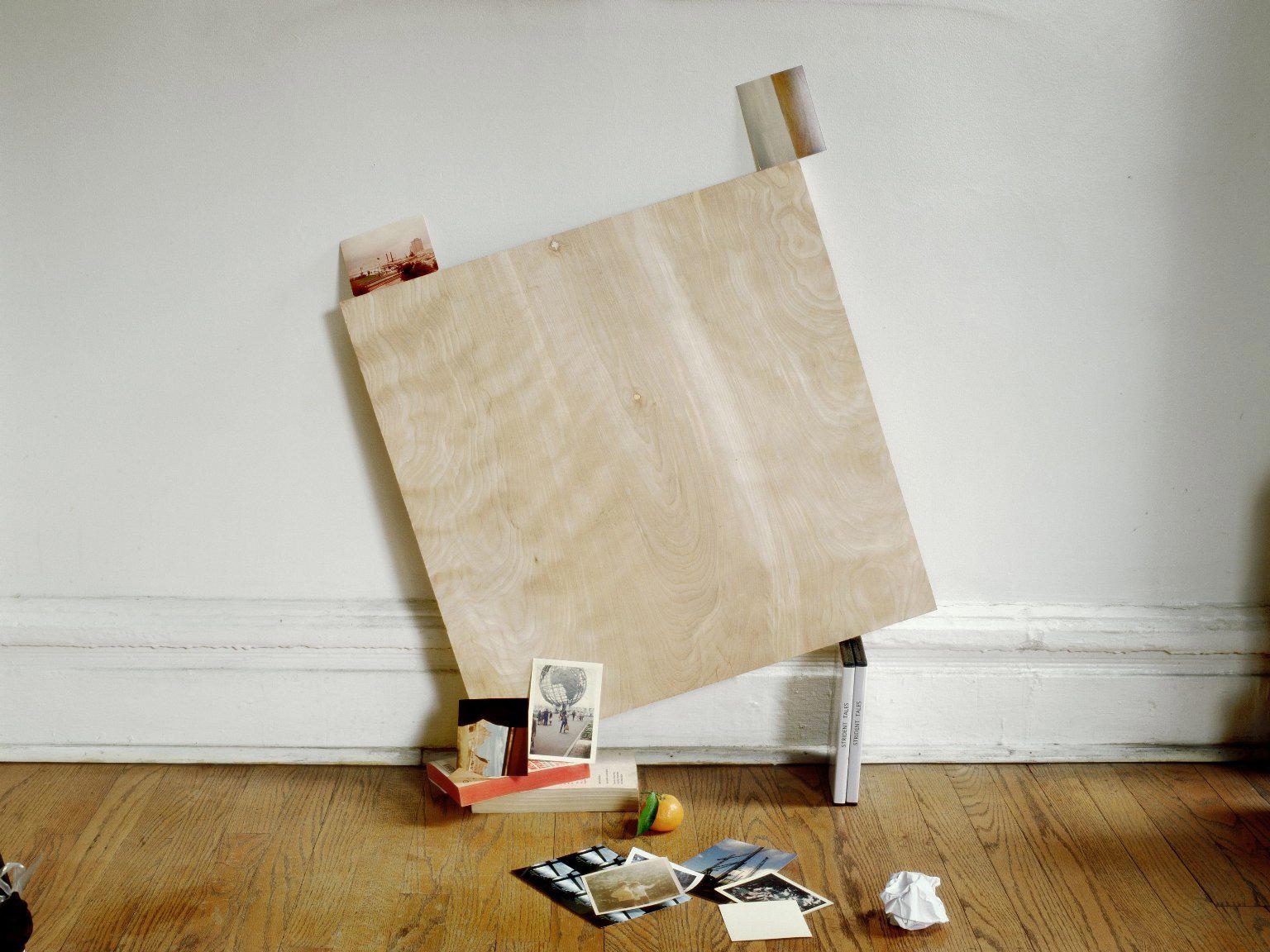
Leslie Hewitt, Untitled (Constant emotion), 2010

june
‘Everything that is essential to art practice, however tortuous the journey, is predicated on acts of disclosure; everything essential to curating turns on showing, ostension, acts of exhibiting’
Terry Smith, Curating the Complex & the Open Strike
‘Community is an act of mutual self- disclosure’
Richard Sennet,The Fall of Public Man
reading:
- Not Going It Alone: Collective Curatorial Curating, edited by Paul O’Neill
- Curating Research edited by Paul O’Neil and Mick Wilson
- Good Work, Paul Becker
- Snow Business, Philipa Snow
- In search of a new ethics of care to the audience in exhibition-making practice, Jasper Delbecke
-The Artist as Ethnographer?, Hal Foster
- Locating the Producers: An End to the Beginning, the Beginning of the End, Paul O’Neill and Claire Doherty
-“The People’s Choice”, General Idea, Thomas Lawson
-The Collective Creativity of Workers: From Unconscious Sleeping Giant to Builder of Barricades Part II, Bruce Lerro
- Conversation Pieces: The Role of Dialogue in Socially-Engaged Art, Grant Kester
- Dialogical Aesthetics, Grant Kester
- The New Situationists, Claire Doherty
- Connective Aesthetics, Suzi Gablik
-On Smuggling as Strategy and the Possibility of Decolonizing the Curatorial, Juana Awad
-”The Curatorial”, Maria Lind
- Curatorial Criticality – On The Role Of Freelance Curators In The Field Of Contemporary Art, Beatrice Von Bismarck
- From Para to Post: The Rise and Fall of Curatorial Reason, Simon Sheikh
- “We were learning by doing”, An Interview with Charles Esche
- The Misunderstood Art of Marie Laurencin, Hannah Stamler
- Muse or revolutionary painter: Who was Suzanne Valadon?, Louise Darblay
- Looking Away: Participations in Visual Culture, Irit Rogoff
read:
- The New Face of Provenance Research, Kelly Davis
- Day-Tripping: Urban Excursions and the Architecture of International Exhibitions, Dr Rosie Spooner
-The Collaborative Turn, Maria Lind
- “Not the Art History I used to know”, Richard Brilliant
watched:
- I bought 140+ floorplans to understand Blue Prince, Kendra Gaylord
- David Byrd: Thats Me In The Corner, Painting Nerds - Living Treasures of Japan (1981)
attended:
- SAVE at 50! Material Legacies: Heritage, Reuse and the Climate Crisis, The Briggait
-The Reason of Towns, Irish Architecture Foundation (IAF)
-SAVE at 50! Buildings at Risk launch 2025
-William Morris Gallery
- National Gallery
- Old Masters to Modern Day sale, Christie’s
- Connecting Thin Black Lines 1985 – 2025, ICA
- V&A East Storehouse
- Empty Alcove / Rotting Figure, Dan Guthrie, Chisenhale gallery
- DEVOCORPOS, Katie Shannon, Neven gallery
- Something where there should be nothing, Soft Opening
- NO 1 @ MEE..., Fatzoo, The Sunday Painter
- In-conversation between artist Megan Rooney and writer Emily LaBarge, Thaddeus Ropac
- Suleman Aqeel Khilji, Royal Academy of the Arts
- Art & the Book, The Warburg Institute
- Seven New Paintings, Andrew North, South Parade
- WHERE THE WILD THINGS ARE, Okiki Akinfe
- GSA Undergraduate degree show
- Sensing City, Mapping Space, curated by Abie Soroño
Heidegger
Die Erde / die Welt : the earth / the world
Das seiendes / das sien des Seienden : existing reality / the being of existing reality
‘I have been conflicted and nearly torn apart by opposite desires: between loving and being loved, or by being alone. I have had to be ruthless about keeping my space to myself, but the barriers I have put up between myself and the outside world have never been as secure as yours’
Celia Paul, Letters to Gwen John
Bonfire of the Vanities
February 7th 1497
"sinful objects were collected for months leading up to the ritual, and on the day of the bonfire itself, Savonarola’s followers adorned themselves with white gowns, garlands and red crosses and went door-to-door collecting objects for burning. An enormous pyre was erected in the Piazza del Signoria and it was surmounted by an image of Satan. Representatives of the different Florentine districts symbolically lit the pyre, obliterating the objects of vanity." Historians have named it the Bonfire of the Vanities—"vanities" being things that distracted Florentines from their religious duties in the eyes of their current ad-hoc leader, Savonarola. What’s important about the bonfire isn’t that it happened, but that people actually handed over things to be burned in the midst of a fairly brief period where Savonarola was the city’s ideological leader and told everyone to expect the coming of the end of the world.’

may
reading:
- Not Going It Alone: Collective Curatorial Curating, edited by Paul O’Neill
- Day-Tripping: Urban Excursions and the Architecture of International Exhibitions, Dr Rosie Spooner
- Research Acts in Art Practice, Graeme Sullivan
- Injecting the Essayistic into the Curatorial, Jasper Delbecke
- Integrated Art Documentation: the Guggenheim Perspective, Tasha Seren, Deirdre Donohue and Lynn Ann Underwood
- In a ‘House if Memory’: Discovering the Provenance of Place, Jeanette Allis Bastian
- The Collaborative Turn, Maria Lind
- “Not the Art History I used to know”, Richard Brilliant
read:
- Against Periodization; or, On Institutional Time, Eric Hayot
- Rethinking Provenance Research, Christian Fuhrmeister and Meike Hopp
- Play It as It Lays, Joan Didion
- The Subject of Botticelli’s ‘Derelitta’, Edgar Wind
- Heidegger and the Origin of the Work of Art: An Explication, Robert B. Stulberg
- Stories from Black Scottish History, Scotland with Hannah 🔗
- Refiguring the Archive, collection of essays
- ‘I just don't like eggs!’: Andrea Fraser unpacks the art market, Wallpaper*
- The Field of Contemporary Art: A Diagram, Andrea Fraser
- Men Reading Women Reading: Interpreting Images of woman readers, James Conlon
- Translating the Past: History & its Images in Late-Medieval Scotland 🔗
- Ingmar Bergman, The Maestro of Angst, Leonard Quart
- ‘A Year of Rest and Relaxation’, Embraces Uneasy Intimacies, Simone Molinari 🔗
watched:
- Artists Archives Series: Alan Dimmick and Claire Barclay 🔗
- The Field of Contemporary Art. Andrea Fraser Lecture | The Artist: Professional (A–Z) 2025 🔗
- Bergman Island, Mia Hansen-Løve
- Me You and Everyone We Know, Miranda July - Stories We Tell, Sarah Polley
- Are We Entering a New Gothic Era? Kate Alexandra 🔗
- King Henry VIII's Lost Flagship, Raising the Mary Rose: The Lost Tapes, Channel 4 🔗
-The 73 cent teleportation hack, Kendra Gaylord 🔗
misc attended:
- GSA MFA Graduate show, The Glue Factory
- Town Without Pity, Paige Silverman, Glasgow Project Room, curated by Chaz Scott
- Myths of the New Future, The Common Guild
- Pilgrim Fields, Solange Pessoa, Tramway opening
- Archaeological Research in Progress 2025 conference
- Storytelling Through Banners and Stained Glass: 850 Years of Our City, Glasgow Trades Union Council, 1st May
- Digging in Another Time: Derek Jarman's Modern Nature, The Hunterian Gallery
Werner Herzog, ‘Ecstatic Truth’
Herzog coined the term ‘ecstatic truth’ in the 1990s. He believes that by transcending mere facts – or what he calls ‘the accountant’s reality’ – the ‘ecstatic truth’ can capture the human experience more faithfully, enabling his viewers to have a deeper emotional and philosophical connection to his films‘How important, really, is the Factual? Of course, we can’t disregard the factual; it has normative power. But it can never give us the kind of illumination, the ecstatic flash, from which Truth emerges’

‘The Cuerdale Hoard, an enormous Viking silver treasure of some 8000 silver coins and pieces of bullion, was discovered in Lancashire, in 1840.
It is one of several Viking hoards unearthed in England but is the largest to date. It is larger than any hoard found in Scandinavia and is the largest Viking silver hoard ever found outside Russia.
The hoard was found by workmen employed in repairing the embankment on the south side of the River Ribble at Cuerdale, near Preston, where it had been buried in a lead chest’
somewhere i have never travelled,gladly beyond
any experience,your eyes have their silence:
in your most frail gesture are things which enclose me,
or which i cannot touch because they are too near
your slightest look easily will unclose me
though i have closed myself as fingers,
you open always petal by petal myself as Spring opens
(touching skilfully,mysteriously)her first rose
or if your wish be to close me,i and
my life will shut very beautifully,suddenly,
as when the heart of this flower imagines
the snow carefully everywhere descending;
nothing which we are to perceive in this world equals
the power of your intense fragility:whose texture
compels me with the colour of its countries,
rendering death and forever with each breathing
(i do not know what it is about you that closes
and opens;only something in me understands
the voice of your eyes is deeper than all roses)
nobody,not even the rain,has such small hands
somewhere i have never travelled,gladly beyond, E.E. Cummings
‘When you’re in the middle of a story, it isn’t a story at all, but only a confusion, a dark roaring, a blindness, a wreckage of shattered glass and splintered wood, like a house in a whirlwind, or else a boat crushed by icebergs or swept over the rapids, and all aboard are powerless to stop it.
It’s only afterwards that it becomes anything like a story at all. When you’re telling it to yourself or to someone else.’
Michael Dolley, Stories We Tell (2012)
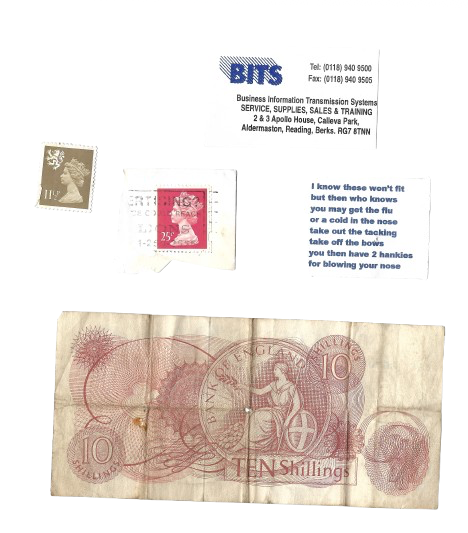
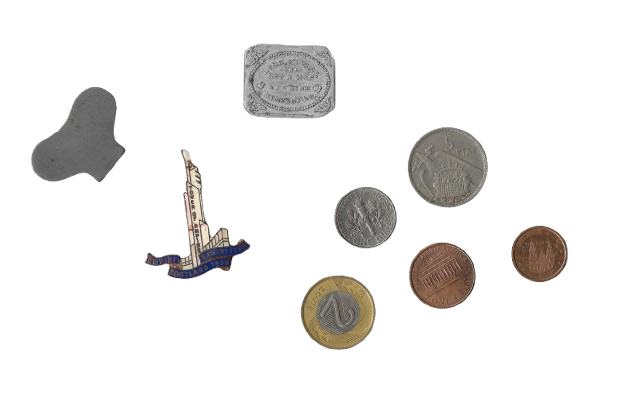
Objects found in Abbess D208 desk, bought at Hamilton Auction House
april
sotto voce
'To delight in the aspects of sentient ruin might appear a heartless pastime, and the pleasure, I confess, shows the note of perversity. The sombre and the hard are as common an influence from southern things as the soft and the bright, I think; sadness rarely fails to assault a northern observer when he misses what he takes for comfort. Beauty is no compensation for the loss, only making it more poignant'
Henry James, Italian Hours
read:
- Modern Gothic, Flâneur, Stock-image-text-post, Lydia Eliza Trail 🔗
-What does falsehood give to knowledge within the framework of logic and ecstacy truth? A study of veracity within Myths, Fables and Tales, Ned Pooler
- Seen, Known, Danced and Spoken: Heinrich von Kleist and the Limits of Being Human, Jessica D. Brier
- ‘Translating’ the Lost Scottish Renaissance, R. D. S. Jack
- Eric Rohmer’s Opressive Summers, John Fawell
- Ruins in Ireland, Ireland in Ruins: Symbols and Semiotics in Visual Art, Yvonne Scott
- W.B. Yeats and the Creative Process: The Example of ‘Her Triumph’, Phillip L. Marcus
- Time out of Joint; Looking at Caravaggio in the 21st century 🔗
- Melting moguls: life-size Rupert and Lachlan Murdoch candles burn in Melbourne installation 🔗
- Tamara De Lempicka: a radical, bohemian, bisexual artist loved by Madonna, Emily Dinsdale
- The Disappearance of Westwood House 🔗
- Butter, Asako Yuzuki
reading:
- Not Going It Alone: Collective Curatorial Curating, edited by Paul O’Neill
watched:
- Los Guantos Mágicos, Martín Rejtman
- Book Talk: Dean Sameshima and Andy Campbell on ‘being alone’ 🔗
-The Souvenir: Part II, Joanna Hogg
- The Souvenir, Joanna Hogg
- Ed Hall on the history and craft of union banners, Southbank Centre 🔗
- Mr Burton, Marc Evans
- Small Axe, Steve McQueen
- John Berger on tenderness, the dead, freedom, bikes (with Michael Silverblatt) 🔗
- Sutton Hoo Ship: Rebuilding a Legend, Part 1 with Tony Robinson, 2024 🔗
- In the Loop, Armando Iannucci
- La Collectionneuse, Eric Rohmer
- La Chimera, Alice Rohrwacher
- Jeremy Deller: Middle Class Hero 🔗
- Matt and Mara, Kazik Radwanski
- Letters to Max, Eric Baudelaire
- Silvia Prieto, Martin Rejtman
- Grand Tour, Miguel Gomes
Marionette theory
‘Writing at the dawn of the nineteenth century, von Kleist’s musings remind us that questions of human intent and action, the ability to know, the role of the social in understanding the world, and the specter of automatism; these have painted the modern age with an ambiguous brush, its hues never fully perceptible but vivid.
Arguably, the conditions of uncertainty around knowing ourselves and our world aren't confined to modernity. But von Kleist’s attempt—in the essay “On the Marionette Theater,” written a year before the writer’s untimely death in 1811—to grapple with the inherent contradiction between self-awareness and total knowledge shows a heightened anxiety around the notion of selfhood in the modern age.
Von Kleist used the marionette to work through what he saw as a problem inherent to Enlightenment thinking, which privileged rational individualism as a framework for understanding the world. The role of a moveable but insensate object in his text seems no accident in an age that saw the constant invention and proliferation of artificial but kinetic objects that acted as extensions of the human body’
🔗
‘Our world is filled with machines and ideas that threaten to separate our consciousness from our corporeal reality and its relations to our surrounding world. The challenge today seems not to identify that separation, as it was for von Kleist, but the ability to put ourselves back together again. Is it possible to reconstruct the self as whole from fragments of our memories, experiences and mediated realities, even while accepting total knowledge as a bygone myth? Perhaps it is, in the expanded social field-the realm in which von Kleist saw the possibility of thought through speech that we might find ourselves reflected back as cohesive and knowable. We might ask each other to open our eyes, to see and be seen as more unbelievably whole than plausibly fragmentary, whether as proximal friends or faraway audience’
Jessica D. Brier, Seen, Known, Danced and Spoken: Heinrich von Kleist and the Limits of Being Human
Medullary rays
(also referred to as pith rays, oak figure or tiger stripes) are thin horizontal rays that extend radially from the core of the tree toward the bark
‘Our world is filled with machines and ideas that threaten to separate our consciousness from our corporeal reality and its relations to our surrounding world. The challenge today seems not to identify that separation, as it was for von Kleist, but the ability to put ourselves back together again. Is it possible to reconstruct the self as whole from fragments of our memories, experiences and mediated realities, even while accepting total knowledge as a bygone myth? Perhaps it is, in the expanded social field-the realm in which von Kleist saw the possibility of thought through speech that we might find ourselves reflected back as cohesive and knowable. We might ask each other to open our eyes, to see and be seen as more unbelievably whole than plausibly fragmentary, whether as proximal friends or faraway audience’
Jessica D. Brier, Seen, Known, Danced and Spoken: Heinrich von Kleist and the Limits of Being Human
Medullary rays
(also referred to as pith rays, oak figure or tiger stripes) are thin horizontal rays that extend radially from the core of the tree toward the bark
watched:
- The real story behind the Backrooms, Kendra Gaylord 🔗
- Alice Austen, the 1880s photographer: her house, her photos, her love life, Kendra Gaylord 🔗
- How to See an Exquisite Corpse | Surrealism at 100, The Museum of Modern Art 🔗
- Art, Scandal and Survival: The Scandalous Life of Tamara de Lempicka 🔗
- Grenfell, Steve McQueen
- Super Happy Forever, Kohei Igarashi
- The End, Joshua Oppenheimer
read:
- The Postmodern Condition: A Report on Knowledge, Jean-Francis Lyotard
- What about Postmodern? The concept of the Postmodern in the work of Lyotard, Niels Brügger
- Donna Dennis; re-imagining an American Vernacular, Jan Riley
- Wonder, the Rainbow, and the aesthetics of pure experiences, Philip Fisher
- Anderson’s Utopia, Partha Chatterjee
- Bound Transcendance and the Invisible: On Merleau-Ponty’s philosophy of painting, Véronique M. Foti
- Otakuology: A Dialogue, Patrick W. Galbraith and Thomas Lamarre
- Giving Voice to a Building: A Critical Analysis of Adolf Loos’s Landhaus Khuner, Eva Branscome
- On Paintings, Douglas Crimp
Three deaths, David Eagleman
‘There are three deaths. The first is when the body ceases to function. The second is when the body is consigned to the grave. The third is that moment, sometime in the future, when your name is spoken for the last time’
Dutch angle
‘(known as a Dutch tilt, canted angle, or oblique angle) a type of camera shot that has a noticeable tilt on the camera’s ‘x-axis.’ It’s a camera technique that was used by the German Expressionists in the 1920s — so it’s not actually Dutch. Directors often use a Dutch angle to signal to the viewer that something is wrong, disorienting, or unsettling’

february
veridis quo
read:
- Eric Rohmer's Oppressive Summers, John Fawell 🔗
- Kobby Adi: The Logic of the Shift, Stephanie Bailey
- A World That One Can Be Enveloped Into and Meditate Upon: Isaac Julien – Curatorial Leadership Summit, The Armory Show 2024, New York: Isaac Julien in conversation with Lauren Cornell
- The World’s Fair That Ignored More Than Half the World, Rachel B. Tiven 🔗
- The Trouble with Art Biennials Today, Joshua Segan-Lean 🔗
- Allegory vs Realism; Female vs Male Depictions 🔗
watched:
- Richard Ayoade on his writing style, creative processes and The Unfinished Harauld Hughes
- Lacan - Mirror Stage, Desire, Imaginary and Symbolic "I"
- Igby Goes Down
- We need to talk about the National Portrait Gallery.
- Gilles Deleuze & Félix Guattari's "A Thousand Plateaus"
- Hannah Quinlan and Rosie Hastings, Inside, Video
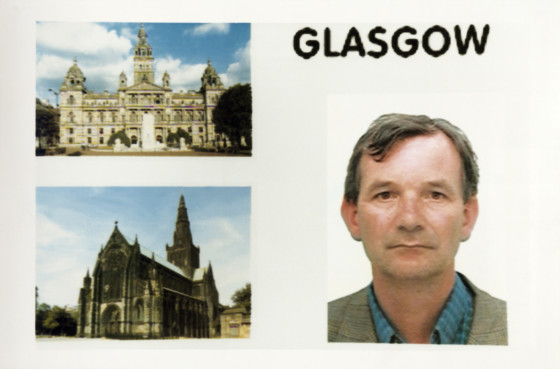
I am Martin Parr, Lee Shulman
‘Since the 1970s, English photographer Martin Parr has held up a sometimes tender, sometimes critical and always mischievous mirror to our times, forcing us to take a hard look at how consumer society has shaped our lives. Discover the maverick behind some of the most iconic images of the past century on an intimate and exclusive road trip across England with the uncompromising Parr, whose subjects, frames and colours have revolutionised contemporary photography’
![]()
january
2025
reading:
- The Lighted Window, Evening walks remembered, Peter Davidson
read:
- Everyday Camouflage in the City, Rafael Gomez-Moriana
- On the Natural History of Destruction’ and Cultural Memory, W.G. Sebald
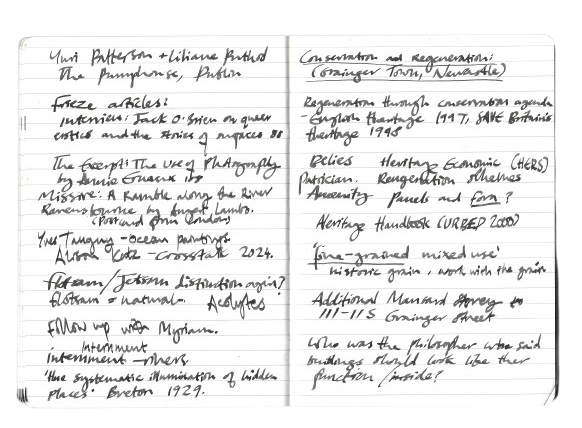
- Conservation and Regeneration: Complementary or Conflicting Processes? The Case of Grainger Town, Newcastle Upon Tyne, John Pendlebury
- Wencun Village, China, by Wang Shu and Lu Wenyu’s Amateur Architecture Studio, Yiping Dong Today
- Dream Works, newly published translations of the work of two overlooked design prophets, Frieze
- ‘Erase the traces’: urban experiance in Walter Benjamin’s commentary on Brecht’s lyric poetry, Luciano Gatti
- Dasein, authenticity, and choice in Heidegger’s ‘Being and time’, Anna M. Rowan
- Adaptive Modernism and beyond: towards a poetics of new Scotland, Ullrich Kockel
- Pierre Bourdieu’s Toolbox: Fields, Power, Practices, and Habitus in the Analysis of Peacebuilding, Catherine Goetze
- John Grierson’s ‘First principles’ as origin and beginning: the emergence of the documentary tradition in the field of nonfiction film, Martin Stollery
- Adaptive modernism and beyond: Towards a poetics of a new Scotland, Ullrich Kockel
articles:
Frieze, October 2024:
- Ring Cycle, Daisy Lafarge on Tacita Dean’s 2003 work Crowhurst
- Interview: Jack O’Brien on queer erotics and the stories of surfaces
- The Excerpt: The Use of Photography, Annie Erneux
- Missive: A Ramble along the River Ravensbourne, Angela Lambo
documentaries:
- Joyce, Yeats and Wilde 🔗
- Willa Cather documentary 🔗
- Yours, Willa Cather 🔗
- WB Yeats 🔗
- Why England erased this Welsh village 🔗
- Sir Walter Scott documentary🔗
- Robert Louis Stevenson documentary 🔗
- 1972: The curious case of the blocked window, BBC Archive 🔗
- Electric Paris - Electricity at the Turn of the Century 🔗
- Sears Houses-- Kit Houses Sold by Sears, Roebuck, 1908-1940. From Two on Two, WBBM-TV Chicago 🔗
- Hannah Quinlan and Rosie Hastings, Inside, Video documentation, 2022, Kunsthalle Osnabrück 🔗
notes
![]()
![]()
![]()
![]()
‘In maritime law, flotsam, jetsam, lagan, and derelict are terms for various types of property lost or abandoned at sea’
‘Since the 1970s, English photographer Martin Parr has held up a sometimes tender, sometimes critical and always mischievous mirror to our times, forcing us to take a hard look at how consumer society has shaped our lives. Discover the maverick behind some of the most iconic images of the past century on an intimate and exclusive road trip across England with the uncompromising Parr, whose subjects, frames and colours have revolutionised contemporary photography’
january
2025
reading:
- The Lighted Window, Evening walks remembered, Peter Davidson
read:
- Everyday Camouflage in the City, Rafael Gomez-Moriana
- On the Natural History of Destruction’ and Cultural Memory, W.G. Sebald
- Conservation and Regeneration: Complementary or Conflicting Processes? The Case of Grainger Town, Newcastle Upon Tyne, John Pendlebury
- Wencun Village, China, by Wang Shu and Lu Wenyu’s Amateur Architecture Studio, Yiping Dong Today
- Dream Works, newly published translations of the work of two overlooked design prophets, Frieze
- ‘Erase the traces’: urban experiance in Walter Benjamin’s commentary on Brecht’s lyric poetry, Luciano Gatti
- Dasein, authenticity, and choice in Heidegger’s ‘Being and time’, Anna M. Rowan
- Adaptive Modernism and beyond: towards a poetics of new Scotland, Ullrich Kockel
- Pierre Bourdieu’s Toolbox: Fields, Power, Practices, and Habitus in the Analysis of Peacebuilding, Catherine Goetze
- John Grierson’s ‘First principles’ as origin and beginning: the emergence of the documentary tradition in the field of nonfiction film, Martin Stollery
- Adaptive modernism and beyond: Towards a poetics of a new Scotland, Ullrich Kockel
articles:
Frieze, October 2024:
- Ring Cycle, Daisy Lafarge on Tacita Dean’s 2003 work Crowhurst
- Interview: Jack O’Brien on queer erotics and the stories of surfaces
- The Excerpt: The Use of Photography, Annie Erneux
- Missive: A Ramble along the River Ravensbourne, Angela Lambo
documentaries:
- Joyce, Yeats and Wilde 🔗
- Willa Cather documentary 🔗
- Yours, Willa Cather 🔗
- WB Yeats 🔗
- Why England erased this Welsh village 🔗
- Sir Walter Scott documentary🔗
- Robert Louis Stevenson documentary 🔗
- 1972: The curious case of the blocked window, BBC Archive 🔗
- Electric Paris - Electricity at the Turn of the Century 🔗
- Sears Houses-- Kit Houses Sold by Sears, Roebuck, 1908-1940. From Two on Two, WBBM-TV Chicago 🔗
- Hannah Quinlan and Rosie Hastings, Inside, Video documentation, 2022, Kunsthalle Osnabrück 🔗
notes
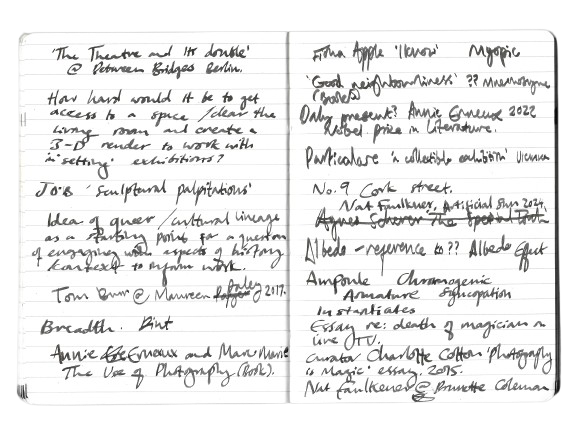

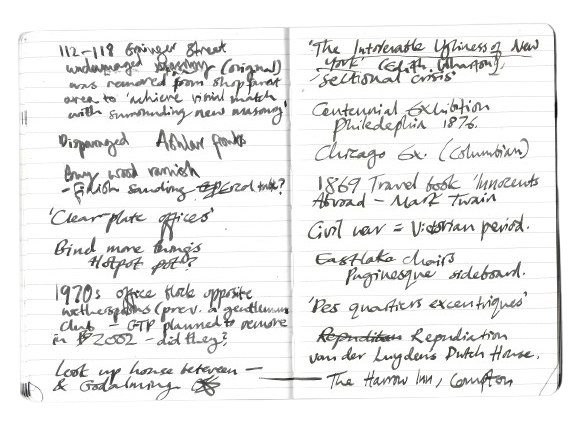
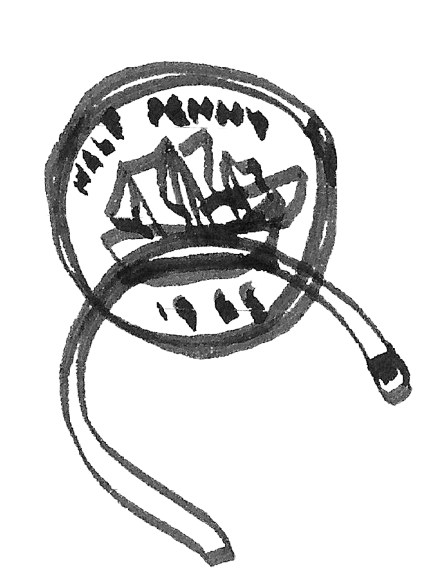
‘In maritime law, flotsam, jetsam, lagan, and derelict are terms for various types of property lost or abandoned at sea’
‘The past is never dead. It's not even past"
William Faulkner, Requiem for a Nun


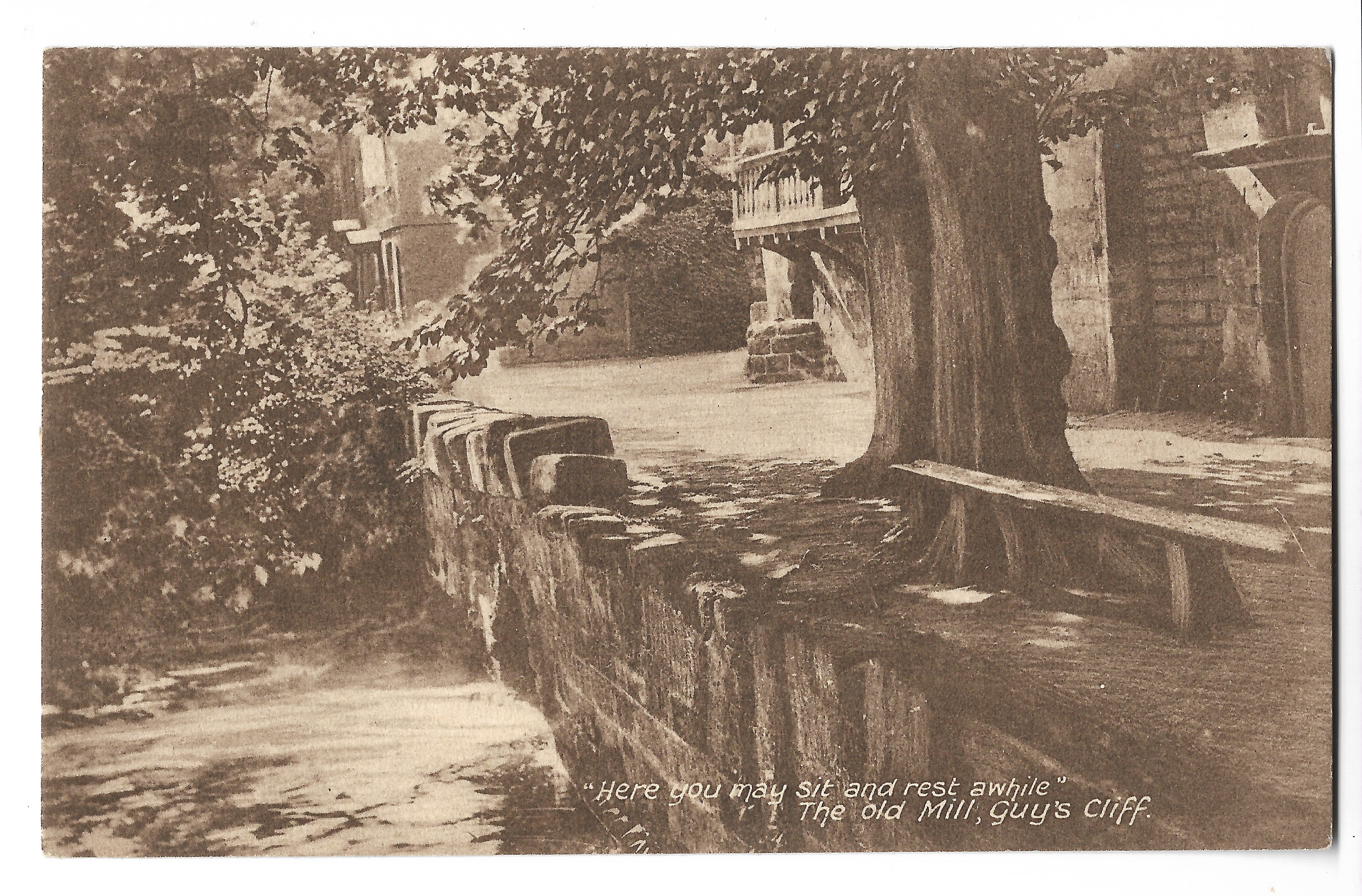
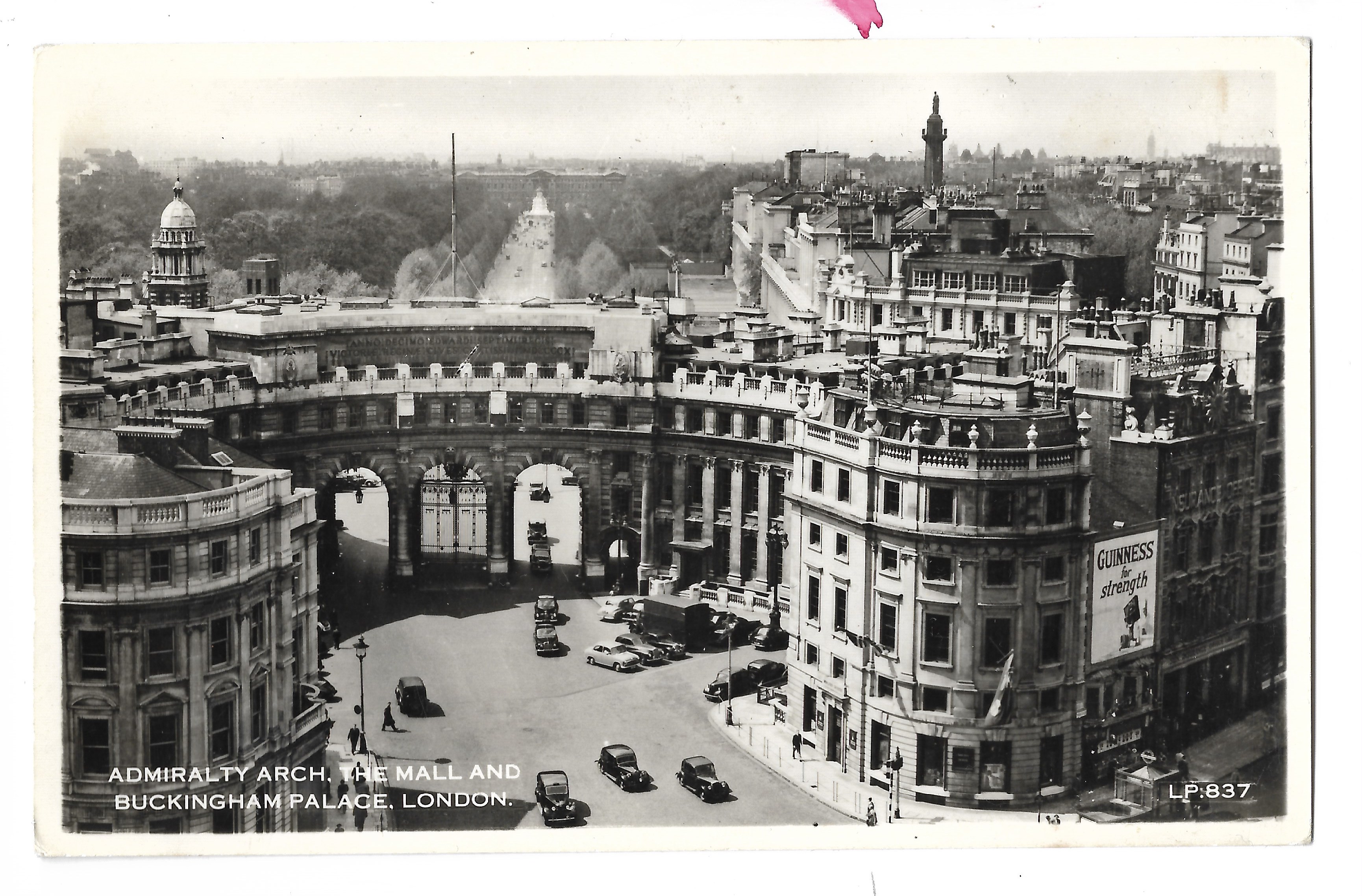
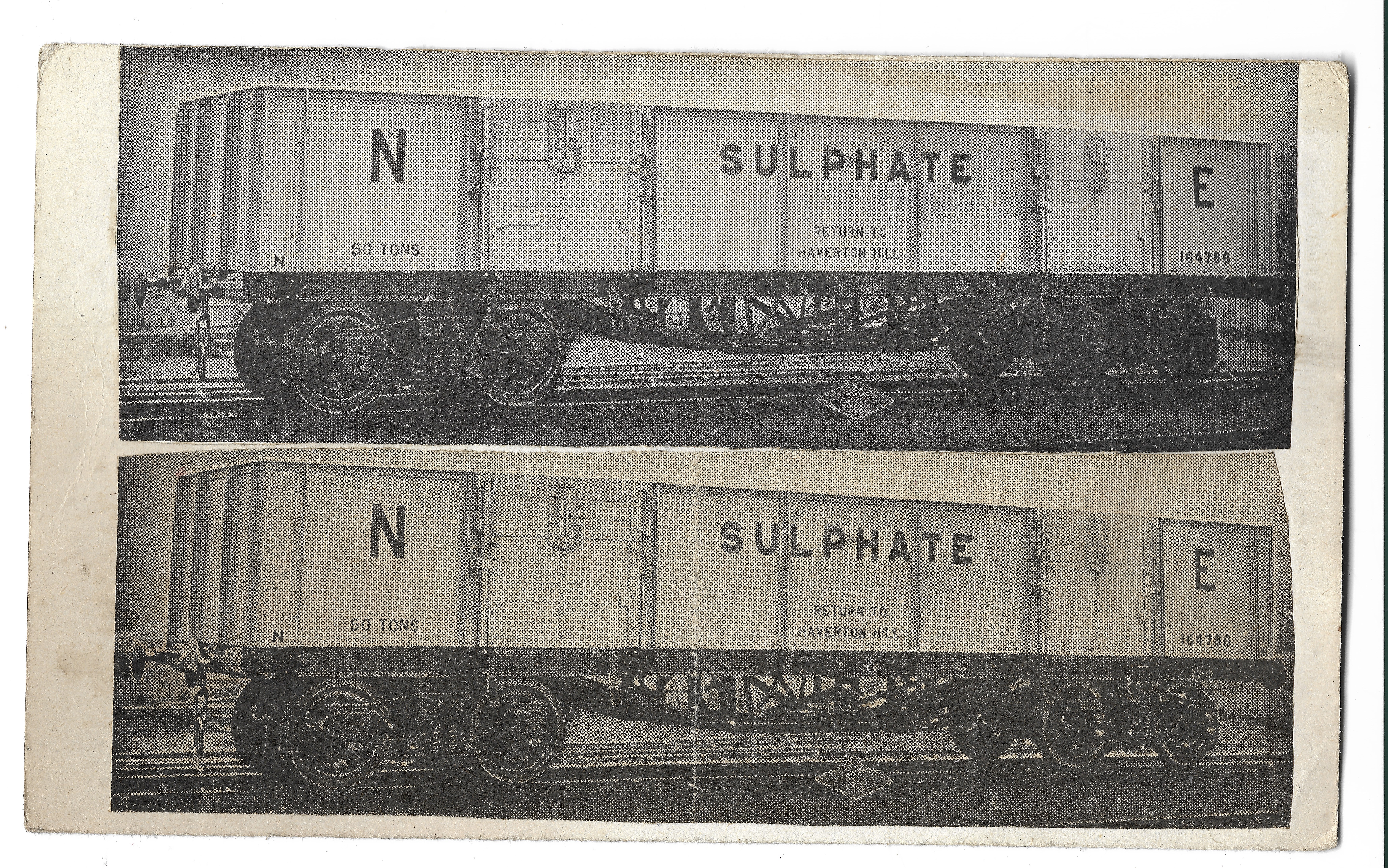
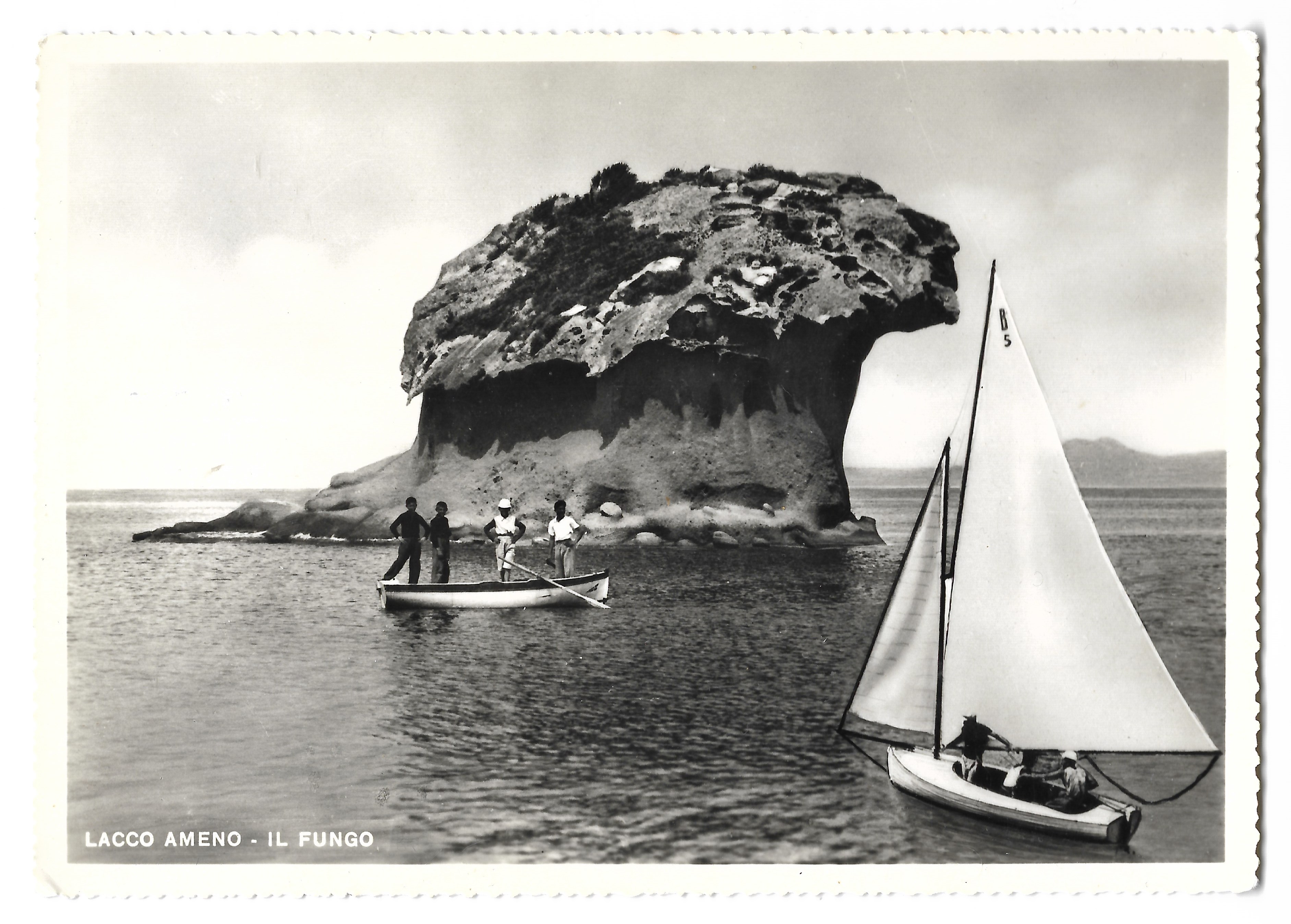
postcards collected at 69A 75 Renshaw St, Liverpool

‘Embroidery on polyester, Rafah Museum Collection, with thanks to its Director, Dr Suhaila Shaheen. This thobe, made for a little girl, was damaged in the targeted bombing of the Rafah Museum in Gaza, whose collections were largely destroyed by Israel in 2023. The force of an explosion threw the dress onto a roof, where it was inaccessible for 8 months until the museum's team could retrieve it. As well as the violence of the bombing, exposure to the elements has left its marks on the garment - the fabric has been weakened by the rain and bleached by the sun’
Thread Memory: Embroidery from Palestine, V&A Dundee


Send Back the Money
Frederick Douglass travelled to Glasgow on Saturday 10 January 1846, sailing from Belfast after an extensive tour of Ireland. He had been invited by William Smeal and John Murray, secretaries of the Glasgow Emancipation Societywho had been eagerly anticipating his arrival for some months. A ‘large and respectable’ audience gathered to hear the ‘self-liberated slave’ deliver his first public lecture at the City Hall the following week.
For the next three months Glasgow served as his main base from which he travelled north to Perth, Dundee and as far as Aberdeen; to Paisley and Ayr to the south; and west to Greenock and the Vale of Leven. 🔗
‘About suffering they were never wrong,
The Old Masters: how well they understood
Its human position; how it takes place
While someone else is eating or opening a window or just walking dully along
How, when the aged are reverently, passionately waiting
For the miraculous birth, there always must be
Children who did not specially want it to happen, skating
On a pond at the edge of the wood:
They never forgot
That even the dreadful martyrdom must run its course
Anyhow in a corner, some untidy spot
Where the dogs go on with their doggy life and the torturer's horse
Scratches its innocent behind on a tree.
In Brueghel's Icarus, for instance: how everything turns away
Quite leisurely from the disaster; the ploughman may
Have heard the splash, the forsaken cry,
But for him it was not an important failure; the sun shone
As it had to on the white legs disappearing into the green
Water; and the expensive delicate ship that must have seen
Something amazing, a boy falling out of the sky,
Had somewhere to get to and sailed calmly on.’
Musée des Beaux Arts, W.H. Auden
Living Treasures of Japan (1981)

Arte Útil
Whether through self-organised groups, individual initiatives or the rise of user generated content people are developing new methods and social formations to deal with issues that were once the domain of the state. Arte Útil case studies show how these initiatives are not isolated incidents, but part of a larger historical trajectory that is now shaping our contemporary world.
The notion of what constitutes Arte Útil has been arrived at via a set of criteria that was formulated by Tania Bruguera and curators at the Queens Museum, New York, Van Abbemuseum, Eindhoven and Grizedale Arts, Coniston. 🔗
Arte Útil projects should:
1) Propose new uses for art within society
2) Use artistic thinking to challenge the field within which it operates
3) Respond to current urgencies
4) Operate on a 1:1 scale
5) Replace authors with initiators and spectators with users
6) Have practical, beneficial outcomes for its users
7) Pursue sustainability
8) Re-establish aesthetics as a system of transformation
![]()
![]()
The Klein Studio, Peter Wormersley, Selkirk 🔗
Satre, en-soi and pour-soi
‘En-soi refers to all those things that are fixed, passive, and defined. Most often, they are the objects we encounter in the world. Pour-soi, though, is our dynamic, personal experience. It’s our awareness directed outward at the world. It’s the “me” that’s doing things and “being.” It’s you, right now, wherever you are, looking out at things.
For Sartre, The Look (sometimes translated as Gaze) is when “The Other” forces us to see ourselves not as pour-soi but en-soi. It is when we, the subject of our life, are made into an object or some background prop. When someone Looks at us, we’re forced to see ourselves as if from outside. As Sartre wrote, “I see myself because somebody sees me.”
![]()
‘Home, James”
‘The full phrase, “Home James and don't spare the horses” dates from about 1870 or earlier. Most stories attributed the phrase to have been uttered by Queen Victoria who had a driver named James Darling. The phrase became widely recognized thanks to the 1934 British song performed by Elsie Carlisle with Burt Ambrose and his orchestra. The lyrics describe a bad date and a woman wanting to get home quickly’
![Janet Burnside and Tiyo Soga, Jessie Soga's parents]()
![Janet Burnside and Tiyo Soga]()
Jessie Soga
In 1908, Soga was one of the "prime movers", according to suffrage campaign leader Teresa Billington-Greig, in creating a large new Women's Freedom League branch in the prosperous West End of Glasgow (Hillhead). The public launch meeting at the Hillhead Burgh Hall greatly exceeded expectations, as the numbers overflowed the main hall and a second room, with a large membership as a result. Soga and E.S. Semple were appointed joint branch secretary in February 1908 and hosted an "At Home" event in the same halls in April, with Margaret Irwin (trade unionist) as keynote speaker.
(Soga was described as a "new contralto" when she performed with other soloists in a Glasgow City Hall concert on 16 November 1895)
Roland Barthes
Text of Pleasure, Text of Bliss
Text of Pleasure - a comfortable text that situates the reader securely in the established culture.
Text of Bliss - a text that discomforts, unsettles the readers historical, cultural, psychological assumptions
Studium and Punctum
‘Investigating the impact of photography on the observer, he distinguished two themes: the studium and the punctum. The studium is the social and cultural interpretation of the photograph and the punctum is a specific detail which provokes a deep and personal reaction to the image’
Whether through self-organised groups, individual initiatives or the rise of user generated content people are developing new methods and social formations to deal with issues that were once the domain of the state. Arte Útil case studies show how these initiatives are not isolated incidents, but part of a larger historical trajectory that is now shaping our contemporary world.
The notion of what constitutes Arte Útil has been arrived at via a set of criteria that was formulated by Tania Bruguera and curators at the Queens Museum, New York, Van Abbemuseum, Eindhoven and Grizedale Arts, Coniston. 🔗
Arte Útil projects should:
1) Propose new uses for art within society
2) Use artistic thinking to challenge the field within which it operates
3) Respond to current urgencies
4) Operate on a 1:1 scale
5) Replace authors with initiators and spectators with users
6) Have practical, beneficial outcomes for its users
7) Pursue sustainability
8) Re-establish aesthetics as a system of transformation

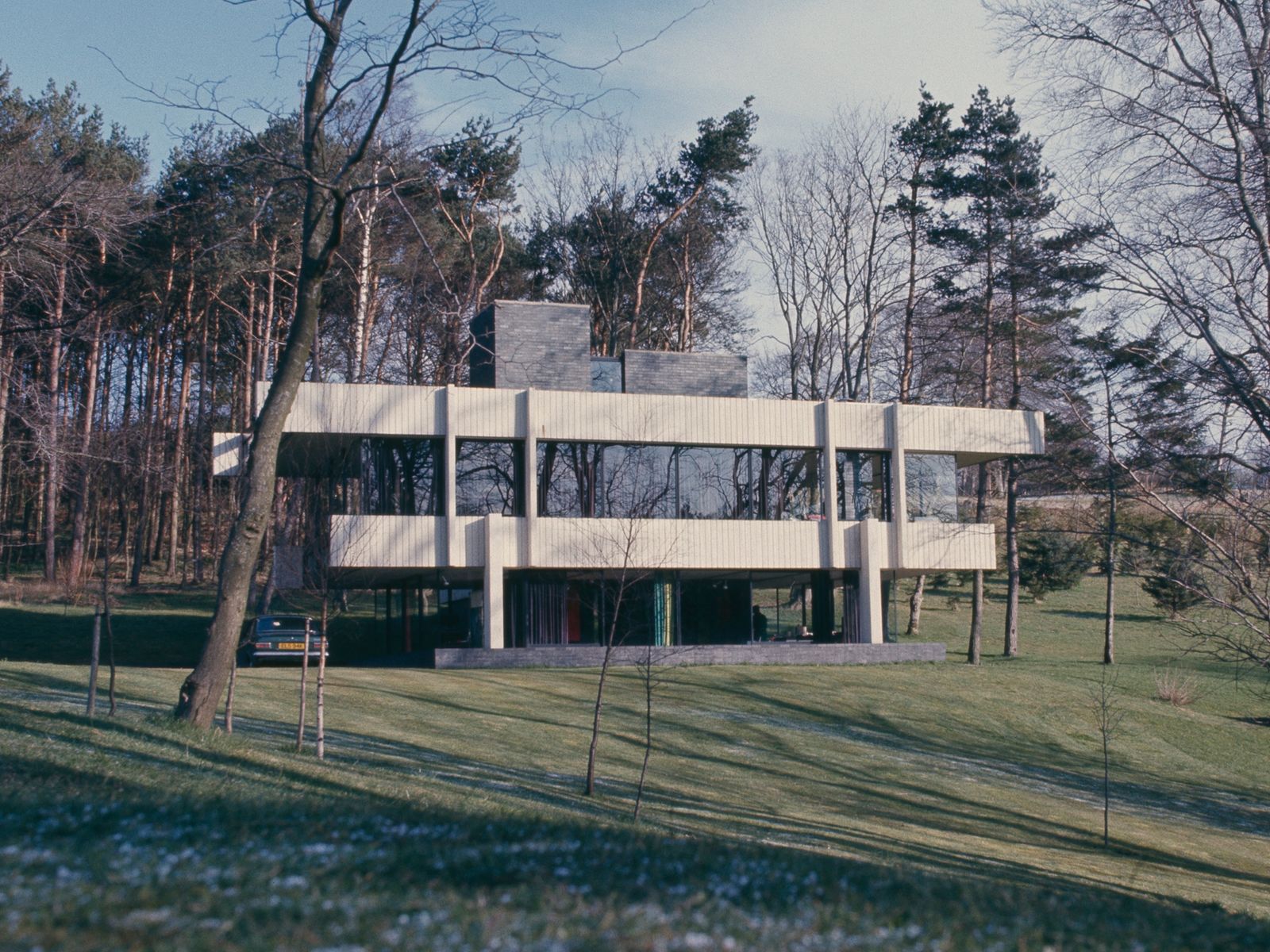
The Klein Studio, Peter Wormersley, Selkirk 🔗
Satre, en-soi and pour-soi
‘En-soi refers to all those things that are fixed, passive, and defined. Most often, they are the objects we encounter in the world. Pour-soi, though, is our dynamic, personal experience. It’s our awareness directed outward at the world. It’s the “me” that’s doing things and “being.” It’s you, right now, wherever you are, looking out at things.
For Sartre, The Look (sometimes translated as Gaze) is when “The Other” forces us to see ourselves not as pour-soi but en-soi. It is when we, the subject of our life, are made into an object or some background prop. When someone Looks at us, we’re forced to see ourselves as if from outside. As Sartre wrote, “I see myself because somebody sees me.”
‘Home, James”
‘The full phrase, “Home James and don't spare the horses” dates from about 1870 or earlier. Most stories attributed the phrase to have been uttered by Queen Victoria who had a driver named James Darling. The phrase became widely recognized thanks to the 1934 British song performed by Elsie Carlisle with Burt Ambrose and his orchestra. The lyrics describe a bad date and a woman wanting to get home quickly’
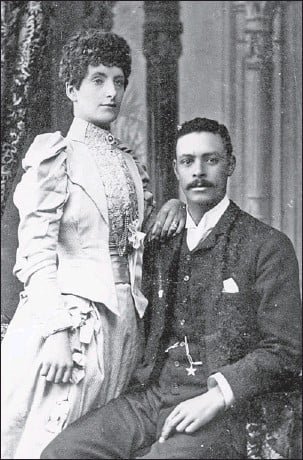
Jessie Soga
In 1908, Soga was one of the "prime movers", according to suffrage campaign leader Teresa Billington-Greig, in creating a large new Women's Freedom League branch in the prosperous West End of Glasgow (Hillhead). The public launch meeting at the Hillhead Burgh Hall greatly exceeded expectations, as the numbers overflowed the main hall and a second room, with a large membership as a result. Soga and E.S. Semple were appointed joint branch secretary in February 1908 and hosted an "At Home" event in the same halls in April, with Margaret Irwin (trade unionist) as keynote speaker.
(Soga was described as a "new contralto" when she performed with other soloists in a Glasgow City Hall concert on 16 November 1895)
Roland Barthes
Text of Pleasure, Text of Bliss
Text of Pleasure - a comfortable text that situates the reader securely in the established culture.
Text of Bliss - a text that discomforts, unsettles the readers historical, cultural, psychological assumptions
Studium and Punctum
‘Investigating the impact of photography on the observer, he distinguished two themes: the studium and the punctum. The studium is the social and cultural interpretation of the photograph and the punctum is a specific detail which provokes a deep and personal reaction to the image’
Rose Schneiderman
‘Rose Schneiderman (a Jewish Polish immigrant in America, she was also a lesbian, she never had children, she was one of the first women to organise the Labour movement in America) was speaking (on April 2, 1911 at a meeting at New York's Metropolitan Opera House) in the aftermath of the Triangle Shirtwaist Factory fire — one of the deadliest industrial disasters in U.S. history which killed 146 workers — 123 of whom were women aged between 14 and 23. "What the woman who labours wants is the right to live, not simply exist — the right to life as the rich woman has the right to life, and the sun and music and art," Schneiderman said, addressing a crowd of mostly privileged women. "You have nothing that the humblest worker has not a right to have also. The worker must have bread, but she must have roses, too. Help, you women of privilege, give her the ballot to fight with.”’
Secret Mall Apartment‘Two decades ago, eight artists set up camp in an off-map crawl space in the local mall. The group somehow outfitted the undeveloped corner of the colossal (and in-use) structure with the trappings of a home, from a dining table and secondhand couch to a TV set. Sneaking in through pitch-black service shafts, they made the forgotten concrete back room into a covert apartment, going as far as installing a door and running electricity, until they were busted in 2007. Two of the occupants, Adriana Valdez Young and Michael Townsend—then married, recent college grads—say that at first, they were simply curious if they could spend an entire day in the hidden section of the busy shopping mall. It spiraled into their group of eight hanging out in the unit on and off over the next four years, filming their escapades and planning art projects’
generation upon
generation upon
generation upon
generation upon
generation upon
generation upon
generation upon
generation upon
generation upon
generation upon
generation upon
generation upon
generation upon
generation upon
generation upon
generation upon
generation upon
generation upon
generation upon
generation upon
g neration up n
g nerat on up n
g nerat n up n
g nerat n p n
g erat n p n
g era n p n
g era n n
g er n n
g r n n
g n n
g n
g
Edwin Morgan, Archive
Conversation with Nathan Coley at The Common Guild, 24th April
Diet coke stand (transactional versus non-linear pursuits), Martin Boyce conversation around the voice of doubt and holding fast (past postcard interaction)


‘April is the cruelest month, breeding
lilacs out of the dead land, mixing
memory and desire, stirring
dull roots with spring rain.
Winter kept us warm, covering
Earth in forgetful snow, feeding
A little life with dried tubers.’
T.S Elliot, The Waste Land
Emil Tabakov, Motivity
“Writing transforms the things seen or heard 'into tissue and blood'” (in vires et in sanguinem)
Foucault
Retrospective causality
In psychoanalytic theory, Freud's concept of "retrospective causality" or "Nachträglichkeit" (meaning "afterwards-ness") suggests that the present can influence our understanding and interpretation of the past, rather than the past solely determining the present.

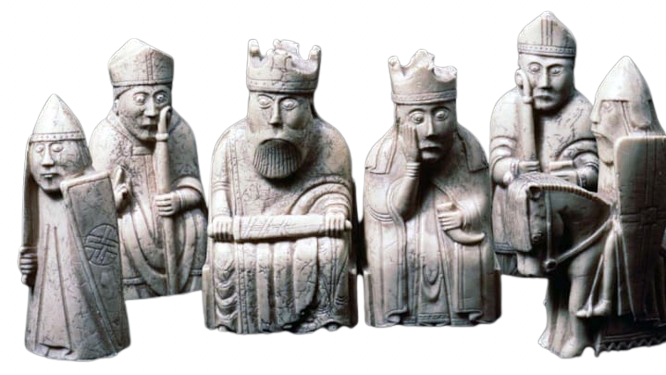
Lewis Chessmen
‘In 1831 Malcolm MacLeod (Calum an Sprot) was tending cattle on the rich farming land of Ardroil on the west coast of Lewis, when one of his animals wondered out onto the sands of Uig Bay. As he followed the cow onto the beach to retrieve it, Malcolm noticed a small stone chamber. In the chamber was a wooden box. And in the box were 78 elaborately carved chess pieces (along with 14 other gaming pieces and a belt buckle). The treasure Malcolm uncovered, carved from walrus ivory and whale teeth, may well have been in its hiding place for over 500 years, having been carved most likely in Trondheim in Norway sometime in the 12th century’
‘In 1831 Malcolm MacLeod (Calum an Sprot) was tending cattle on the rich farming land of Ardroil on the west coast of Lewis, when one of his animals wondered out onto the sands of Uig Bay. As he followed the cow onto the beach to retrieve it, Malcolm noticed a small stone chamber. In the chamber was a wooden box. And in the box were 78 elaborately carved chess pieces (along with 14 other gaming pieces and a belt buckle). The treasure Malcolm uncovered, carved from walrus ivory and whale teeth, may well have been in its hiding place for over 500 years, having been carved most likely in Trondheim in Norway sometime in the 12th century’

Callendar House
‘Callendar House is a mansion set within the grounds of Callendar Park in Falkirk, central Scotland. During the 19th century, it was redesigned and extended in the style of a French Renaissance château fused with elements of Scottish baronial architecture’
The Antonine Wall
(Vallum Antonini) was a turf fortification on stone foundations, built by the Romans across what is now the Central Belt of Scotland, between the Firth of Clyde and the Firth of Forth. Built some twenty years after Hadrian's Wall to the south, and intended to supersede it, while it was garrisoned it was the northernmost frontier barrier of the Roman Empire
‘Callendar House is a mansion set within the grounds of Callendar Park in Falkirk, central Scotland. During the 19th century, it was redesigned and extended in the style of a French Renaissance château fused with elements of Scottish baronial architecture’
The Antonine Wall
(Vallum Antonini) was a turf fortification on stone foundations, built by the Romans across what is now the Central Belt of Scotland, between the Firth of Clyde and the Firth of Forth. Built some twenty years after Hadrian's Wall to the south, and intended to supersede it, while it was garrisoned it was the northernmost frontier barrier of the Roman Empire
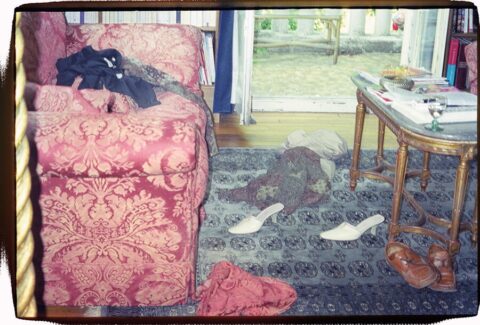
The Use of Photography, Annie Ernaux and Marc Marie
‘Lined up next to each other, these snapshots are like a diary to me. A diary of 2003. Love and death. The decision to exhibit them, make a book of them, is to put the seal on a part of our history.
I don't know what these photos are. I know what they embody, but I don't know what they're for.know what they are not: images in frames on a mantel-piece, next to a father, chubby babies and a great-uncle in uniform’
‘Lined up next to each other, these snapshots are like a diary to me. A diary of 2003. Love and death. The decision to exhibit them, make a book of them, is to put the seal on a part of our history.
I don't know what these photos are. I know what they embody, but I don't know what they're for.know what they are not: images in frames on a mantel-piece, next to a father, chubby babies and a great-uncle in uniform’
Sears’ houses
‘Sears, Roebuck & Co., based in Chicago, sold "mail order houses" from 1908-1940. In this story, the "Two on Two" news magazine visits the Sears archives to learn more about these unique homes...and also goes on a "house tour" to some of the Sears homes in the Chicago area. Produced in the 1980s, WBBM-TV’
‘Sears, Roebuck & Co., based in Chicago, sold "mail order houses" from 1908-1940. In this story, the "Two on Two" news magazine visits the Sears archives to learn more about these unique homes...and also goes on a "house tour" to some of the Sears homes in the Chicago area. Produced in the 1980s, WBBM-TV’

God knows where I am
‘The body of a homeless woman is found in an abandoned New Hampshire farmhouse. Beside the body, lies a diary that documents a journey of starvation and the loss of sanity, but told with poignance, beauty, humor, and spirituality. For nearly four months, Linda Bishop, a prisoner of her own mind, survived on apples and rain water, waiting for God to save her, during one of the coldest winters on record. As her story unfolds from different perspectives, including her own, we learn about our systemic failure to protect those who cannot protect themselves’

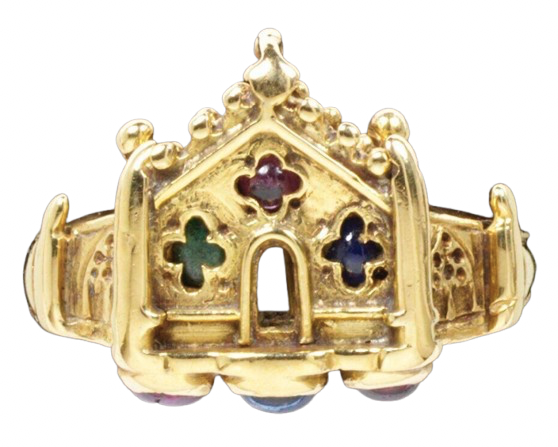
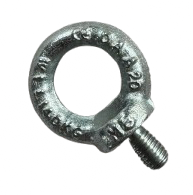
‘This ring was designed (1901) by the architect William Richard Lethaby (1857-1931), one of the founders of the Art Workers Guild and Principal of the Central School of Arts and Crafts, as a wedding gift for his wife Edith Crosby (1850-1927)’
Architecture parlante
The idea that a building reflects its purpose in its shape or decoration. This is an idea that came about in 18th century French architecture, especially in the ideas of French architect Claude-Nicolas Ledoux
Lacan’s three principles;
The Imaginary- the world of immediate sensory perceptions
The Symbolic- based on language and gives meaning to everything around us
The Real- a deliberately ambiguous term that suggests both material reality and that which cannot be symbolized
research notes
Bergson became aware that the moment one attempted to measure a moment, it would be gone: one measures an immobile, complete line, whereas time is mobile and incomplete. For the individual, time may speed up or slow down, whereas, for science, it would remain the same. Hence Bergson decided to explore the inner life of man, which is a kind of duration, neither a unity nor a quantitative multiplicity. Duration is ineffable and can only be shown indirectly through images that can never reveal a complete picture. It can only be grasped through a simple intuition of the imagination’
Reading:
The Lighted Window, Evening walks remembered, Peter Davidson
Essays:
‘On the Natural History of Destruction’ and Cultural Memory, W.G. Sebald Gestures of Exhibiting Everyday Camoflage in the City, Rafael Gomez-Moriana
Conservation and Regeneration: Complementary or Conflicting Processes? The Case of Grainger Town, Newcastle Upon Tyne, John Pendlebury
Wencun Village, China, by Wang Shu and Lu Wenyu’s Amateur Architecture Studio, Yiping Dong Today
Dream Works, newly published translations of the work of two overlooked design prophets, Frieze
‘Erase the traces’: urban experiance in Walter Benjamin’s commentary on Brecht’s lyric poetry, Luciano Gatti
Dasein, authenticity, and choice in Heidegger’s ‘Being and time’, Anna M. Rowan
Adaptive Modernism and beyond: towards a poetics of new Scotland, Ullrich Kockel
Pierre Bourdieu’s Toolbox: Fields, Power, Practices, and Habitus in the Analysis of Peacebuilding, Catherine Goetze
John Grierson’s ‘First principles’ as origin and beginning: the emergence of the documentary tradition in the field of nonfiction film, Martin Stollery
2024
Summary of research interests and references of note in 2024, half of the earlier months lost to digital error sometime in November (an embedded video took over the website and created a black screen of doom, January- June became the accidental sarcrificial lamb)
december
Duration
‘A theory of time and consciousness posited by the French philosopher Henri Bergson.Bergson became aware that the moment one attempted to measure a moment, it would be gone: one measures an immobile, complete line, whereas time is mobile and incomplete. For the individual, time may speed up or slow down, whereas, for science, it would remain the same. Hence Bergson decided to explore the inner life of man, which is a kind of duration, neither a unity nor a quantitative multiplicity. Duration is ineffable and can only be shown indirectly through images that can never reveal a complete picture. It can only be grasped through a simple intuition of the imagination’
The Lighted Window, Evening walks remembered, Peter Davidson
Essays:
‘On the Natural History of Destruction’ and Cultural Memory, W.G. Sebald Gestures of Exhibiting Everyday Camoflage in the City, Rafael Gomez-Moriana
Conservation and Regeneration: Complementary or Conflicting Processes? The Case of Grainger Town, Newcastle Upon Tyne, John Pendlebury
Wencun Village, China, by Wang Shu and Lu Wenyu’s Amateur Architecture Studio, Yiping Dong Today
Dream Works, newly published translations of the work of two overlooked design prophets, Frieze
‘Erase the traces’: urban experiance in Walter Benjamin’s commentary on Brecht’s lyric poetry, Luciano Gatti
Dasein, authenticity, and choice in Heidegger’s ‘Being and time’, Anna M. Rowan
Adaptive Modernism and beyond: towards a poetics of new Scotland, Ullrich Kockel
Pierre Bourdieu’s Toolbox: Fields, Power, Practices, and Habitus in the Analysis of Peacebuilding, Catherine Goetze
John Grierson’s ‘First principles’ as origin and beginning: the emergence of the documentary tradition in the field of nonfiction film, Martin Stollery
Gemeinschaft and Gesellschaft
Gemeinschaft and Gesellschaft, generally translated as "community and society", are categories which were used by the German sociologist Ferdinand Tönnies in order to categorize social relationships into two types. The Gesellschaft is associated with modern society and rational self-interest, which weakens the traditional bonds of family and local community that typify the Gemeinschaft
november
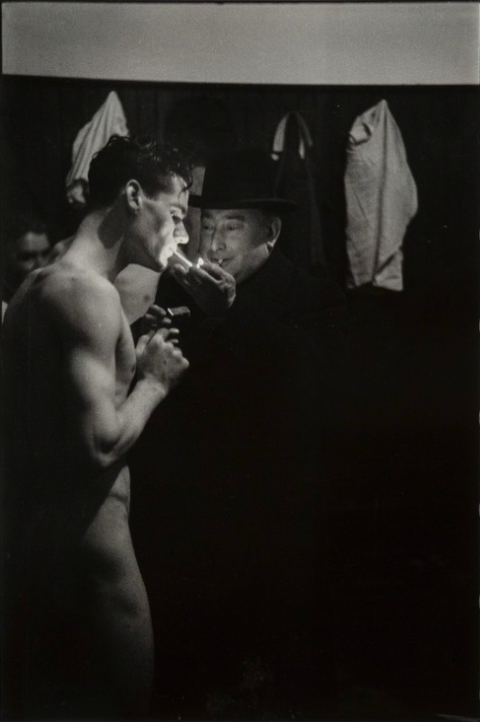
John Humphrey Spender, Newcastle United Football Club Changing Room, 1938
‘Light spreads darkly downwards from the high
Clusters of lights over empty chairs
That face each other, coloured differently.
Through open doors, the dining-room declares
A larger loneliness of knives and glass
And silence laid like carpet. A porter reads
An unsold evening paper. Hours pass,
And all the salesmen have gone back to Leeds,
Leaving full ashtrays in the Conference Room.
In shoeless corridors, the lights burn. How
Isolated, like a fort, it is -
The headed paper, made for writing home
(If home existed) letters of exile: Now
Night comes on. Waves fold behind villages’
Philip Larkin, Friday Night At The Royal Station Hotel
![]() The Glashaus (Glass House) Pavilion for the Werkbund (Work Federation) Exhibition at Cologne 1914, collaboration between Architect Bruno Taut and Poet Paul Scheerbart
The Glashaus (Glass House) Pavilion for the Werkbund (Work Federation) Exhibition at Cologne 1914, collaboration between Architect Bruno Taut and Poet Paul Scheerbart
The Window as Protagonist in British Architecture and Visual Culture, Paul Mellon Centre
Read:
The Idea of North, Peter Davidson
Why I Do What I Do: Global Curators Speak: 4, (Sternberg Press / Thoughts on Curating)
Essays:
Image and Inventory: Picture Post and the British View of Scotland, 1938-1957, Andrew Blaikie
"The Intolerable Ugliness of New York": Architecture and Society in Edith Wharton's The Age of Innocence, Cynthia G. Falk
Bewildered Remembrance: W. B. Yeats's ‘The Dreaming of the Bones’ and 1916, Christopher Morash
Contemporary Art’s Twin Follies, Mike Pepi Landscapes of Thrift and Dwelling: Dwelling and Sociality in ‘Midsomer Murders’, Stefan Zahlmann
![]()
‘Light spreads darkly downwards from the high
Clusters of lights over empty chairs
That face each other, coloured differently.
Through open doors, the dining-room declares
A larger loneliness of knives and glass
And silence laid like carpet. A porter reads
An unsold evening paper. Hours pass,
And all the salesmen have gone back to Leeds,
Leaving full ashtrays in the Conference Room.
In shoeless corridors, the lights burn. How
Isolated, like a fort, it is -
The headed paper, made for writing home
(If home existed) letters of exile: Now
Night comes on. Waves fold behind villages’
Philip Larkin, Friday Night At The Royal Station Hotel
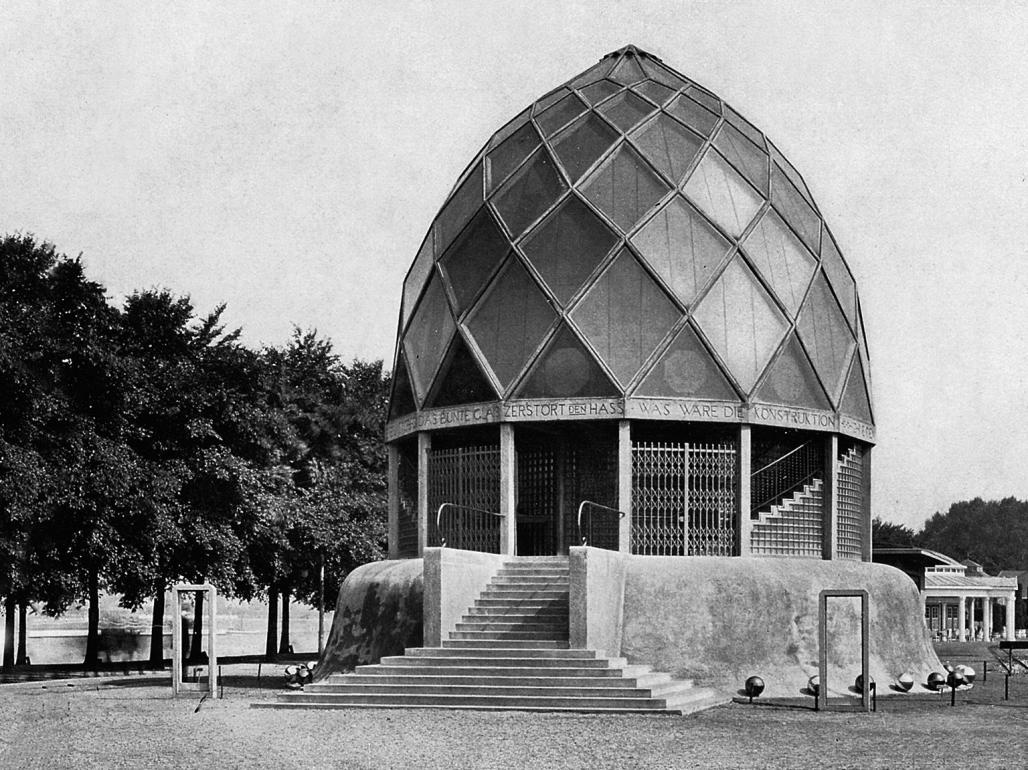
The Window as Protagonist in British Architecture and Visual Culture, Paul Mellon Centre
Lad o’pairts vs Jack of all trades
The "lad o' pairts", was an ideal encouraged by the Scottish educational system of the nineteenth century: a boy should strive to be an all-rounder, a pioneer, broad in knowledge and at the same time practical vs the term Jack of all tradesoriginated in English and the earliest known use of it was in the early 1600s.The phrase was originally used to praise people for having many talents. The phrase "master of none" was added later, after the industrial revolution when modern systems began to form
The Idea of North, Peter Davidson
Why I Do What I Do: Global Curators Speak: 4, (Sternberg Press / Thoughts on Curating)
Essays:
Image and Inventory: Picture Post and the British View of Scotland, 1938-1957, Andrew Blaikie
"The Intolerable Ugliness of New York": Architecture and Society in Edith Wharton's The Age of Innocence, Cynthia G. Falk
Bewildered Remembrance: W. B. Yeats's ‘The Dreaming of the Bones’ and 1916, Christopher Morash
Contemporary Art’s Twin Follies, Mike Pepi Landscapes of Thrift and Dwelling: Dwelling and Sociality in ‘Midsomer Murders’, Stefan Zahlmann
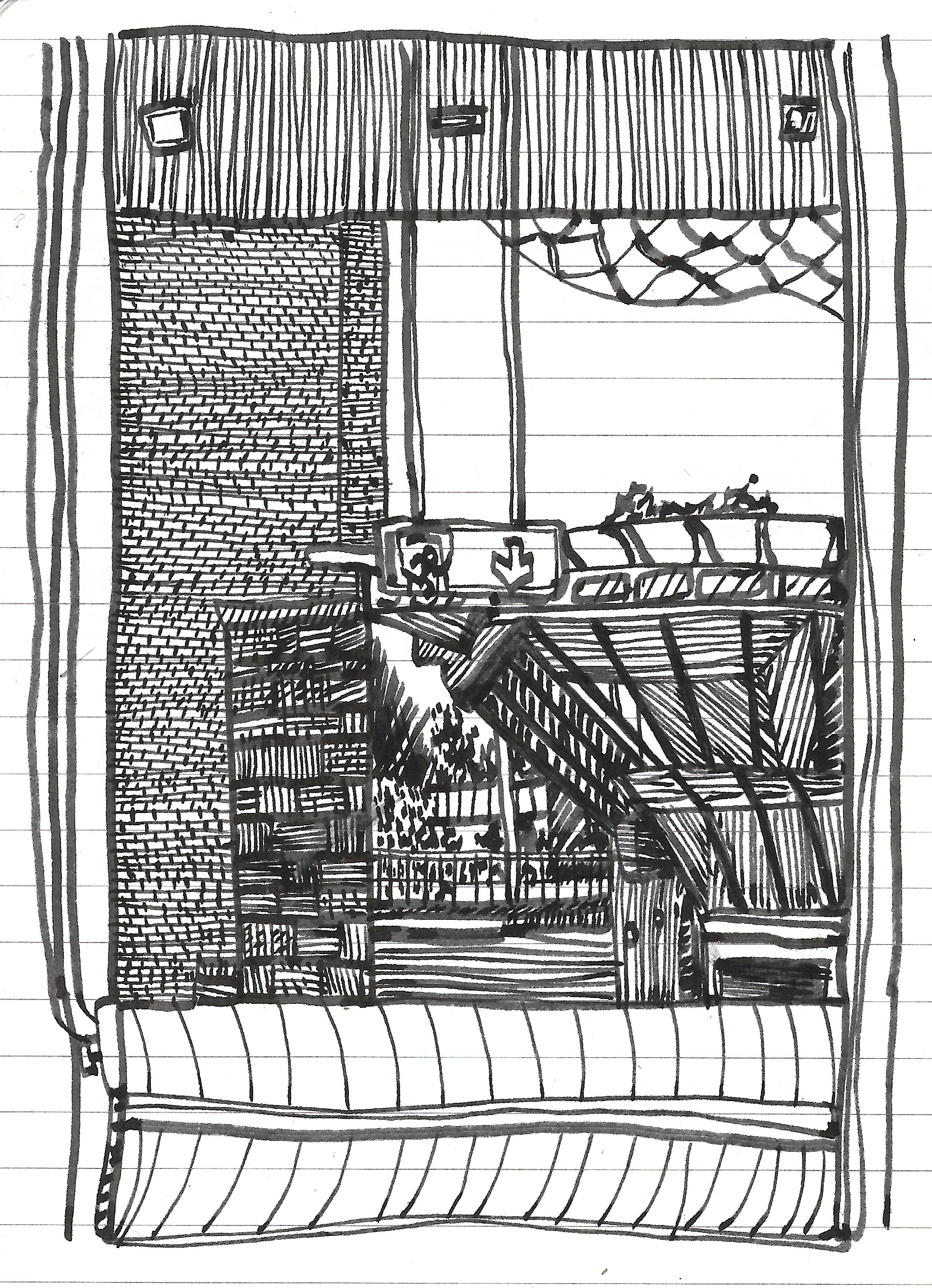

october
‘He had had to put on the light, and by doing so he had ended the summer. He had bundled the long days, the dog days when the grass begins to show yellow and the haystacks slip over to one side, into one of the drawers of his enormous desk’
Emma Tennant, Wild Nights, 1981
Heidegger’s concept of Geworfener Entwurf (thrown projection)
Dasein is a ‘thrown projection’, projecting itself onto the possibilities that lie before it or may be hidden, and interpreting and understanding the world in terms of possibilities. Such projecting has nothing to do with comporting oneself toward a plan that has been thought out‘Your destiny can't be changed but, it can be challenged. Every man is born as many men and dies as a single one’
Premise
Paris Art Basel 2024, featured nine galleries presenting highly singular curatorial proposals.‘The Premise sector is new for the 2024 edition of Art Basel Paris and is dedicated to singular projects that can include work crafted before 1900. It aims to provide a platform for presentations that go beyond the conventional art historical canon and examine little-known artistic practices. The nine galleries of Premise are all newcomers to the Paris fair: Bombon, The Gallery of Everything, Loft Art Gallery, Parker Gallery, Pauline Pavec, Nara Roesler, Sies + Höke, The Pill, Galerie Dina Vierny’
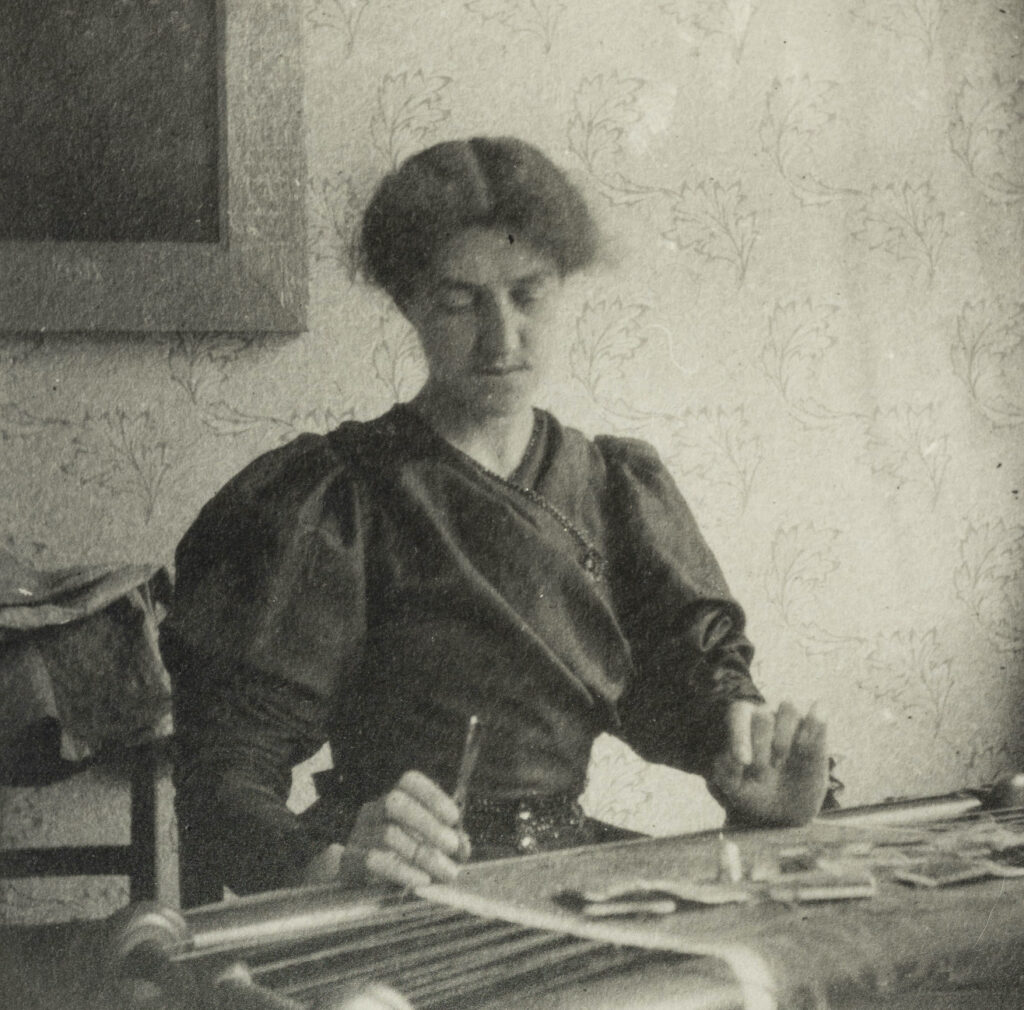
May Morris
(1862–1938) once described herself as a “remarkable woman… though none of you seemed to think so.”
Pinchbeck
89% copper to 11% zincChristopher Pinchbeck, a London clockmaker, invented pinchbeck in the 18th century. He sold it as imitation gold, or "pinchbeck metal". The word "pinchbeck" came to be used to mean fake or imitation because other jewelers tried to pass it off as real gold
The Warburg Institute Handwriting archive
The Warburg Institute makes its mysteries more public, Alison ColeThe law of the good neighbour
‘The "law of the good neighbor" is the principle that governs the organization of the Warburg Library's collections and the scholarly practice of the Warburg Institute. The principle is based on the idea that books should be arranged by their ability to engage with the books on either side of them, rather than by subject, author, title, or date of acquisition’Pierre Bourdieu, Habitus
‘habitus’ is a system of dispositions that are shaped by the experiences of actors in particular positions in society. They are the interplay between structure and practices. They work as guidelines rather than rules for action. We incorporate things into our habitus, and reconstruct it to generate new actions. Habitus mediates between positions (social) and position taking (symbolic)’
september
Omnia mea mecum porto
All that is mine, I carry with me
‘Any work of art that can be photographed can take its place in Malraux's super-museum. But photography not only secures the admittance of objects, fragments of objects, details, etc., to the museum, it is also the organising device: it reduces the now even vaster heterogeneity to a single perfect similitude. Through photographic reproduction a cameo takes up residence on the page next to a painted tondo and a sculpted relief; a detail of a Rubens in Antwerp is compared to that of a Michelangelo in Rome. The art historian's slide lecture, the art-history student's slide comparison exam belong in the museum without walls’
Douglas Crimp, On The Museum's Ruins, p52
folly (2024) references slides so far
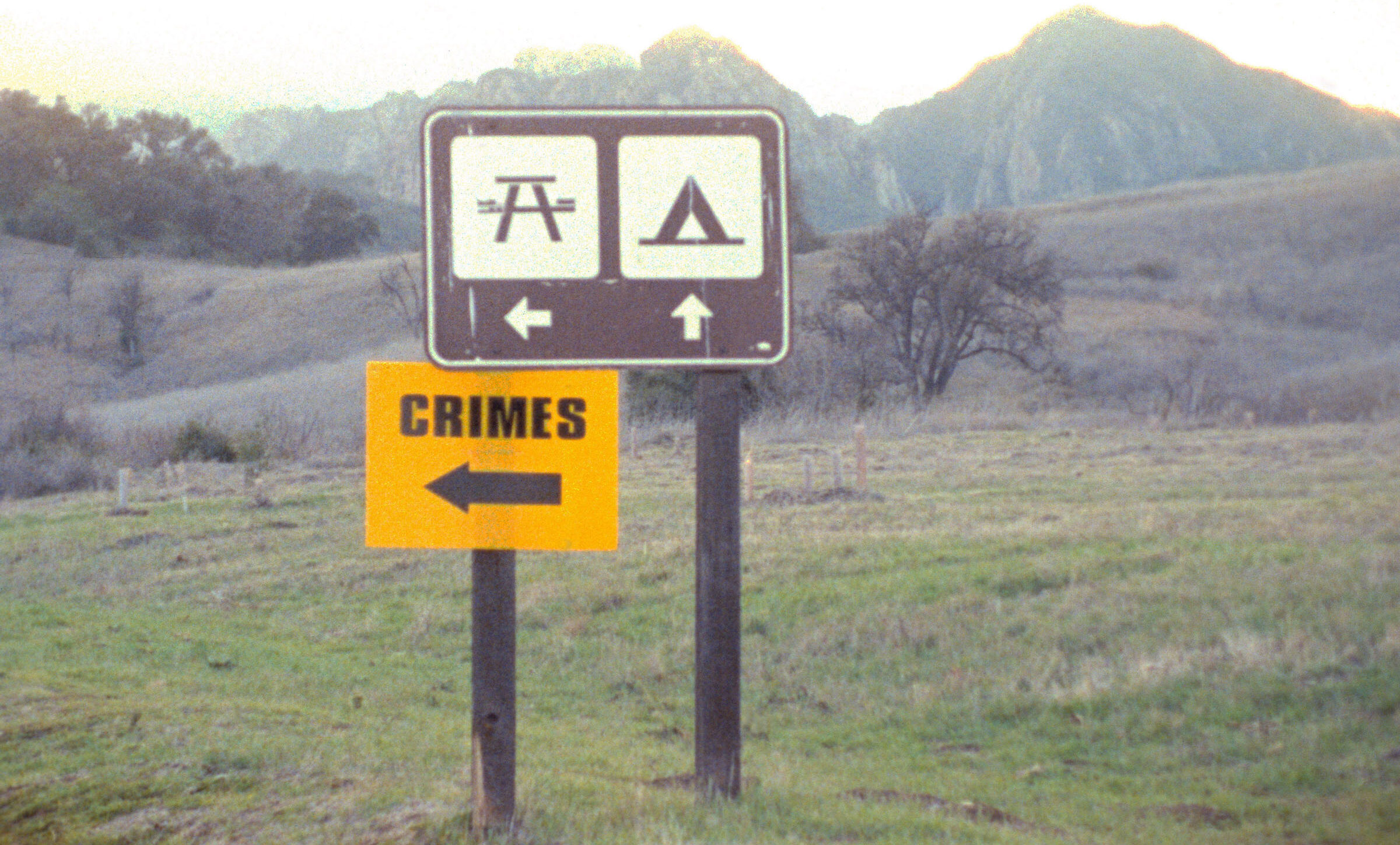
Los Angeles Plays Itself, Thom Andersen
‘Of the cities in the world, few are depicted in and mythologized more in film and TV than the city of Los Angeles. Carefully weaving together footage from films made in or about the city, Thom Andersen gradually builds his thesis about how Hollywood has represented, and misrepresented, its hometown’
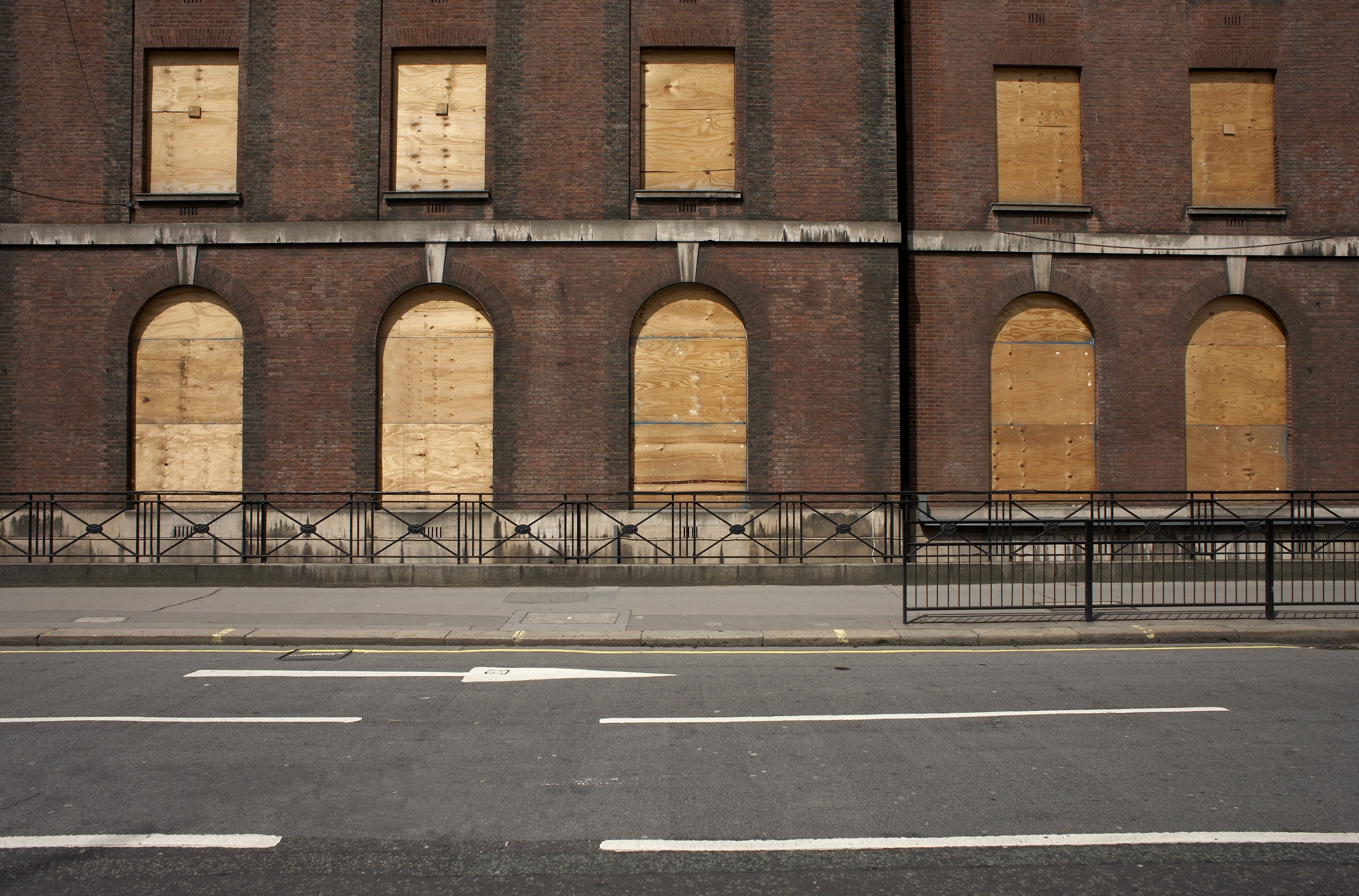
Facadism
‘Facadism is nothing new. Almost a century ago Herbert Baker cheerfully demolished John Soane’s Bank of England but rebuilt his own massive version behind retained sections of his predecessor’s impregnable walls. But the sacrificial offering of a single remnant of an older building, usually a street elevation and never more than skin deep, has suddenly reached epidemic proportions, turbo-powered in London at least by escalating land values.The agreement to retain a facade is, for the key players, a get out of jail card. It may come at the very end of a long wrangle but eventually the developers receive their planning permissions, prettily iced with listed building consents, the architects can relax and get on with the job (the demolition contractors and engineers having already done the trickiest bits) which leaves the marketing team and estate agents free to egg up the ‘heritage’ angle and clinch sales. Meanwhile the local activists have retired exhausted, or have moved on to ready themselves for the next battle of nerves. And – this is the trump card – all this means that the number of listed buildings saved from demolition appears to be continually rising’
Read:
Objects in This Mirror, Brian Dillon
Why I Do What I Do: Global Curators Speak: 4, (Sternberg Press / Thoughts on Curating)
Order and Collapse, The Lives of Archives, Art and Theory Stockholm
Essays: On the Museum’s ruins, Douglas Crimp
Metahistory: The Historical Imagination in Nineteenth- century Europe, Hayden White
Edgeless, Modeless, Paul Shepard
The Artist as Historian, Mark Godfrey
The Aesthetics of Decay, Nothingness, Nostalgia
and the Absence of Reason, Robert Ginsberg
Reading an Archive, Photography between labour and capital, Allan Sekula
Jorge Luis Borges and George Bernard Shaw, Leonard A. Cheever
Experiance and Poverty, Walter Benjamin
Heidegger on Melancholia, Deep boredom and the Inability-to-be, Kevin Aho
august
Reading:
Objects in This Mirror, Brian Dillon
Why I Do What I Do: Global Curators Speak: 4, (Sternberg Press / Thoughts on Curating)
Order and Collapse, The Lives of Archives, Art and Theory Stockholm


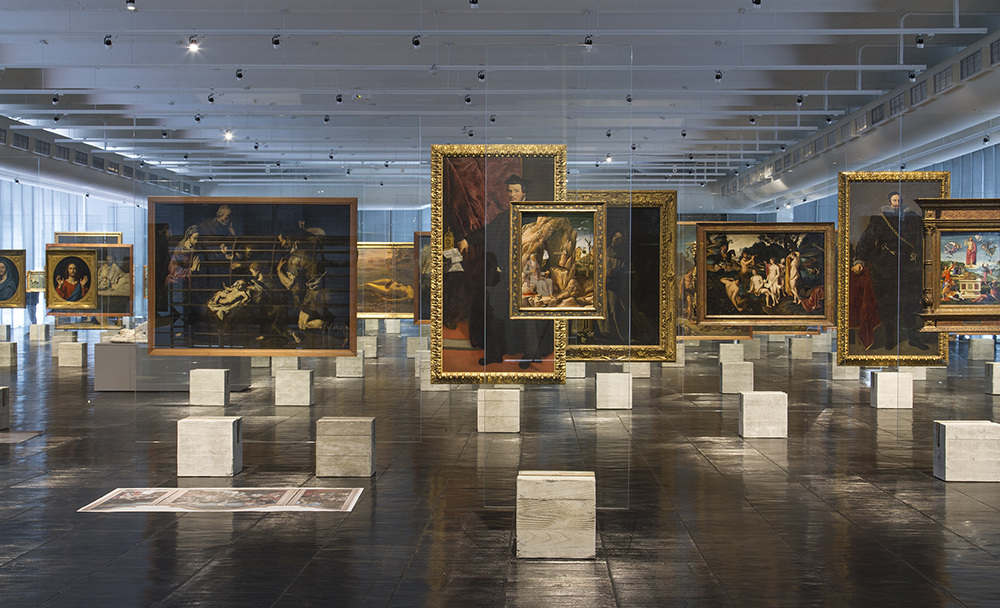
Lina Bo Bardi, exhibition deisgn
‘The São Paulo Museum of Art is recreating a 1968 exhibition design by Brazilian Modernist Lina Bo Bardi, commissioning updated versions of her glass and concrete easels to recreate an original exhibition design by the architect, for a new show of 117 artworks from 400 BC to the 2000s.São Paulo based Metro has recreated more than 100 of the easels – which featured a pane of glass supported by a concrete cube – by examining pieces that remained from the originals’ (2015)
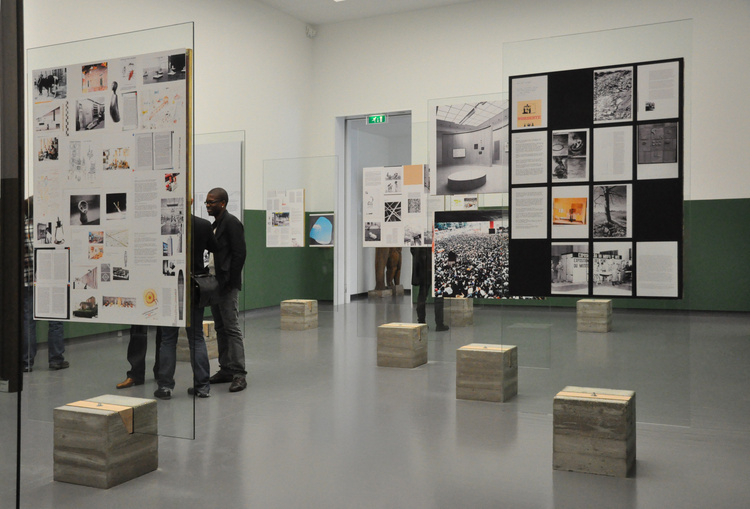
When Lina Bo Bardi presented the collection of MASP on glass she expressed the desire to free works of art from any established reading or judgement and gave space for new relations between them and the public.
Hic et ubique
Here and everywhere
Here and everywhere
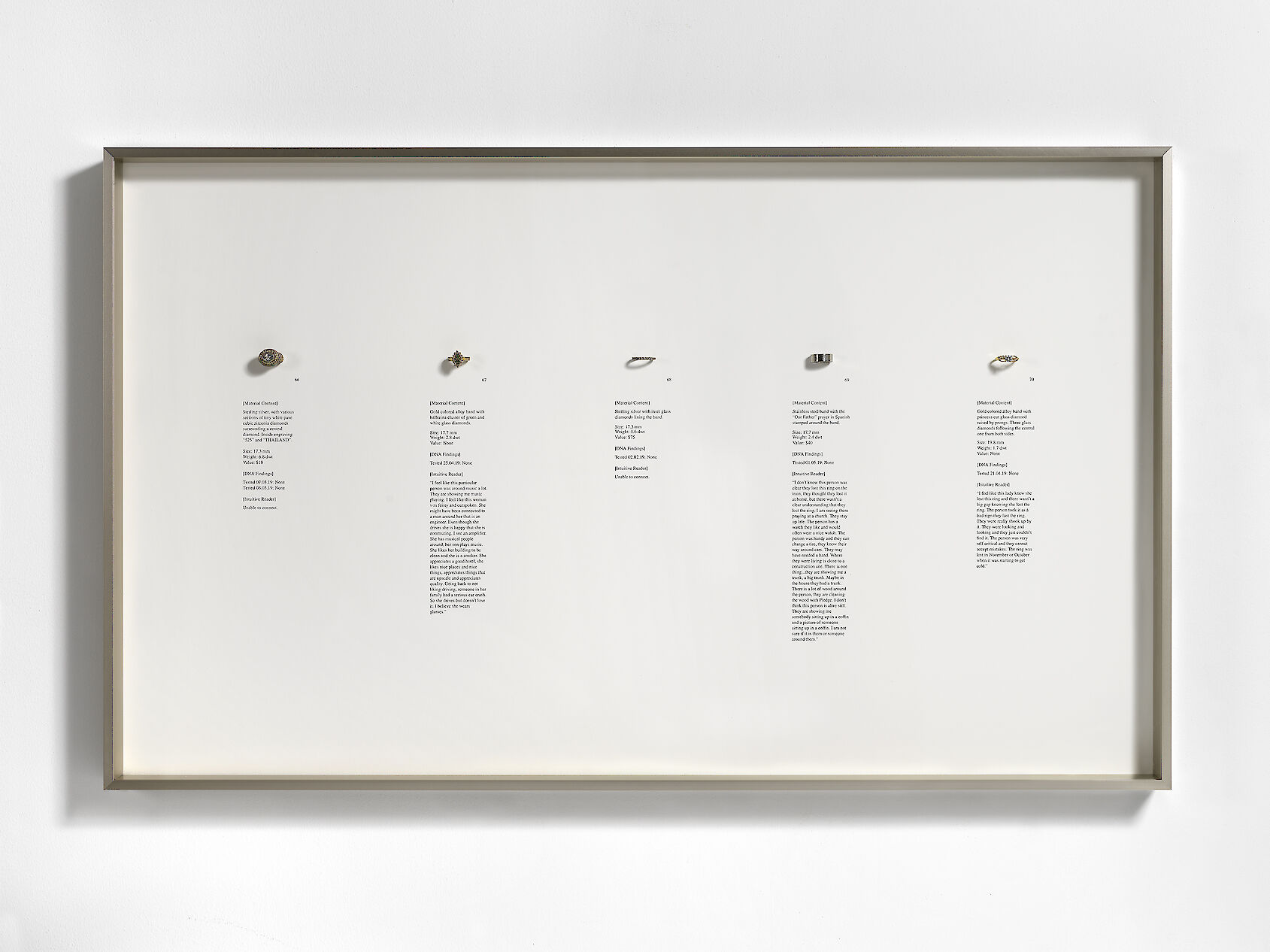
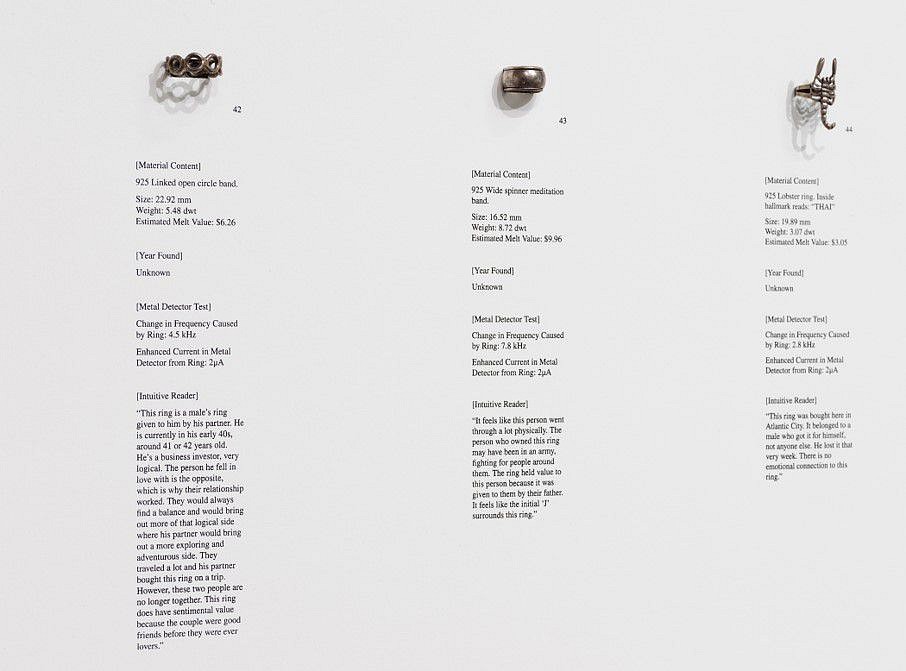
Rose Salane, 60 Detected Rings and Panorama 94
‘Salane acquired the rings in 60 Detected Rings from a metal detectorist who unearthed them over decades in Atlantic City’s sands. Again, the artist ferried the rings between a psychic and a lab, the latter of which was asked to conduct a second metal detection of the lot ... The rings were then mounted in a frame, each accompanied by excerpts of an investigation into their provenance’‘Panorama 94 examines a collection of 94 rings that were lost then found throughout the New York City Subway system in 2016. The Metropolitan Transportation Authority stored each ring for one year in the hope that they would be reclaimed by their respective owners. The rings were documented by colour and material before being archived with a detailed description and unique number for the MTA’s records. Salane acquired the lot and has since been working with a biology lab to extract potential traces of mitochondrial DNA left behind on each ring, an intuitive reader to search for any spiritual information imbued within these objects, and a pawnshop to appraise their material values. Presented with this assortment of collected insights, we are asked to consider parallel notions of value and truth as we recall the lineages of the individual in a public environment, the individual within the city, and the individual within a global population’
The River, restaurant by Dean Baldwin Lew
‘On a soft bend in the slow moving Burnley Creek running through Warkworth, Ontario a restaurant was opened for a single weekend in 2015. In the week prior, traps were set to capture an invasive species of freshwater crustaceans called “Rusty Crawfish”. As it is prohibited to “carry overland” a known invasive species (in that they might be introduced to a new uninfected watershed), the entire kitchen and dining area was set-up directly in the river’
![]()
![]()
Dion Kitson, Rue Brittania, Ikon Gallery, 10.05.2024–08.09.202
‘The visual environment of Kitson’s exhibition at Ikon draws on the artist’s experiences of growing up in Dudley, a market town which prides itself as the birthplace of the industrial revolution and, as such, is replete with ruination – a metaphor for the wider state of British towns. Visitors to Rue Britannia are invited into the architectural installation Council House of Kitson (2024), which recreates both the façade and interior of his father’s house, who’s living room was also
pebbledashed. In contrast with the large-scale pebbledash installation, Ode to Rubbish Mountain (2022) is a miniature recreation of the iconic landfill pile that was removed from Brierley Hill in the Black Country in 2016 after a 5-year local battle to have it taken away.
Visitors to the exhibition can play on a functional pool table, as Kitson brings the staple of the British pub into the gallery space. Elsewhere, he shows a series of prints created from scratched bus stop windows, a form of found drypoint etchings. Slung from a suspended telegraph wire are the unmistakable ruby slippers of Dorothy. The Wizard of Oz – a whimsical, trippy and yearning tale of searching for the way home – is a key reference point for Kitson’
![]()
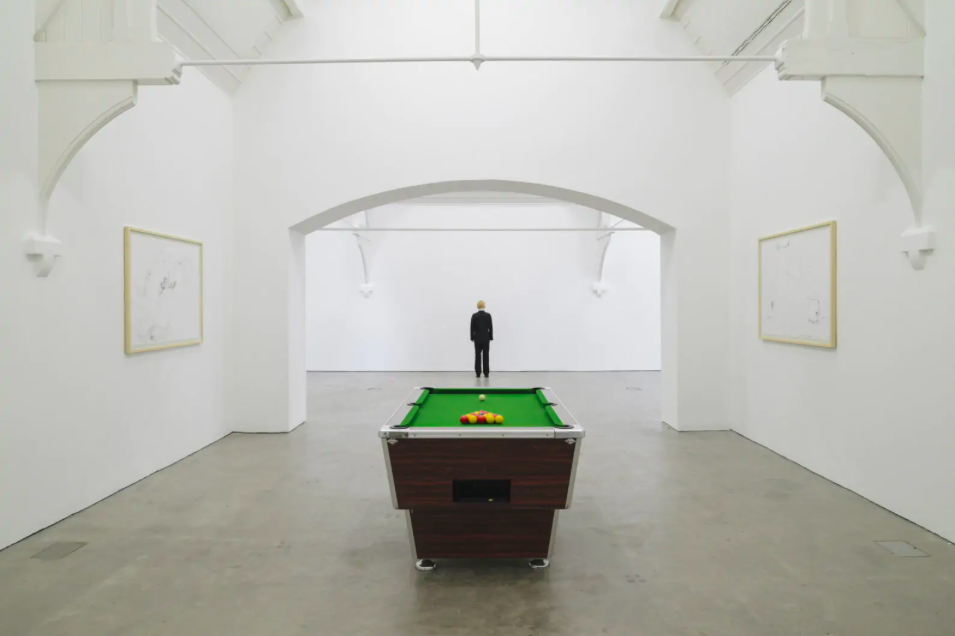
Dion Kitson, Rue Brittania, Ikon Gallery, 10.05.2024–08.09.202
and Silver Lining at J W Evans Silver Factory, 54-57 Albion Street, Birmingham
‘The visual environment of Kitson’s exhibition at Ikon draws on the artist’s experiences of growing up in Dudley, a market town which prides itself as the birthplace of the industrial revolution and, as such, is replete with ruination – a metaphor for the wider state of British towns. Visitors to Rue Britannia are invited into the architectural installation Council House of Kitson (2024), which recreates both the façade and interior of his father’s house, who’s living room was alsopebbledashed. In contrast with the large-scale pebbledash installation, Ode to Rubbish Mountain (2022) is a miniature recreation of the iconic landfill pile that was removed from Brierley Hill in the Black Country in 2016 after a 5-year local battle to have it taken away.
Visitors to the exhibition can play on a functional pool table, as Kitson brings the staple of the British pub into the gallery space. Elsewhere, he shows a series of prints created from scratched bus stop windows, a form of found drypoint etchings. Slung from a suspended telegraph wire are the unmistakable ruby slippers of Dorothy. The Wizard of Oz – a whimsical, trippy and yearning tale of searching for the way home – is a key reference point for Kitson’
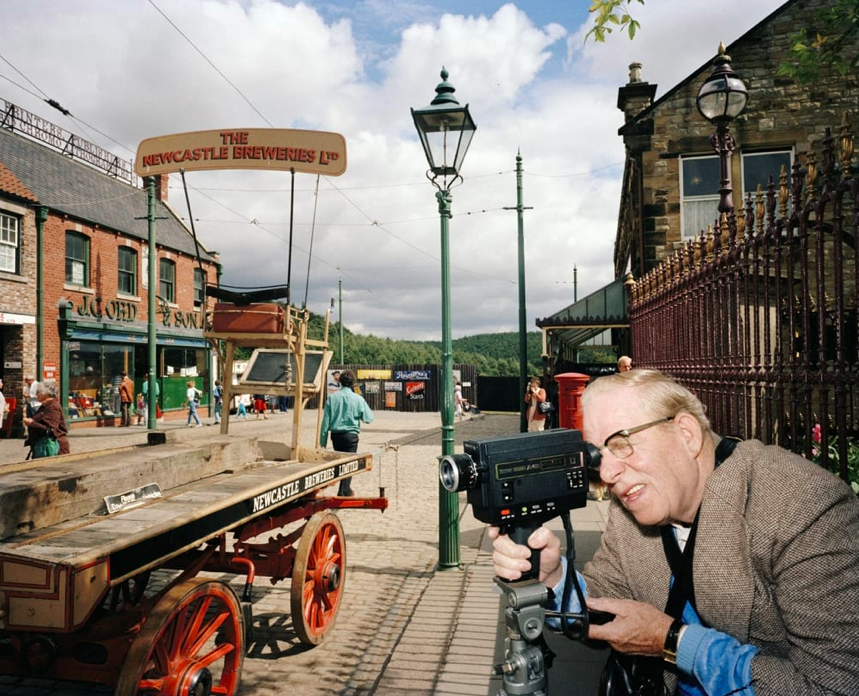
Paul Reas, Flogging a Dead Horse, Man with a Movie Camera, 1993
‘The decline of manufacturing industries in Britain throughout the 1980s forced the collective imagination of Britain to retreat into a time of more certainty. A time of empire, a time of full employment, a time of paternalistic benevolent mill owners and a time of the pastoral and picturesque. This desire for an illusion of stability was serviced by the heritage industry; with its themed industrial museums and country houses, heritage offered a novel (if spurious) sense of place and identity to a country which had lost its old ‘eternal truths’ of industry and empire, reassuring us that our lives are better in the new service economy than those of our parents in ‘the bad old days’ of the industrial past. But these heritage centres did not recover the past-they re-created it. The heritage process irons out differences, glosses over contradiction and unifies all the conflicting dynamics of the past into a single romantic and idealised version of it’
Derinkuyu
‘In 1963, a man knocked down a wall in his basement and discovered a mysterious underground city. The subterranean city is up to 18 stories and 280 feet deep in places and probably thousands of years old. The Derinkuyu Underground City is the largest of its kind: It could house 20,000 people’
july
Read:
Theatres of Memory, Raphael Samuel
Ruins: (Documents of Contemporary Art), Whitechapel Gallery
Art + Archive, Sara Callahan
Dust, Caroline Steedman
‘You know perfectly well that the infinite heaps of things they recorded, the notes and traces that these people left behind, constitute practically nothing at all. There is the great, brown, slow-moving strandless river of Everything, and then there is its tiny flotsam that has ended up in the record office you are at work in. Your craft is to conjure a social system from a nutmeg grater, and your competance in that was established long ago. Your anxiety is more precise and more prosaic. It’s about PT S2/1/1, which only arrived from the stacks that afternoon, which is enormous, and which you will never get through tomorrow’
Caroline Steedman, “Something She Called a Fever”

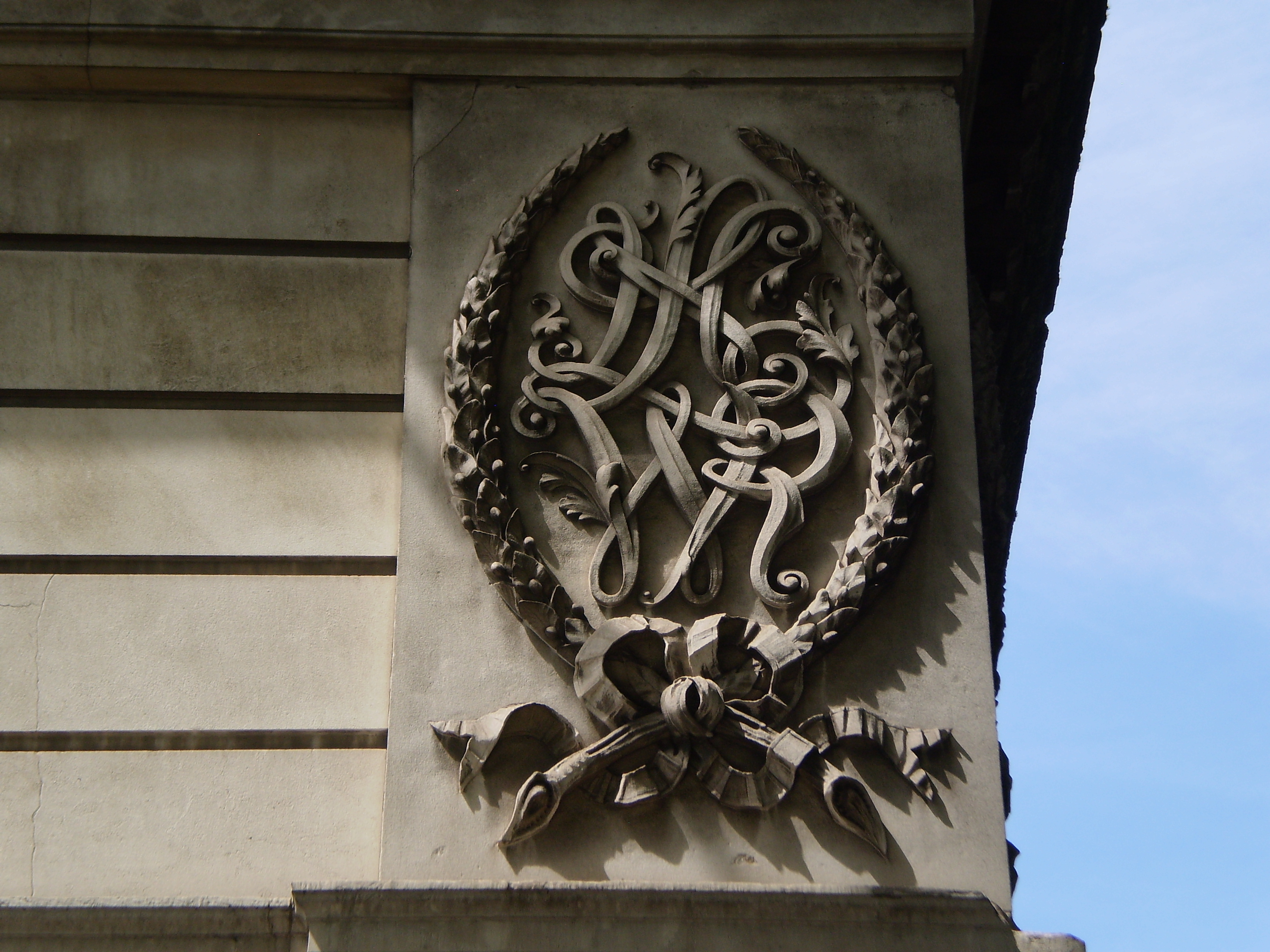
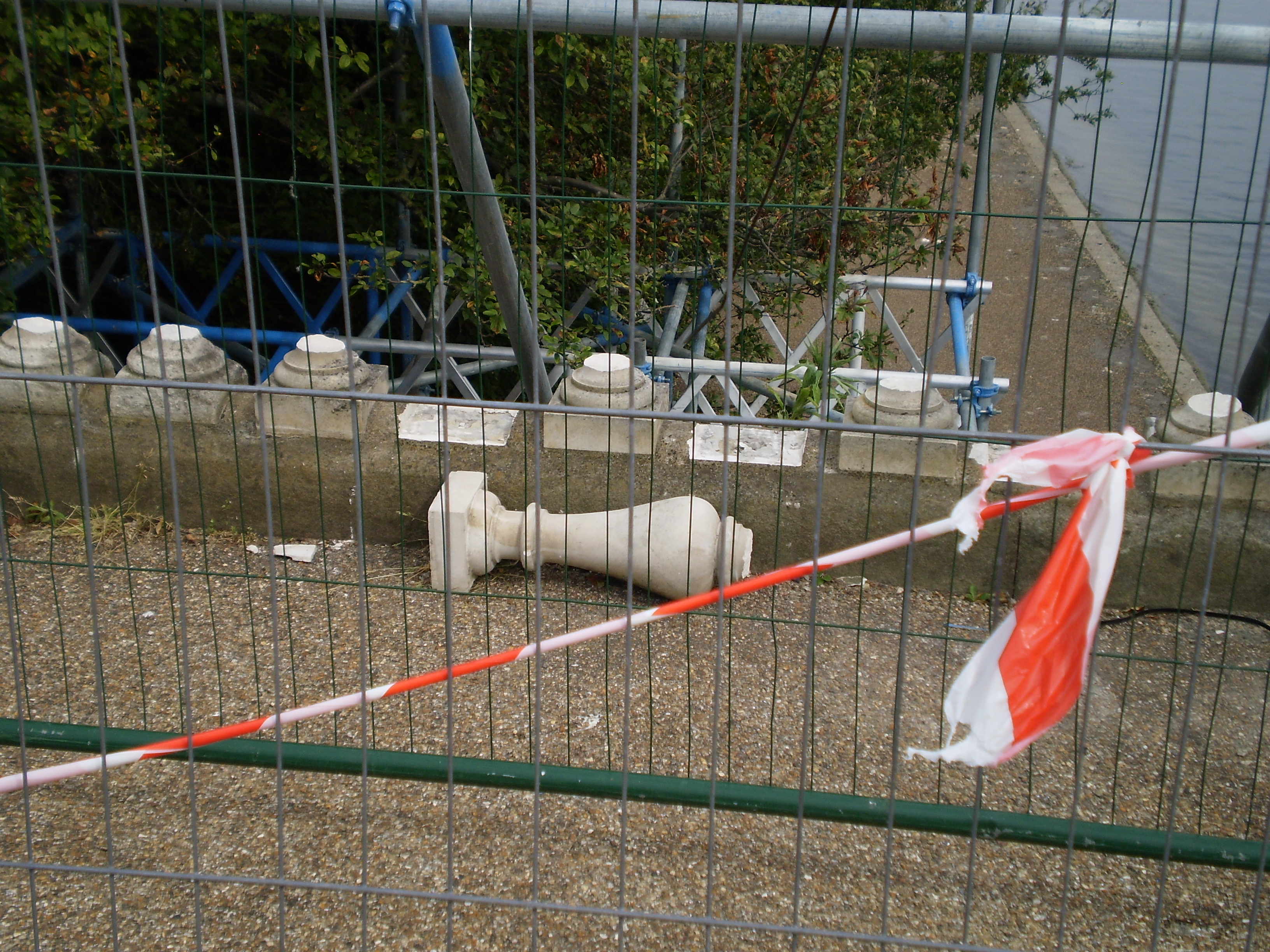
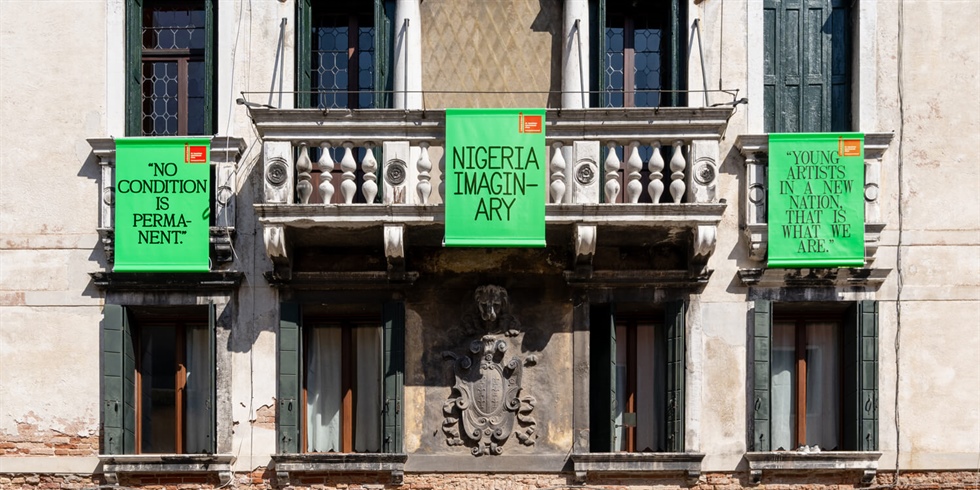
The Nigerian Pavilion at theVenice Biennale
2024, featuring exclusively commissioned, site-specific works, which have been installed throughout the historic Palazzo Canal in Venice’s Dorsoduro. Nigeria’s second participation, curated by Aindrea Emelife (Curator of Modern and Contemporary Art at MOWAA, the Museum of West African Art in Benin City, Nigeria). Showcasing works by Yinka Shonibare CBE RA, Tunji Adeniyi-Jones, Ndidi Dike, Onyeka Igwe, Toyin Ojih Odutola, Abraham Oghobase, Precious Okoyomon and Fatimah Tugga.
Nishikigi, Japanese play
‘Upon arriving at Kyo-u, Michinoku Province, a traveling Buddhist priest (waki) and his companions (waki-tsure) meet a man (shite of act one) holding a ‘nishikigi’ - a decorated bough, and a woman (tsure of act one) holding a ‘hosonuno’ - a narrow piece of cloth. The priest asks the man and woman about the two objects and they reply that the ‘nishikigi’ and the ‘hosonuno’ are the specialties that their region is best known for. Furthermore, the man recounts a tale based on a poem dedicated to the decorated bough and narrow cloth. There is a custom in the hamlet of Kyo-u that a man should place a ‘nishikigi’ in front of his beloved's house. If the woman takes the ‘nishikigi’ inside, then his love is requited.Once, there lived a man who, for three long years, would go every night and place a coloured bough in front of his beloved's home. The man lies now, buried together with his thousand boughs in a mound called the Brocade Mound, deep in this mountain. The man and woman lead the priest to the mound and disappear inside it.
A local man (ai) passes by and, responding to the priest's request, tells the story of the origin of the Brocade Mound. He finally recommends that the priest hold a memorial service. At night, as the priest is chanting sutras near the mound, the ghosts of a man and a woman (shite and tsure of act two) appear. They express their gratitude for the prayers.
Suddenly, the mound transforms into a lamplit house from times of old. As the woman is sitting inside weaving a ‘hosonuno’, the man comes to woo her by leaving yet another ‘nishikigi’ bough by the gate. The man recounts the story of his unrequited love. However, on the last night of the third year, his efforts finally came to fruition. Happy with the outcome, the man performs a dance of joy. Eventually, the priest wakes up from his dream, to hear only the autumn wind blowing over the ancient mound’
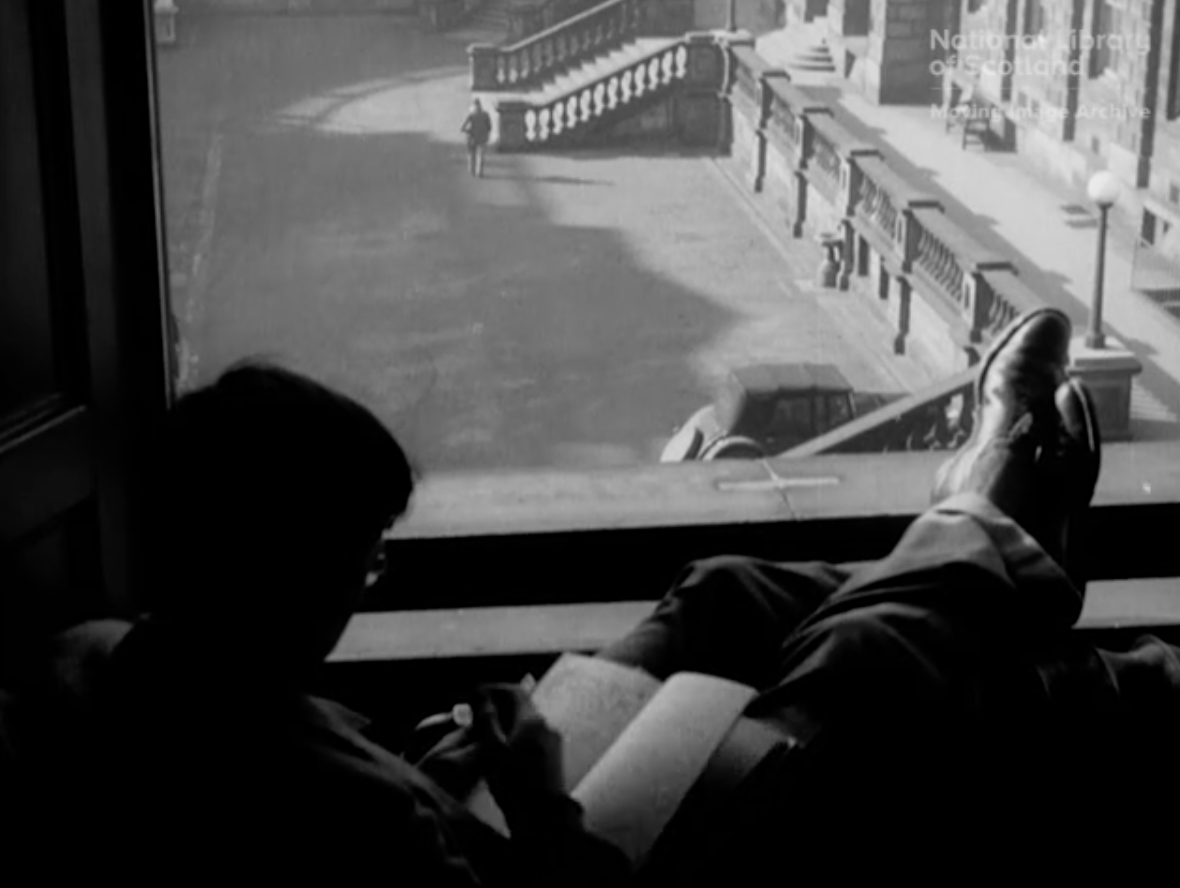
Scotland Committee, The Face of Scotland, 1938, film still


“But I have sometimes thought that a woman's nature is like a great house full of rooms: there is the hall, through which everyone passes in going in and out; the drawing-room, where one receives formal visits; the sitting-room, where the members of the family come and go as they list; but beyond that, far beyond, are other rooms, the handles of whose doors perhaps are never turned; no one knows the way to them, no one knows whither they lead; and in the innermost room, the holy of holies, the soul sits alone and waits for a footstep that never comes.”
Edith Wharton, The Fullness of Life, 1893
‘Stories we tell ourselves about ourselves’ Geertz
The right to be forgotten
The right to be forgotten (RTBF) is the right to have private information about a person be removed from Internet searches and other directories in some circumstances. The issue has arisen from desires of individuals to "determine the development of their life in an autonomous way, without being perpetually or periodically stigmatized as a consequence of a specific action performed in the past". The right entitles a person to have data about them deleted so that it can no longer be discovered by third parties, particularly through search engines.
Humourism
16th-century German illustration of the four humors: Flegmat (phlegm), Sanguin(blood), Coleric (yellow bile) and Melanc (black bile), divided between the male and female sexes
Margaret Cavendish
Duchess of Newcastle, 1623-1673. ‘Cavendish is famous today for her plays, letters, orations, poetry and fiction, and was a very popular writer in her time. She was prolific, publishing more than a dozen original works during her life, under her own name, with her portrait proudly engraved on the frontispieces of her works. Cavendish was also a natural philosopher in her own right, determined to learn about the latest scientific developments and to engage in philosophical debate despite her lack of any formal education. Thanks to her high social status, and her husband’s active and supportive interest in philosophy, she was able to personally know the best minds of her time, including René Descartes, Thomas Hobbes, Henry More, Walter Charleton, and Joseph Glanvill’

Cesare Ripa
Fig. 238. Pazzia : Folly
Iconologia, or, Moral emblems, 1709
‘Person at Mans Estate, in a long, black Garment; laughing ; riding upon a Hobby-horse; holding, in one Hand, a Whirligig of Past-board; and plays the Fool with Children, who make him twirl it by the Wind. Folly is only acting contrary to due decorum, and the common Custom of Men, delighting in childish Toys, and Things of little Moment’

Showing the way
Anton Ginter, Consideratio emblems, 1711
firmitas, utilitas, venustas
Writing near the end of the first century B.C.E., Roman architect Vitruvius Pollio identified three elements necessary for a well-designed building: firmitas, utilitas, and venustas. Firmness or physical strength secured the building's structural integrity. Utility provided an efficient arrangement of spaces and mechanical systems to meet the functional needs of its occupants. And venustas, the aesthetic quality associated with the goddess Venus, imparted style, proportion, and visual beauty.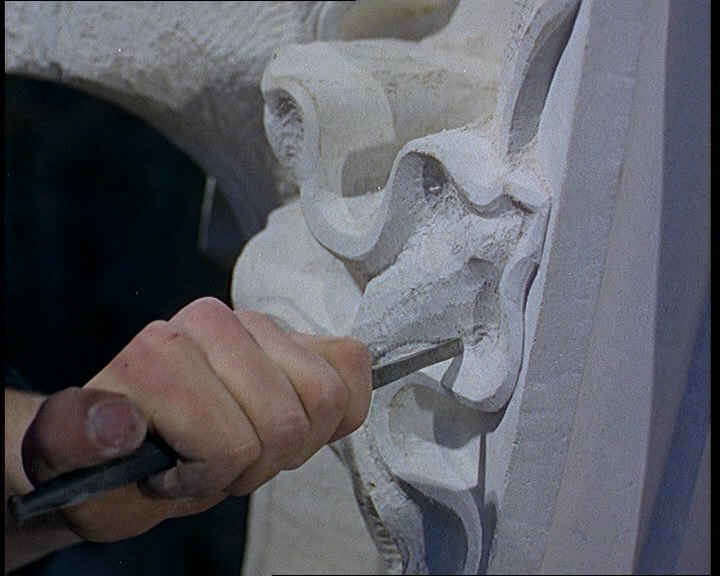
Thick Description
‘In the social sciences and related fields, a thick description is a description of human social action that describes not just physical behaviors, but their context as interpreted by the actors as well, so that it can be better understood by an outsider. A thick description typically adds a record of subjective explanations and meanings provided by the people engaged in the behaviors, making the collected data of greater value for studies by other social scientists.The term was first introduced by 20th-century philosopher Gilbert Ryle. However, the predominant sense in which it is used today was developed by anthropologist Clifford Geertz in his book The Interpretation of Cultures (1973) to characterise his own method of doing ethnography’
Arte Povera
artists note the year of conception in their works’ titles, eg Michelangelo Pistoletto, Donna che indica (Woman who points), conceived 1962, fabricated 1982
📎
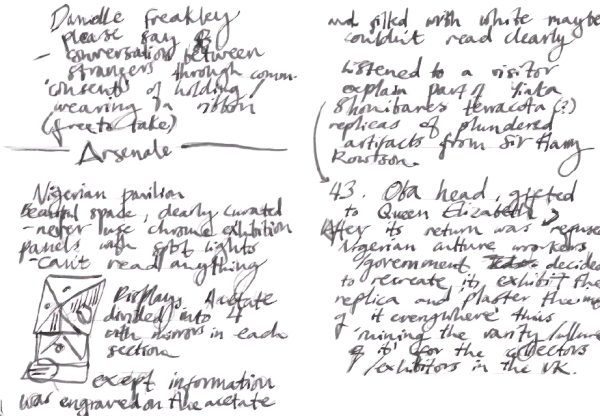


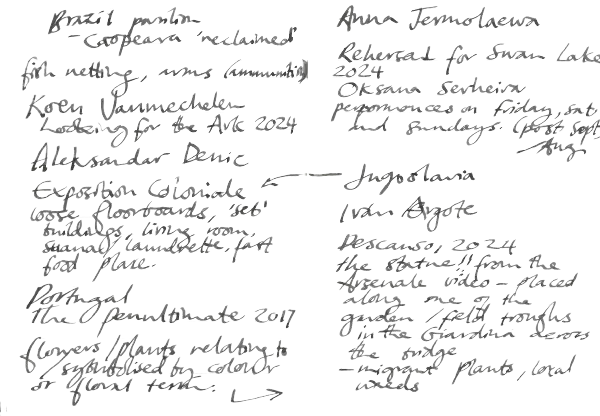


Venice Biennale 2024 notes
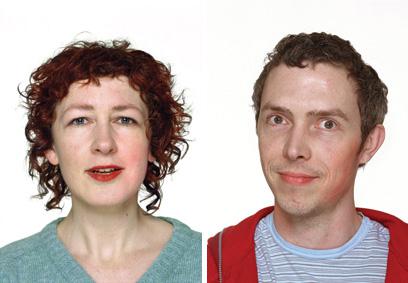
You’ll never work in this town again, Phil Collins
‘’Berlin-based, British-born contemporary artist Phil Collins—no relation—strives to hit the same note between righteous criticality and swagger in his project you’ll never work in this town again (2004-ongoing). The work, in which Collins slaps willing protagonists of the art world across the face and then photographs them against a blank white background, keeps with his subtly evocative brand of socially engaged practice ... You’ll never work in this town again ostensibly offers catharsis to the participants. These subjects, however, are not the postcolonial oppressed, but rather the curators, critics, and writers (and, occasionally, dealers and collectors) who form the cadres of contemporary art production’
Dearest Fiona, Fiona Tan
‘Offscreen we hear a man’s gentle voice talking. It is the late 1980s, the young art student Tan has just moved to Amsterdam. Approximately once a fortnight, her father in Australia writes to her. In parallel Tan combines her father’s letters with documentary film images from the silent era in an evocative soundscape. In a voice-over spoken by actor Ian Henderson, we get to know him, his life, his relationship with his daughter, and increasingly, the times he lives in. Effortlessly he switches from the minutiae of domestic life or local politics to momentous historical events of the time: the Tiananmen Square massacre, the end the communism in Eastern Europe, Mandela’s election in South Africa. Events which, to this day, cast long shadows.As the film unfolds we see rare and little known images of daily life in The Netherlands from 100 years ago, selected from the archives of the Netherlands Eye Filmmuseum. Unforgettable scenes – often tinted, sometimes even painstakingly coloured by hand – which offer entry into a world both familiar and unknown. The juxtaposition between word and image is striking. Embracing both small and large – the personal and the universal – it is as if the letter-writer discovers these images together with us, the viewer. Windmills, clogs, fishing boats, cows and tulips, they are all there. But mainly we see people at work. The resulting film is a hypnotic montage – an unexpectedly emotional voyage through time and place, questioning the current status quo while hovering somewhere between dream and reality’
Studies of the History of the Renaissance,Walter Pater
‘In the last paragraph of Walter Pater's Studies of the History of the Renaissance, Pater makes an existential analysis of how the way in which we view things matter to people individually, based on each of our personal experiences in life. Although this sounds obvious in the surface, Pater goes more in-depth: he argues that there is a difference between what we perceive things to be, and what things really are. That everything, from objects, to sounds, to emotions, are uniquely particular to the value that we choose to bestow upon them.If we are not careful, we risk the chance of allotting value and importance to things that do not deserve it. As a result, we may end up being trapped in personal and psychological limitations that we impose upon ourselves merely because of the value that we choose to give things. This message is obvious when he concludes:
To such a tremulous wisp constantly re-forming itself on the stream, to a single sharp impression, with a sense in it, a relic more or less fleeting, of such moments gone by, what is real in our life fines itself down. It is with this movement, with the passage and dissolution of impressions, images, sensations, that analysis leaves off—that continual vanishing away, that strange, perpetual weaving and unweaving of ourselves’
The Doll, Ernst Lubitsch
A Dirge Without Music, Edna St Vincent Millay
...Lovers and thinkers, into the earth with you.Be one with the dull, the indiscriminate dust.
A fragment of what you felt, of what you knew,
A formula, a phrase remains,—but the best is lost...

Conscience pile
‘In the archives of a small museum in the middle of nowhere, there are piles and piles of letters from remorseful senders dating as far back as 1938. These letters were accompanied in the mail by returned pieces of petrified wood, stolen from Arizona’s Petrified Forest National Park. Believing they are cursed and condemned by the karma of ancient hot rocks they stole on vacation one time, the writers report strange happenings, stories of sudden misfortune and express their urgent desire to be free of their ill gotten souvenirs’ Ryan Thompson, 2011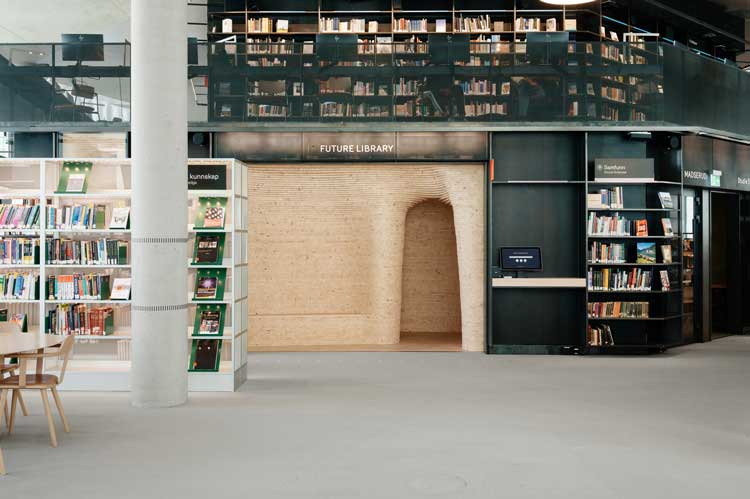
Katie Paterson, Future Library, 2014-2114
‘A forest has been planted in Norway, which will supply paper for a special anthology of books to be printed in 100 years time. Between now and then, one writer every year will contribute a text, with the writings held in trust, unread and unpublished, until the year 2114. The manuscripts will be held in a specially designed room in the new public library, Oslo. Writers to date include Margaret Atwood (2014), David Mitchell (2015), Sjón (2016), Elif Shafak (2017), Han Kang (2018), Karl Ove Knausgård (2019), Ocean Vuong (2020) and Tsitsi Dangarembga (2021). Judith Schalansky is 2022’s author’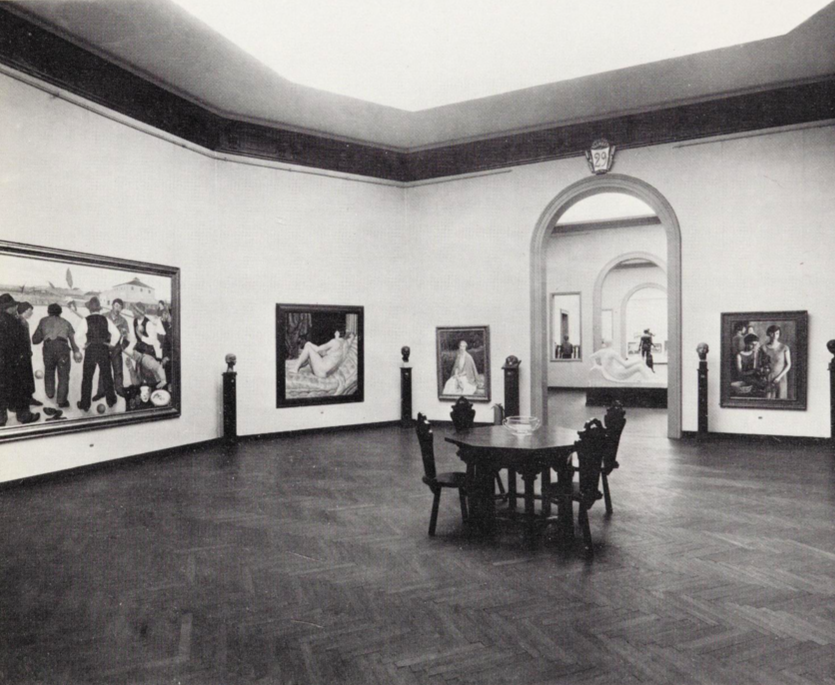
The Venice Biennale, 1895-1968; from Salon to Goldfish Bowl, Lawrence Alloway
‘The pavilions in the Giardini, where the exhibition is housed, are erected by each country and the styles are a vivid array of national self-images. As the pavilions are occasional architecture, they are more demonstrative than buildings pur up for continuous use; they are frivolous, but sensitive to the cultures from which they originate. At a large exhibition, the total effect, the sam of the physical plant and its content of individual works, has a meaning. To look only for the pure art content within the circus of material display at large-scale shows confuses this meaning. Such an approach leads to a constant antagonism between the containing system and the exhibirs contained. The exhibition itself, as we shall argue later, has a structure, and hence a message, as much as the art that it shows. Here we can approach the architecture as a model of nonverbal com-municacion, somewhar like an exhibition. The pavilions, buil and rebuile at various times, can be divided into categories of folkloric, classicizing, and international’ p17Gallery in the Central Pavilion 1928

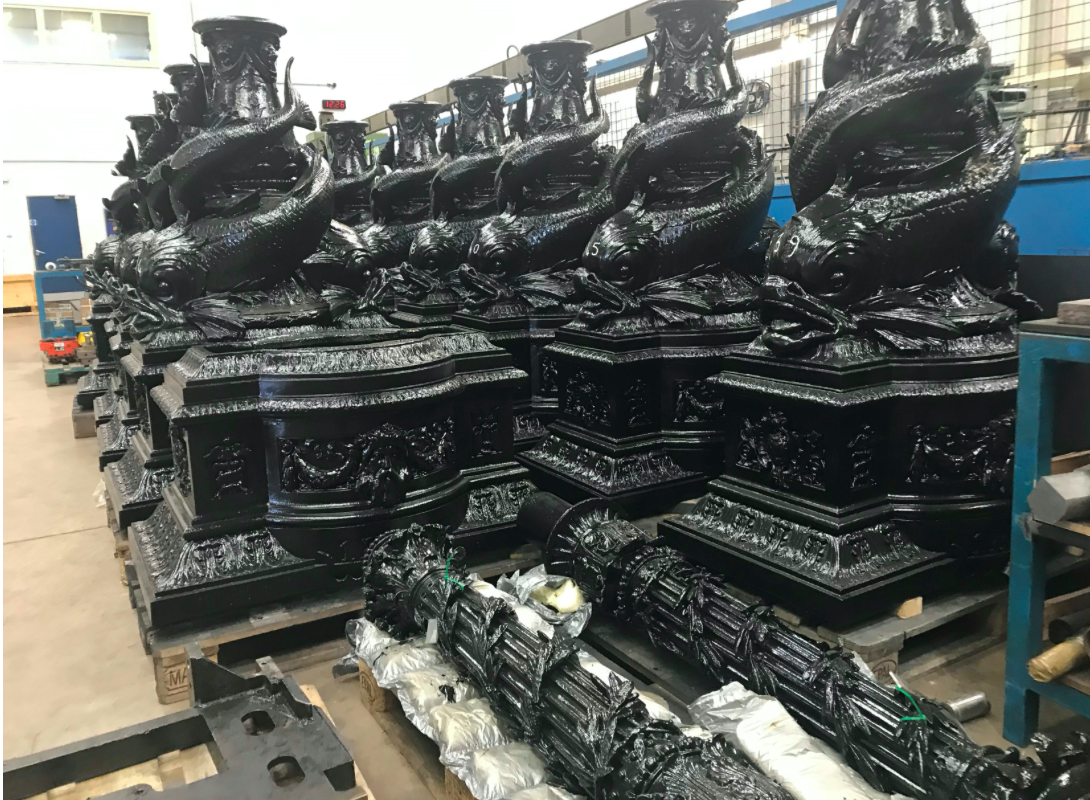
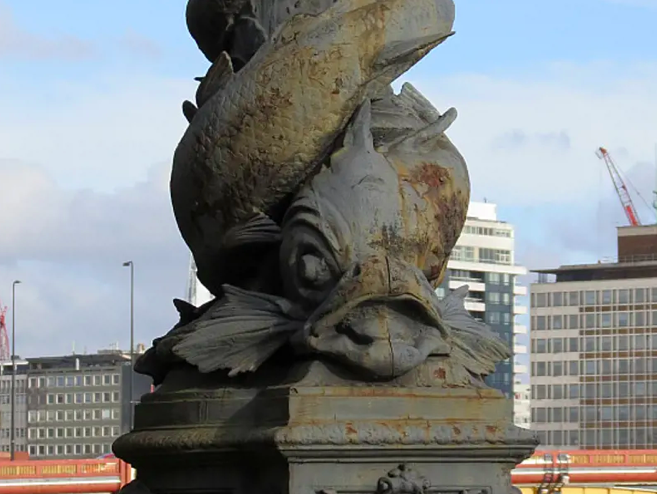
Thames Embankment Dolphin / Sturgeon lamps
‘The building of Victoria, Albert and Chelsea Embankments would give Londoners new places to stroll down by the river and, in order for them to stroll safely, lighting was needed.The installation of the original 49 ornate cast iron ‘sturgeon’ lamp columns mounted on top of the Victoria embankment wall thus created the ‘Dolphin Zone’ occurring in 1870s.
The cast-iron lamps feature two dolphins (or sturgeons) with their bodies wrapped around the lamp column and were apparently inspired by the dolphin sculptures on the Fontana del Nettuno in Rome’s Piazza del Popolo.
Then, in 1977, City authorities had replicas placed on the North and South banks of the river to commemorate the Queen’s Silver Jubilee, with ‘EIIR’ inscribed to honour Queen Elizabeth II’
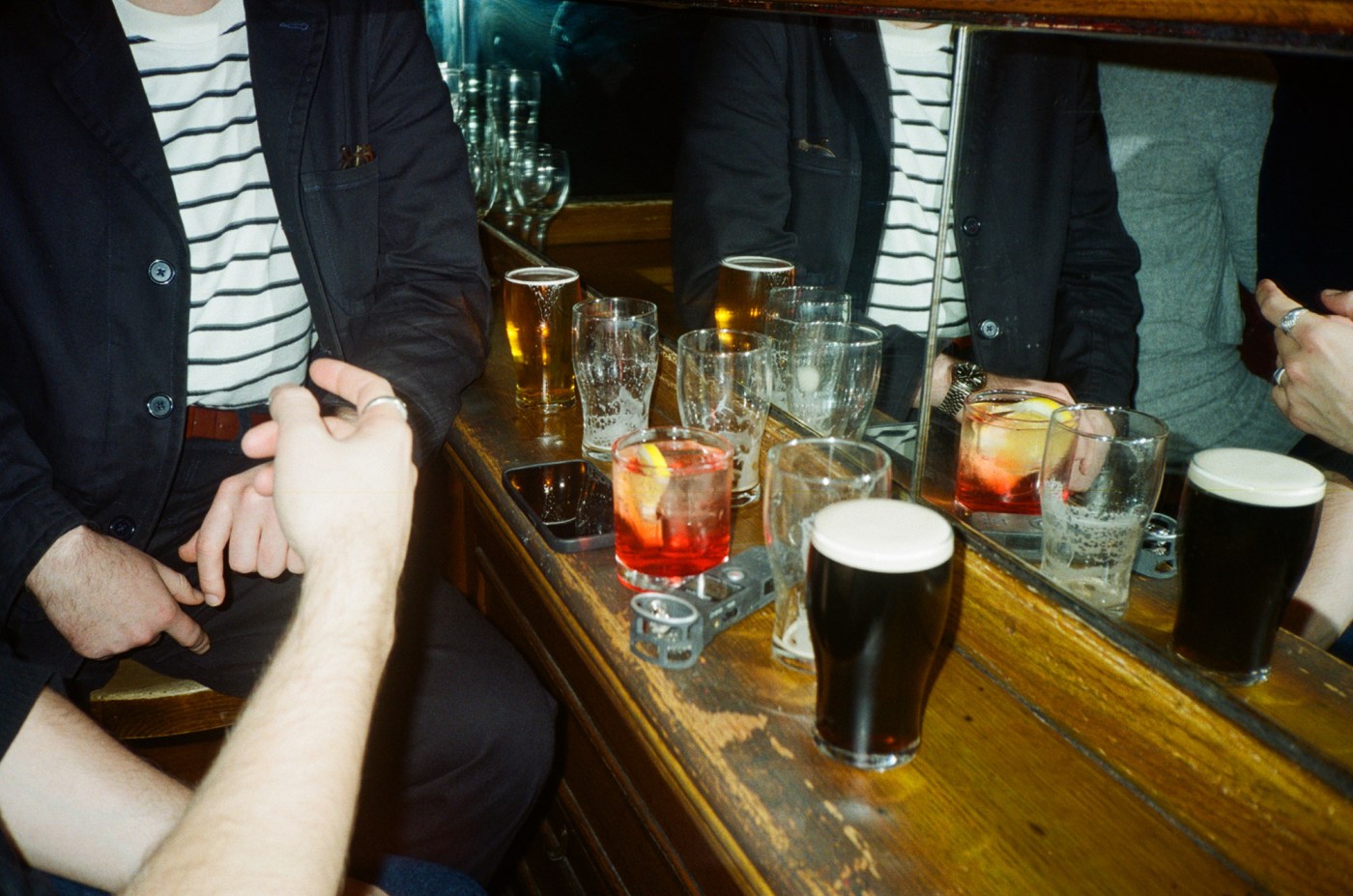
George Richardson and Leon Scott-Engel walk into a bar, Plaster Magazine interview
‘Richardson says the material for his degree show was scavenged from a skip that his grandad (“the least sentimental man around”) had filled. I ask him, is he sentimental? “I’m still working out what I believe about lots of things.” Scott-Engel, by comparison, is. “I grew up surrounded by art, my parents are creative. They’re very sentimental people … You hold a sentimental place for your art, especially certain works, and then when you let them out into the world you give up control over the idea and you let other people experience it.”I go to the bar for a Guinness, a Meteor and a Campari soda for Scott-Engel. I leave them with another question: can sentimentality spill over into resentment? When you’re too close to your art, can you come to hate it?’
Quod non est in actis non est in mundo
What is not kept in the records, does not exist
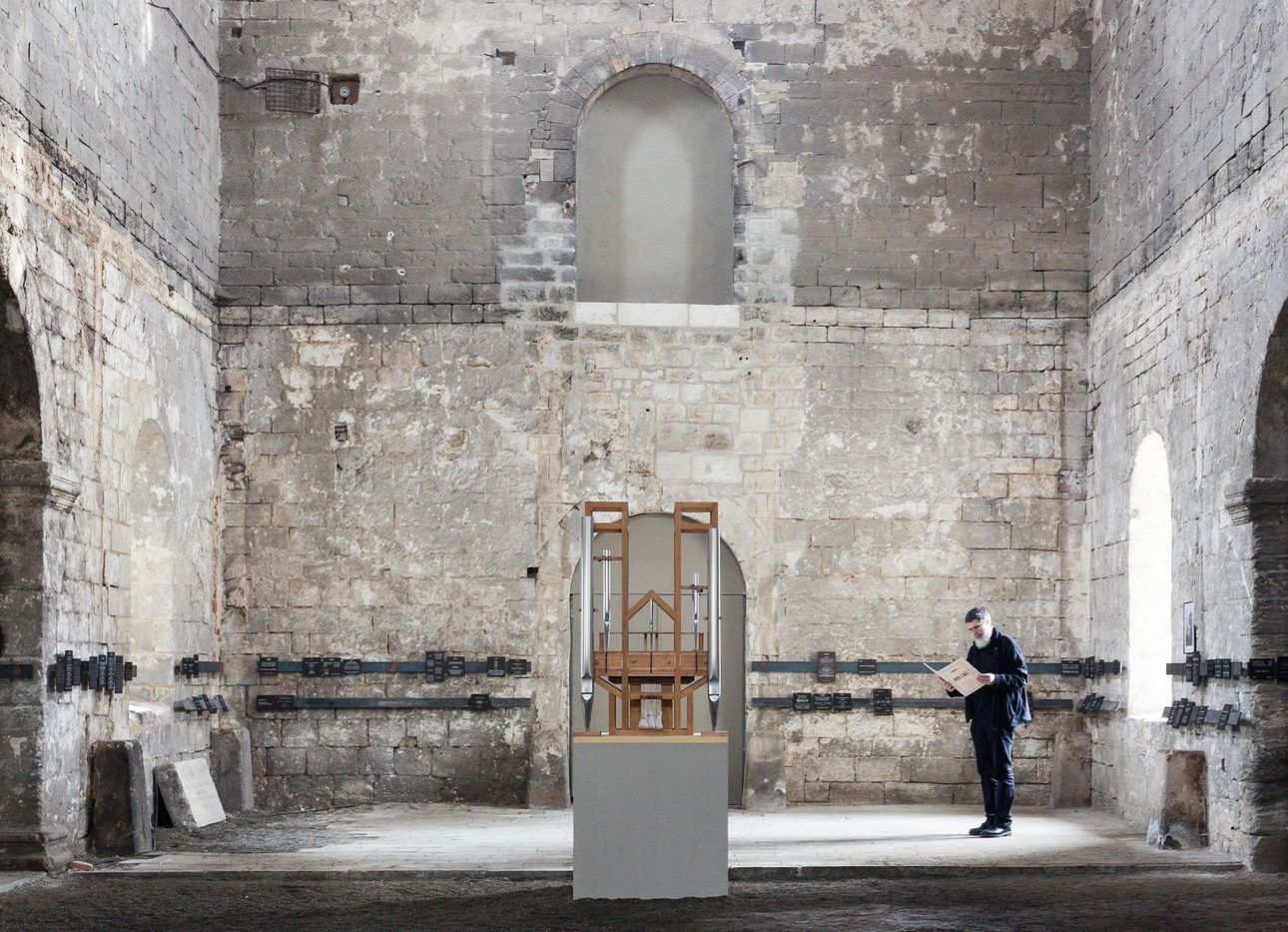
John Cage, “ORGAN²/ASLSP.”
‘On first glance, the German town of Halberstadt may seem like any other. Winding rows of timbered houses line cobbled streets, broken up by the occasional remnant of gothic architecture. Within the quaint trappings of this berg, though, rests one of the most ambitious and odd musical experiments to see life: a six-century-long performance of legendary composer John Cage’s piece “ORGAN²/ASLSP.”’
Red rot
Red powdering’, ‘red decay’ and ‘red rot’ continue to be described in the literature of book conservation. 'Red rot' is as well known among historians as it is among archivists. A crumbling of leather in the form of an orangey-red powdering, it is said to be found particularly in East India leather, prepared with tannin of bark, wood or fruits.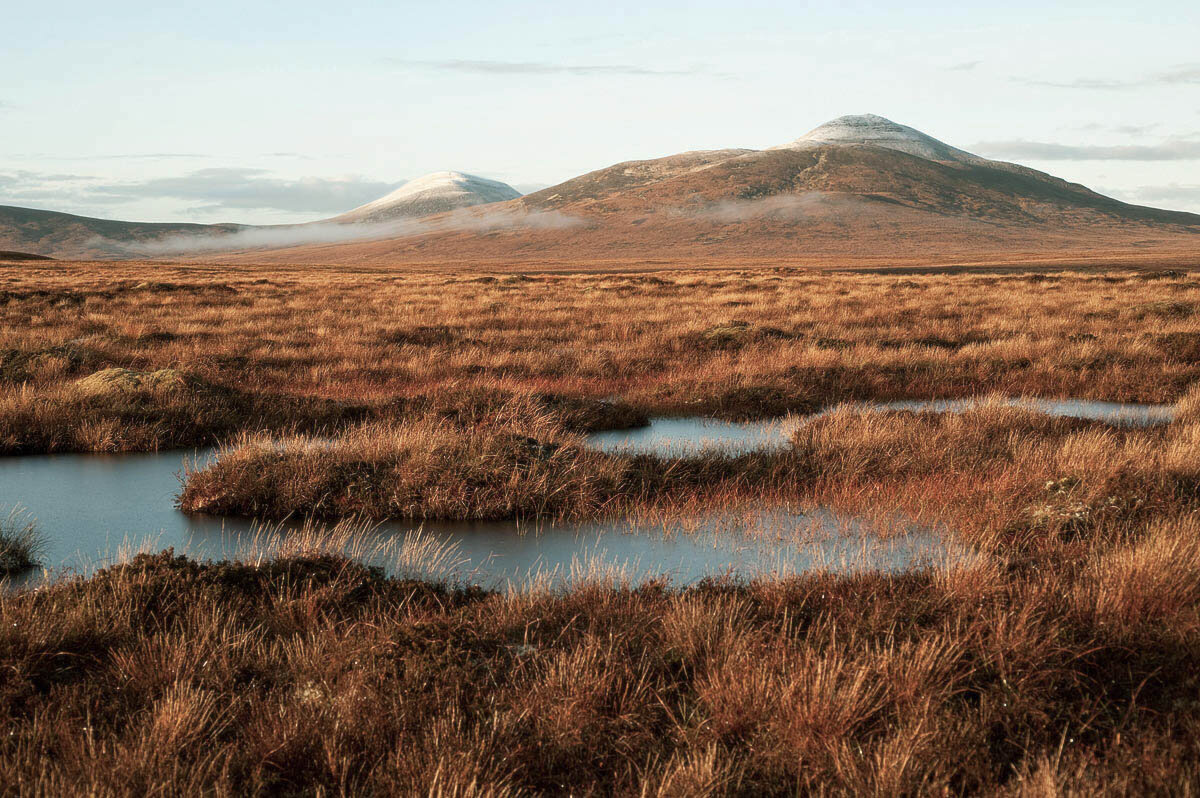
The Flow Country
of Caithness and Sutherlandin the far north of Scotland covers almost 2,000 sq km (469,500 acres) of one of the most intact and extensive blanket bog systems in the world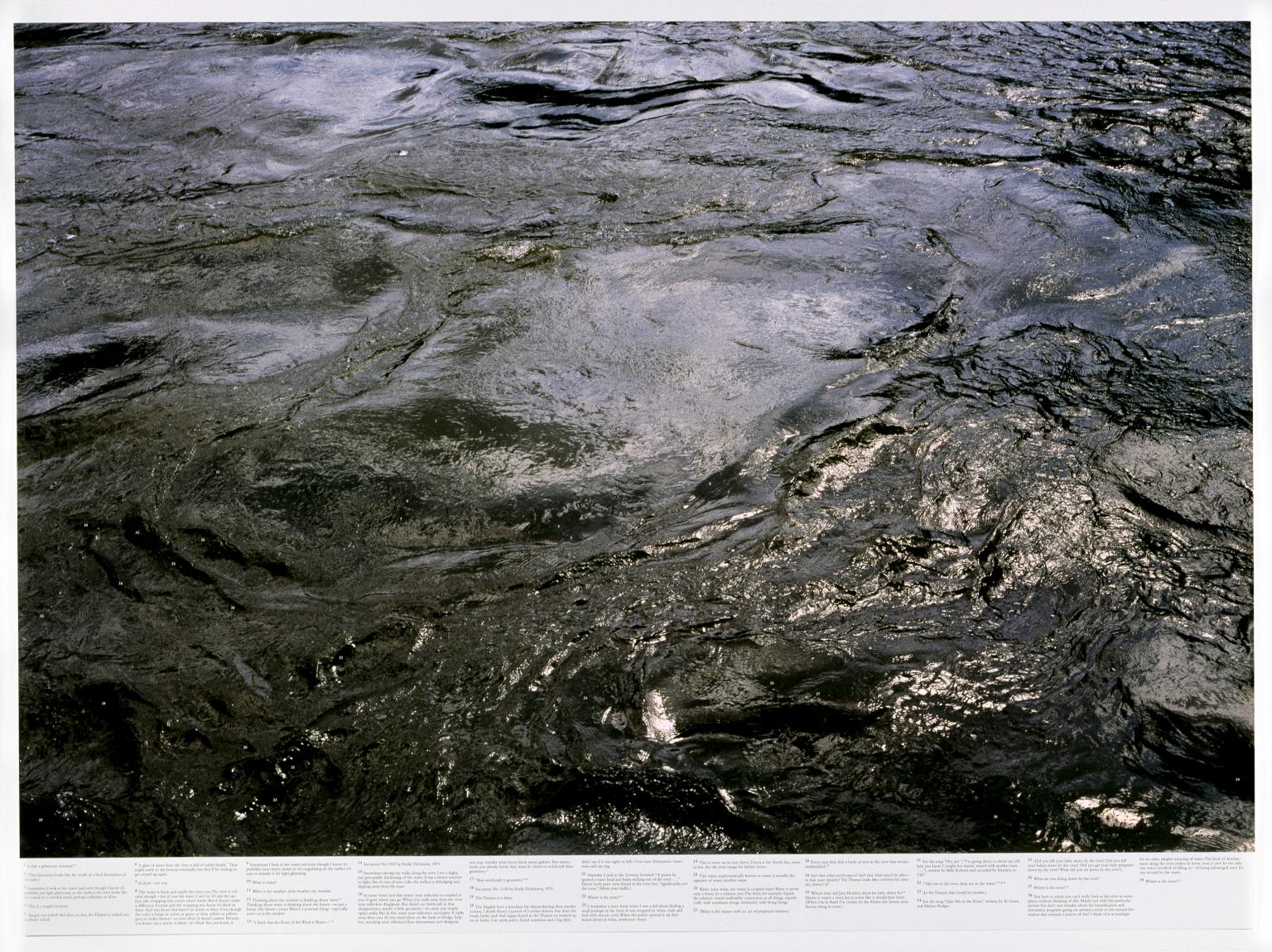
Roni Horn, Still Water (The River Thames, for Example), 1999

june
Read:
Always Open, Always Closed, Caitlin Merrett-King
People Person, Sam Cottingham
River, Esther Kinksy
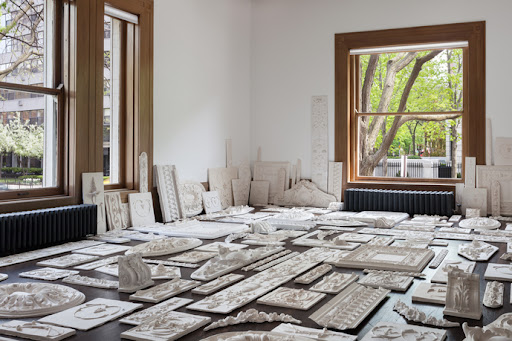
Michael Rakowitz, The Flesh Is Yours, The Bones Are Ours, Graham Foundation, Chicago 2016
‘Rakowitz’s installation deploys fin de siècle Istanbul’s architectural remains as a counternarrative to the city’s rich multiethnic historical development, at the same time excavating psychic and material traces of the Armenian craftspeople responsible for much of the city’s art nouveau façades.The exhibition’s title “The Flesh Is Yours, The Bones Are Ours” refers to a customary Turkish saying used when an apprentice was given over to a master—meant to convey that the teacher was granted influence over their pupil’ Context collapseis a phrase used in digital culture to describe how the boundaries of different communication contexts collapse on social media, as personal, professional, and family spheres coalesce on these virtual platforms. danah boyd coined the phrase to describe how “technology complicates our metaphors of space and place, including the belief that audiences are separate from each other” (Marwick and Boyd 2)
Civil inattention defines how individuals show others that they are conscious of others’ presence without offending people by avoiding showing pervasive attention to them.In his studies, Goffman found that polite inattention often begins with a modest social engagement, such as extremely short eye contact, head nodding, or flimsy smiles. Following that, both parties usually turn away from one another.’
Glasgow School of Art BA Degree Show
...Helen
- conversation in Tramway, deciphering the join-the-dots exhibition guide of over 40 worksHelen welsh gold, harp, mother’s engagement ring london staying with a friend...
Monumental Cemetery of Staglieno
‘The Cimitero monumentale di Staglieno is an extensive monumental cemeterylocated on a hillside in the district of Staglieno of Genoa, Italy, famous for its monumental sculpture. Covering an area of more than a square kilometre, it is one of the largest cemeteries in Europe’‘For all its through traffic, constant din of vehicles, people in transit, none of whom intended to stop, and despite the constant trickle of decaying masonry, the place had come to a complete standstill; it was like one big theatre backdrop, a prop left by the side of a road which could be blown away in the next storm, or carried away in a flood’
River, Esther Kinksy
may
Read:
Prairie, Dresses, Art, Other, Danielle Dutton,The Fall of Public Man, Richard Sennett

The ‘hunger stone’, one of the oldest hyrdological monuments in central Europe in Decín
‘It's the hottest week in the world. In Sweden a forest fire has crossed the Arctic Circle. In Oman the overnight low is 120 degrees. Near a small German town famous for its asparagus, long-deserted bombs are exploding beneath the trees. And just downstream in Czechia a hunger stone has emerged in the Elbe, the water having hit a record low. ‘If you see me, weep', it reads, the words etched desperately four centuries before. A second message emerges upriver: We cried - We cry - And you will cry? But the dead are as loud as toasters. The fish flap in the mud. Meanwhile, farther north, seen only from the sky, ghostly landscapes rise up via drought: the blueprint of an eighteenth-century mansion on a lawn, a World War II airfield beneath a Hampshire farm, an elaborate Victorian garden long ago cut down’
‘La Pelle’ offers little to no theme or chronology, and Tuymans by nature isn’t an easy read. It’s like peeping into someone else’s bank of fragmented memories, frantically searching for something solid to grasp. The visions are peripheral, jumbled and intangible. ‘He does not intend to take the visitor by the hand, he is asking them to make an effort to come closer; a reflection and a physicality instead,’ explains curator Caroline Bourgeois’
![]()
Danielle Dutton, Prairie, Dresses, Art Other
Nocturne‘It's the hottest week in the world. In Sweden a forest fire has crossed the Arctic Circle. In Oman the overnight low is 120 degrees. Near a small German town famous for its asparagus, long-deserted bombs are exploding beneath the trees. And just downstream in Czechia a hunger stone has emerged in the Elbe, the water having hit a record low. ‘If you see me, weep', it reads, the words etched desperately four centuries before. A second message emerges upriver: We cried - We cry - And you will cry? But the dead are as loud as toasters. The fish flap in the mud. Meanwhile, farther north, seen only from the sky, ghostly landscapes rise up via drought: the blueprint of an eighteenth-century mansion on a lawn, a World War II airfield beneath a Hampshire farm, an elaborate Victorian garden long ago cut down’
Episodic / Semantic memory
‘Episodic memory enables individuals to consciously recollect previous experiences and events in a serial form, from which one can reconstruct various instances and occurrences. Semantic memory, though, maintains no tie to personal events and is utilized in understanding symbols, language, and problem-solving’Luc Tuymans, Schwarzheide
2019, Palazzo Grazzi‘When painting almost huffed its final breath in the 1990s, Tuymans was on hand to resuscitate with a new breed of figurative painting, and for that we are indebted. Cut, pasted then painted, Tuymans’ works are frequently archival abbreviations of press, internet and film source material, shorthand chronicles for seminal moments in culture and history, all burdened with secrets and narrative chaos. But if you didn’t read up, you’d probably never know. ‘I didn’t want words on the walls. I loathe those,’ he says. This lack of context shifts all the mental heavy lifting onto the viewer. The load is almost unmanageable, but the intrigue alone provides enough fuel to persevere.‘La Pelle’ offers little to no theme or chronology, and Tuymans by nature isn’t an easy read. It’s like peeping into someone else’s bank of fragmented memories, frantically searching for something solid to grasp. The visions are peripheral, jumbled and intangible. ‘He does not intend to take the visitor by the hand, he is asking them to make an effort to come closer; a reflection and a physicality instead,’ explains curator Caroline Bourgeois’

Ostracon
‘Ostraca (plural for ostracon) are potsherds used as surfaces for writing or drawing. By extension, the term is applied to chips of limestone which were employed for similar purposes. Figural ostraca vary from sketches of a single feature to polychrome painted compositions. They were used to practice drawing, draft compositions, and copy scenes. However, some ostraca were created for more durable functions, used as cult images in religious practice and deposited at tombs or shrines as sites of access to the divine. Ostraca on which animals appear acting as humans have been variously interpreted as playful jokes, political satire, or illustrations to fables or myths in the oral tradition’
Sarah Esme Harrison, Untitled (Gate for a Tree), 2023-2024
“Sometimes I feel heretical when I use the gate to conceal parts of the plein air painting. At the same time, on their own, the naked landscapes strike me as an obscenity by omission. I make paintings about Earth, not images of utopia. In the United States, where people subject the natural world to their fantasies about possession, control, and safety, the land contains a taboo. I add the gate as a form of anti-censorship: a way of owning up to that taboo, and implicating myself in it. The gate is my movable cloister, a place that lets me see. It is also an acknowledgment of my shadow.”
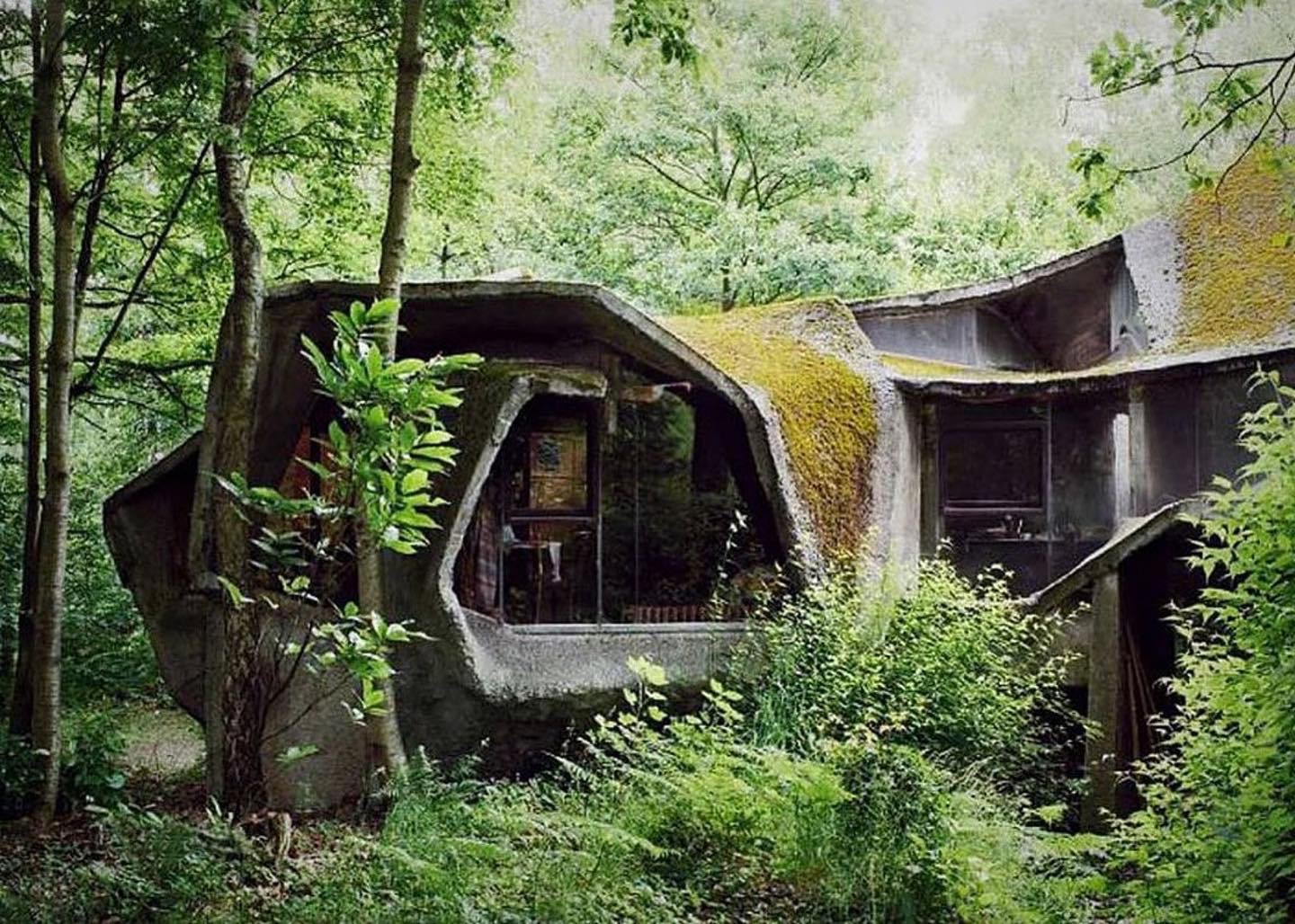
Sculpture House, Jacques Gillet
‘The Belgian architect Jacques Gillet designed the sculpture house in Liège (1967-1968) as a synthesis of structure and form, collaborating on this project with the sculptor Félix Roulin and the engineer René Greisch. This ‘living- sculpture’ was undertaken by the team as a reaction against the general pressure of that time towards standardisation of forms in architecture, in which an artistic poverty and deficiency needed to be counterbalanced through collaboration with sculptors and painters’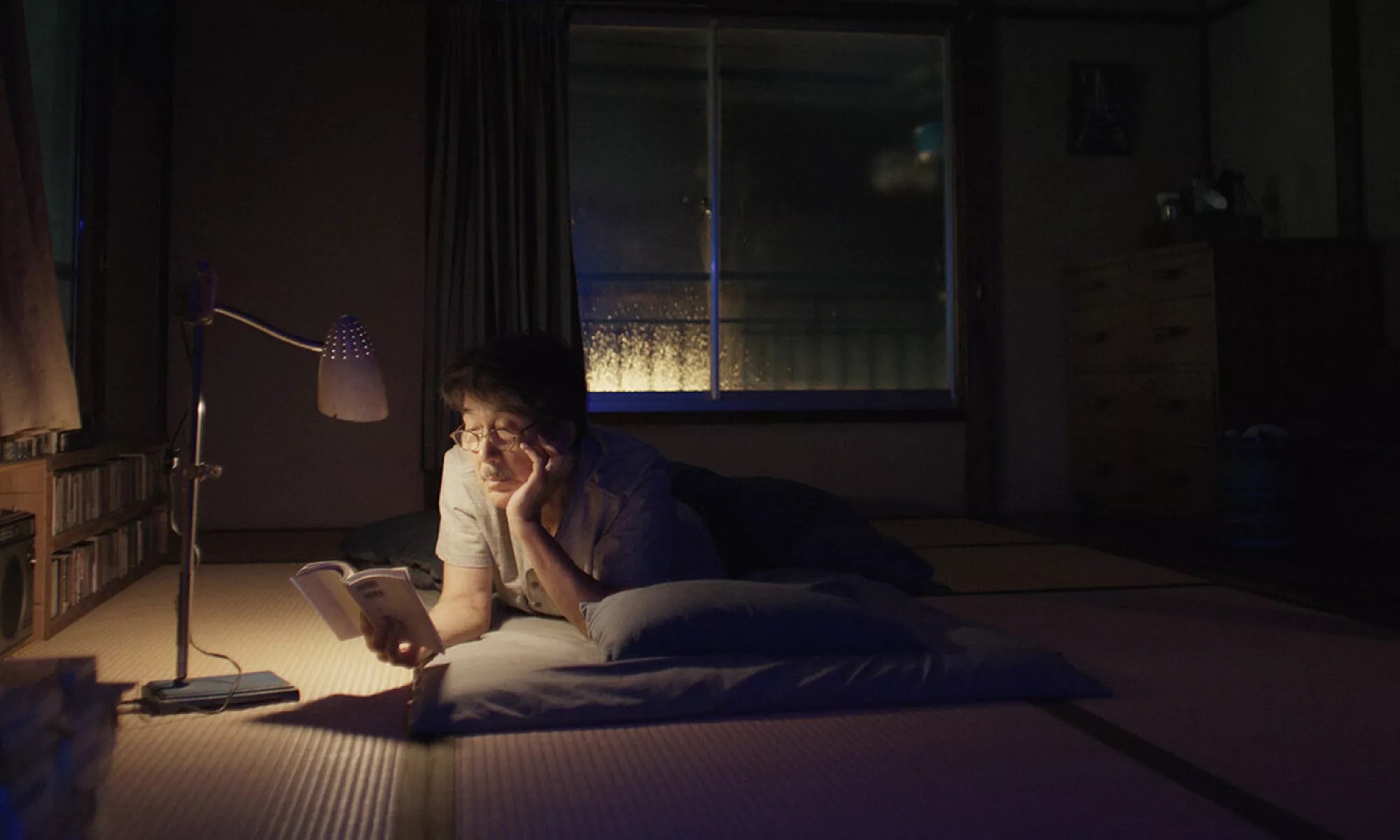
Wim Wenders, Perfect Days
‘Hirayama feels content with his life as a toilet cleaner in Tokyo. Outside of his structured routine, he cherishes music on cassette tapes, reads books and takes photos. Through unexpected encounters, he reflects on finding beauty in the world’ (the shadow bit)
Komorebi
‘Is the Japanese work for the shimmering of light and shadows that is created by leaves swaying in the wind. It only exists once, in that moment’

april
Feet of Clay
a weakness or hidden flaw in the character of a greatly admired or respected personChambre de Bonne
‘A chambre de bonne is a type of French apartment consisting of a single room in a middle-class house or apartment building. It is generally found on the top floor and only accessible by a staircase, sometimes a separate "service staircase". Initially, these rooms were intended as the bedroom for one of the family's domestics, and the name originates from the colloquial name for such maids: a "bonne à tout faire". Due to the social level of the envisaged occupants, chambres de bonne are characterised by their tight proportions. The rooms usually have a floor areaof around 6–12 m2 (65–129 sq ft), which is sometimes accentuated by being in a garret‘Gian Lorenzo Bernini (button holes)
Fata morgana
‘A Fata Morgana is a complex form of superior mirage visible in a narrow band right above the horizon. The term Fata Morgana is the Italian translation of "Morgan the Fairy"’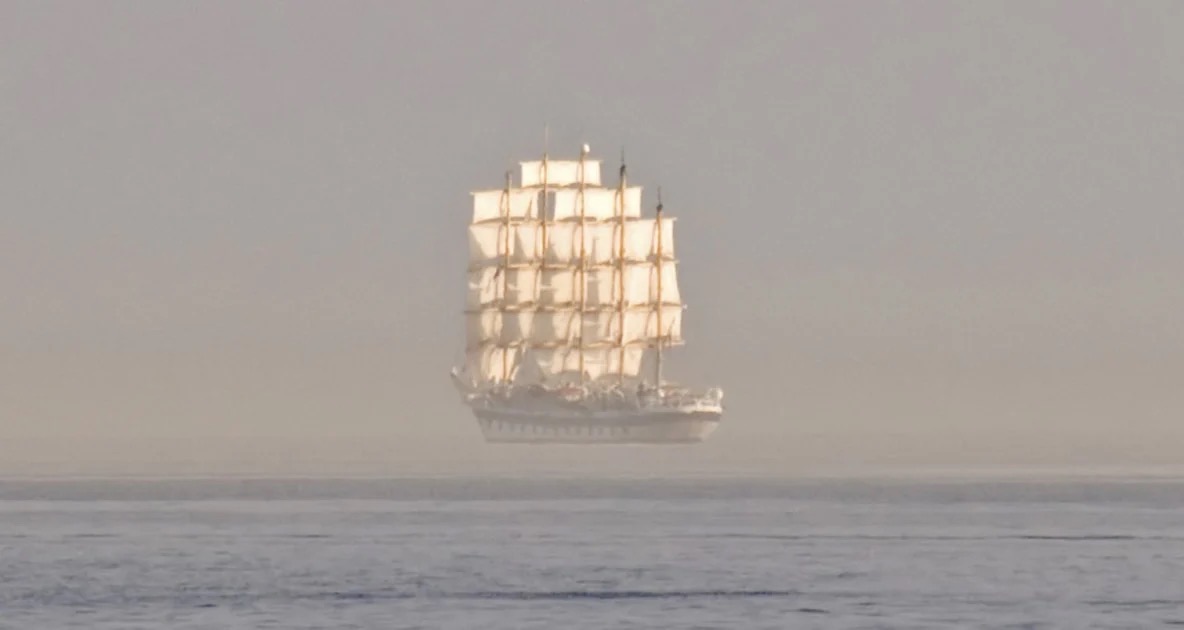
‘Through a glass, darkly’
‘To see “through a glass” — a mirror — “darkly” is to have an obscure or imperfect vision of reality’For now we see through a glass, darkly; but then face to face: now I know in part; but then shall I know even as also I am known. 1 Corinthians 13:12

Silver coin of Malcom IV of Scotland 1153-65 found by a metal detectorist in Cockairnie, Fife
Pop Inflection
Zazou Roddam, 16 November – 16 December 2023 Brunette Coleman gallery
‘Pop Inflection (The City) reconstructs segments from the popular HBO television series ‘Sex and the City’ which aired between 1998 to 2004. The video isolates only ‘the City’ – removing its famous quartet of female characters, to focus instead on spliced together clips of New York. Sequenced in chronological order, Pop Inflection (The City) presents a passage of time witnessed from the perspective of the urban metropolis. Beginning in 1998, the video opens with a multitude of aerial shots, panning the glittering Manhattan skyline that New York is so well-known. As time progresses, and crosses into the new millennium, we witness a subtle shift in the city’s rhythm. Transitioning away from sprawling skylines, the perspective narrows – becoming increasingly intimate and insular. Parks, churches, sidewalks and public sculptures begin dominating the screen, reducing the city to a more generic portrait. Accompanied by an original score produced by musician Luca Mantero, the video is a phantasmagoric unfolding of time, charting the change and inflections of a city’
march
Enid Yandell Artist and social activist
‘Enid Yandell was the first woman to be inducted into the National Sculpture Society in 1898.
Born in 1869, she defied norms as a pioneering sculptor from Louisville, Kentucky. At just 21, she gained fame for her work at the 1893 Chicago World’s Fair.
Her crowning achievement was a monumental statue of Pallas Athena for the Nashville Exposition. Commissioned at just 27 years old for the 1897 Nashville Exposition, her work symbolized the city’s moniker, “Athens of the South.” Crafted in sections in her Paris studio, the sculpture stood tall in front of the Fine Arts Building, a replica of the Parthenon’
Born in 1869, she defied norms as a pioneering sculptor from Louisville, Kentucky. At just 21, she gained fame for her work at the 1893 Chicago World’s Fair.
Her crowning achievement was a monumental statue of Pallas Athena for the Nashville Exposition. Commissioned at just 27 years old for the 1897 Nashville Exposition, her work symbolized the city’s moniker, “Athens of the South.” Crafted in sections in her Paris studio, the sculpture stood tall in front of the Fine Arts Building, a replica of the Parthenon’
Do Ho Suh Tracing Time
Edinburgh Modern One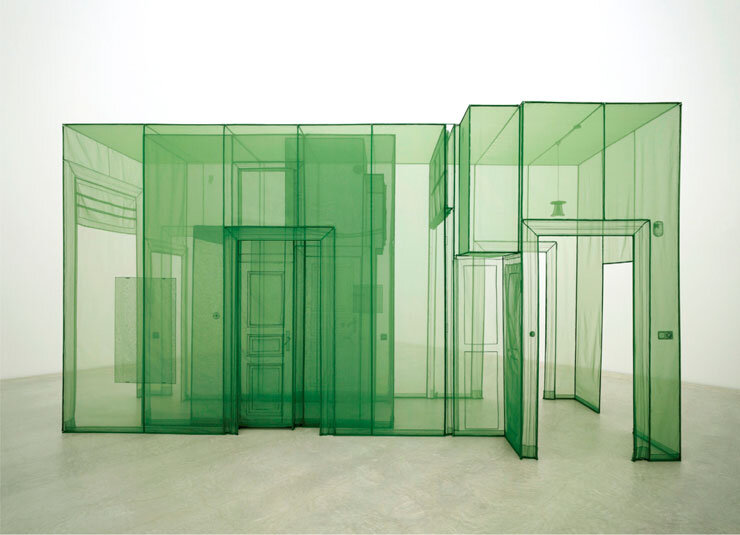
Do Ho Suh,Wielandstr. 18, 12159 Berlin, Germany-3 corridors, 2011
![]()
William N. Boyle (1956)
The 120-miles between Winchester and Canterbury pass through some of the south-east England's prettiest towns, villages and pastures. Between 1956 and today plenty has changed, but despite the narrator's grumblings about urban encroachment much is timeless. Like a good hike, the film is not a race and takes its time to pause and wonder at its surroundings.Halfway through the film there are some great scenes of a mass pilgrimage through the streets of Guildford to the site of the new Cathedral The event, which took place on the 4th April 1955, marked thmuch delayed start of the construction of the nave, and was clearly a celebratory occasion for the town and its surroundings’
‘A group from Glasgow’s Countryside Club visit the North Norfolk Coast, exploring Blakeney National Nature Reserve before the National Trail Path was established’🔗
Castle Semple
‘Dating from shortly after the building of Castle Semple house in the early 1730s, the purpose of the ‘temple’ has been romanticised and lost. Ideas range from a place for viewing hunts to a local lovers’ meeting place.
The original purpose of the temple was simply a landscape feature or ‘folly’, designed to be seen from the mansion house and by visitors arriving at Castle Semple. It also served as a summer house with panoramic views. The design of the building probably comes from James Gibbs ‘Book of Architecture’, published in 1728, a sort of architect’s scrapbook of ideas. Gibbs described his designs as ‘summer houses in the form of temples of an octagonal form’ 🔗
Martin Boyce Before Behind
Between Above Below
Fruitmarket Gallery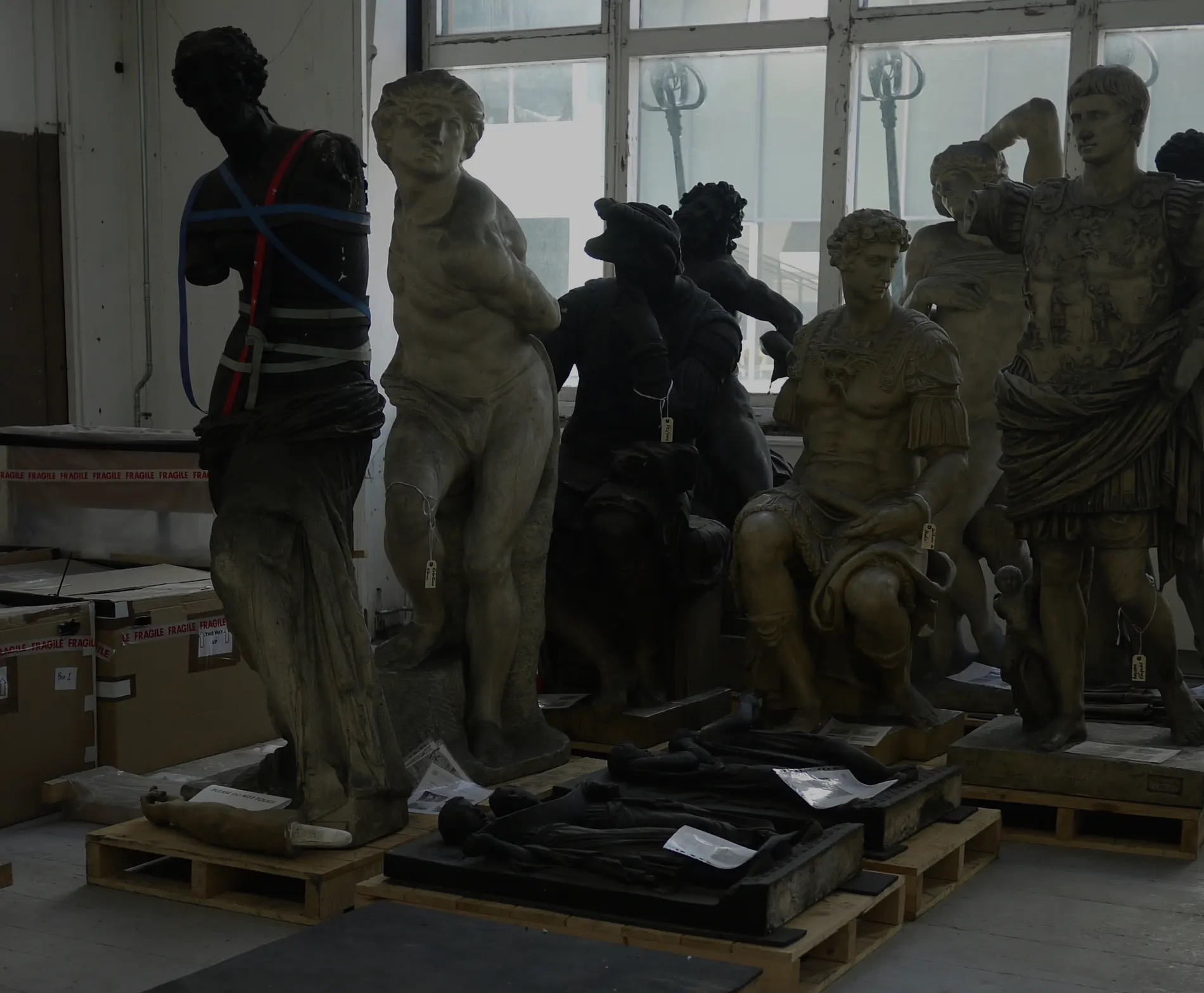
Pilgrim’s Way
William N. Boyle (1956)The 120-miles between Winchester and Canterbury pass through some of the south-east England's prettiest towns, villages and pastures. Between 1956 and today plenty has changed, but despite the narrator's grumblings about urban encroachment much is timeless. Like a good hike, the film is not a race and takes its time to pause and wonder at its surroundings.Halfway through the film there are some great scenes of a mass pilgrimage through the streets of Guildford to the site of the new Cathedral The event, which took place on the 4th April 1955, marked thmuch delayed start of the construction of the nave, and was clearly a celebratory occasion for the town and its surroundings’
Holiday on the North Norfolk Coast
‘A group from Glasgow’s Countryside Club visit the North Norfolk Coast, exploring Blakeney National Nature Reserve before the National Trail Path was established’🔗
Castle Semple
‘Dating from shortly after the building of Castle Semple house in the early 1730s, the purpose of the ‘temple’ has been romanticised and lost. Ideas range from a place for viewing hunts to a local lovers’ meeting place.The original purpose of the temple was simply a landscape feature or ‘folly’, designed to be seen from the mansion house and by visitors arriving at Castle Semple. It also served as a summer house with panoramic views. The design of the building probably comes from James Gibbs ‘Book of Architecture’, published in 1728, a sort of architect’s scrapbook of ideas. Gibbs described his designs as ‘summer houses in the form of temples of an octagonal form’ 🔗
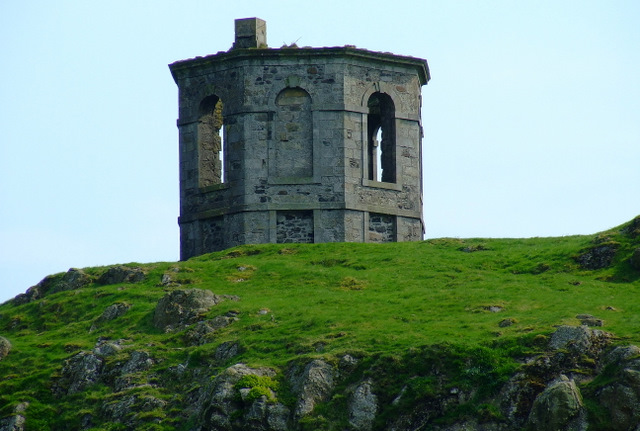
‘folly’
‘A costly but useless structure built to satisfy the whim of some eccentric and thought to show his folly; usually a tower or a sham Gothic or classical ruin in a landscape park intended to enhance the view or picturesque effect’‘The term 'folly' comes from the French 'folie', meaning 'foolish'. The definition of a folly in the Dictionary of Architecture by Pevsner’
Batty Langley, the Temple of Modern Virtue vs the Temple of Ancient Virtue, The Sleeping Pavilion, Stowe. 🔗 🔗
Ratcliffe’s Folly or Ecton Castle
‘Arthur Ratcliffe owned a building firm and built a house for himself on a hill at Ecton in Staffordshire, about 12 miles from the town of Leek. It became known as "Ratcliffe's Folly", or "The Castle" because of its copper spire and battlements’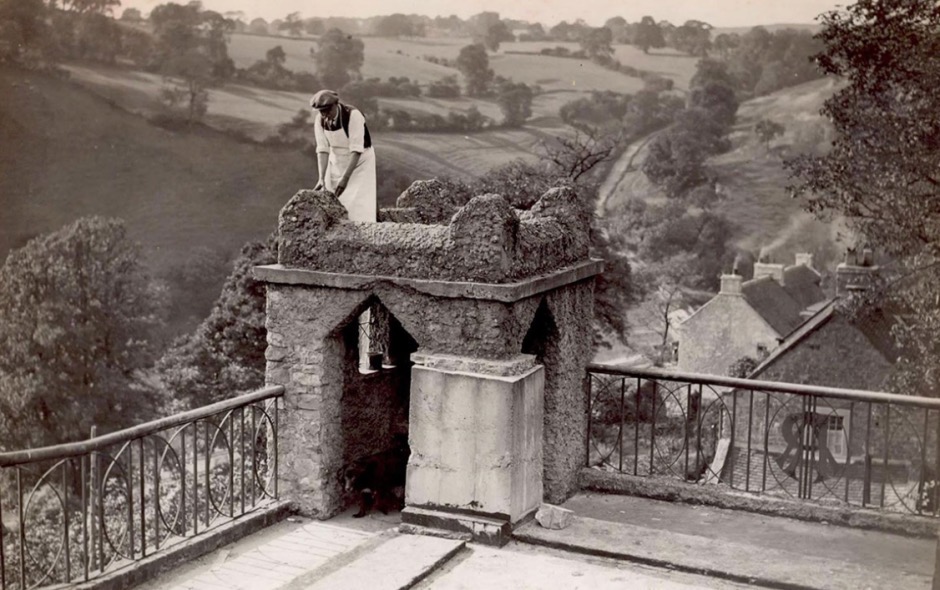
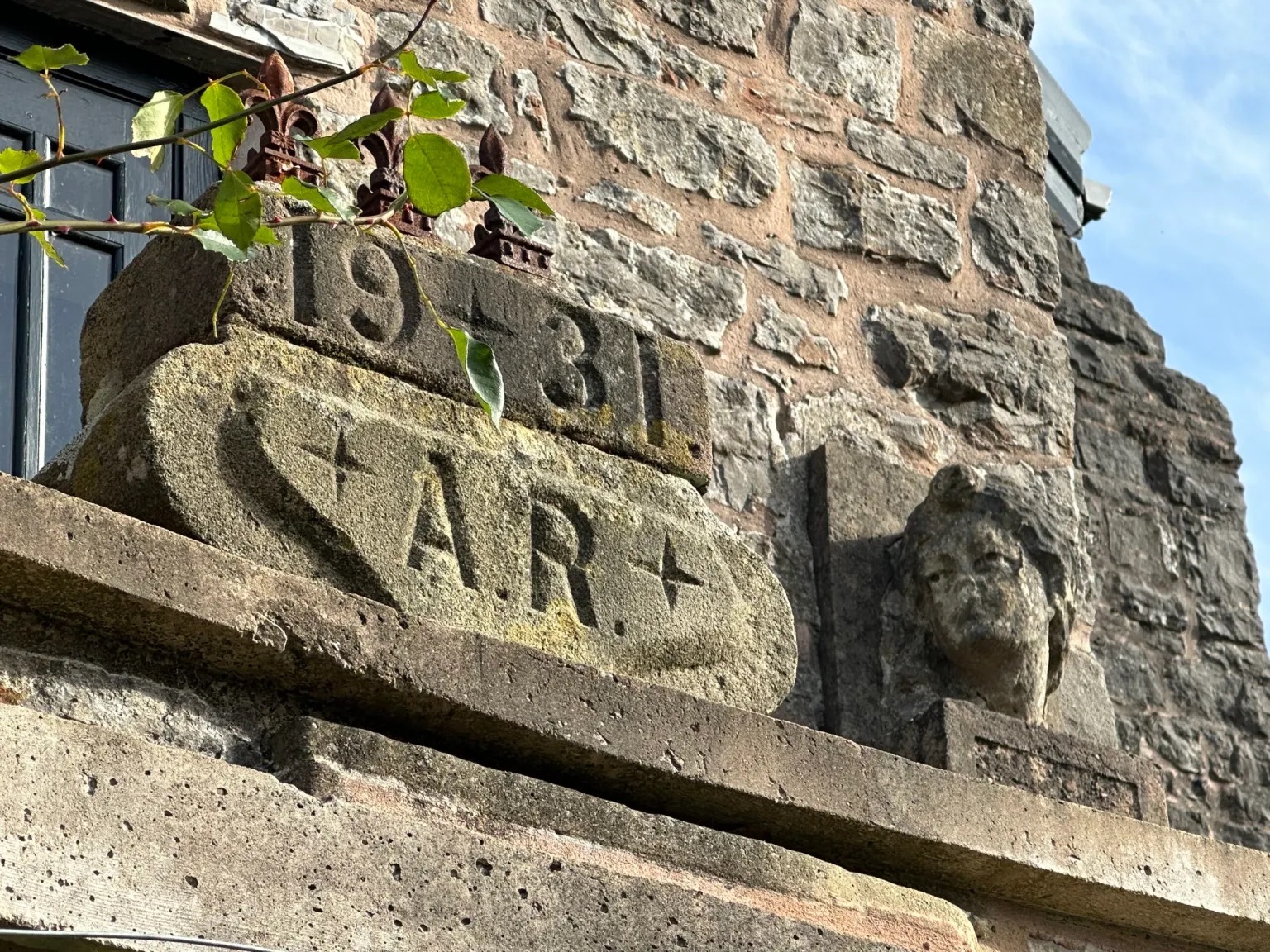

Brutalism
‘The term originates from the use by modern architect and painter Le Corbusier, of 'beton brut' – raw concrete in French. Banham gave the French word a punning twist to express the general horror with which this concrete architecture was greeted in Britain’
Anonymous / Significant objects
‘Anonymous Objects: Inscrutable Photographs and the Unknown suggests that unidentifiable things in photographs point towards larger questions about the limits of knowledge. In a world that seems to give up images of itself more freely every day, there’s very little left to the unknown. Inscrutable photographs keep ambiguity alive. They make room for curiosity and wonder by resisting our facile attempts to know the world by naming it’
‘Significant Objects was a literary and anthropological experiment that "demonstrated that the effect of narrative on any given object's subjective value can be measured objectively." For this experiment, Walker and Glenn asked 100 creative writers to invent stories about $129 worth of items and then sold them on eBay’

february
The Future Tense
Joe Lawlor and Christine Molloy (2022)‘Staged as a series of voiceover sessions, The Future Tense unfolds as a poignant tale of tales, exploring the filmmakers' own experiences in aging, parenting, mental illness, and the brutal history beneath Ireland’s heavy earth’

Folded Map™ Project
‘Tonika Lewis Johnson’s Folded Map™ Project visually connects residents who live at corresponding addresses on the North and South Sides of Chicago. She investigates what urban segregation looks like and how it impacts Chicago residents’ Address pair- 6327 S. Hermitage and 6333 N. Hermitage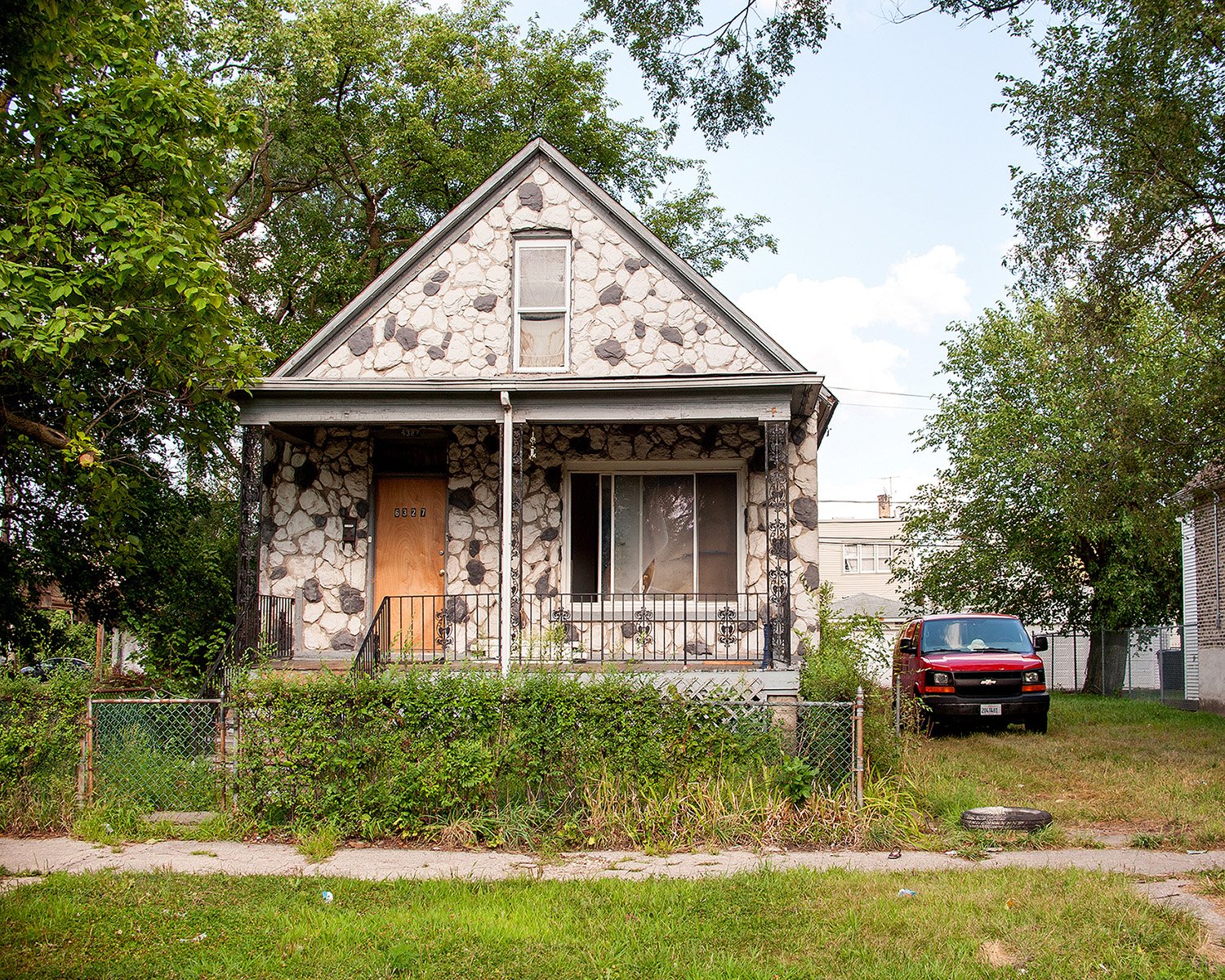
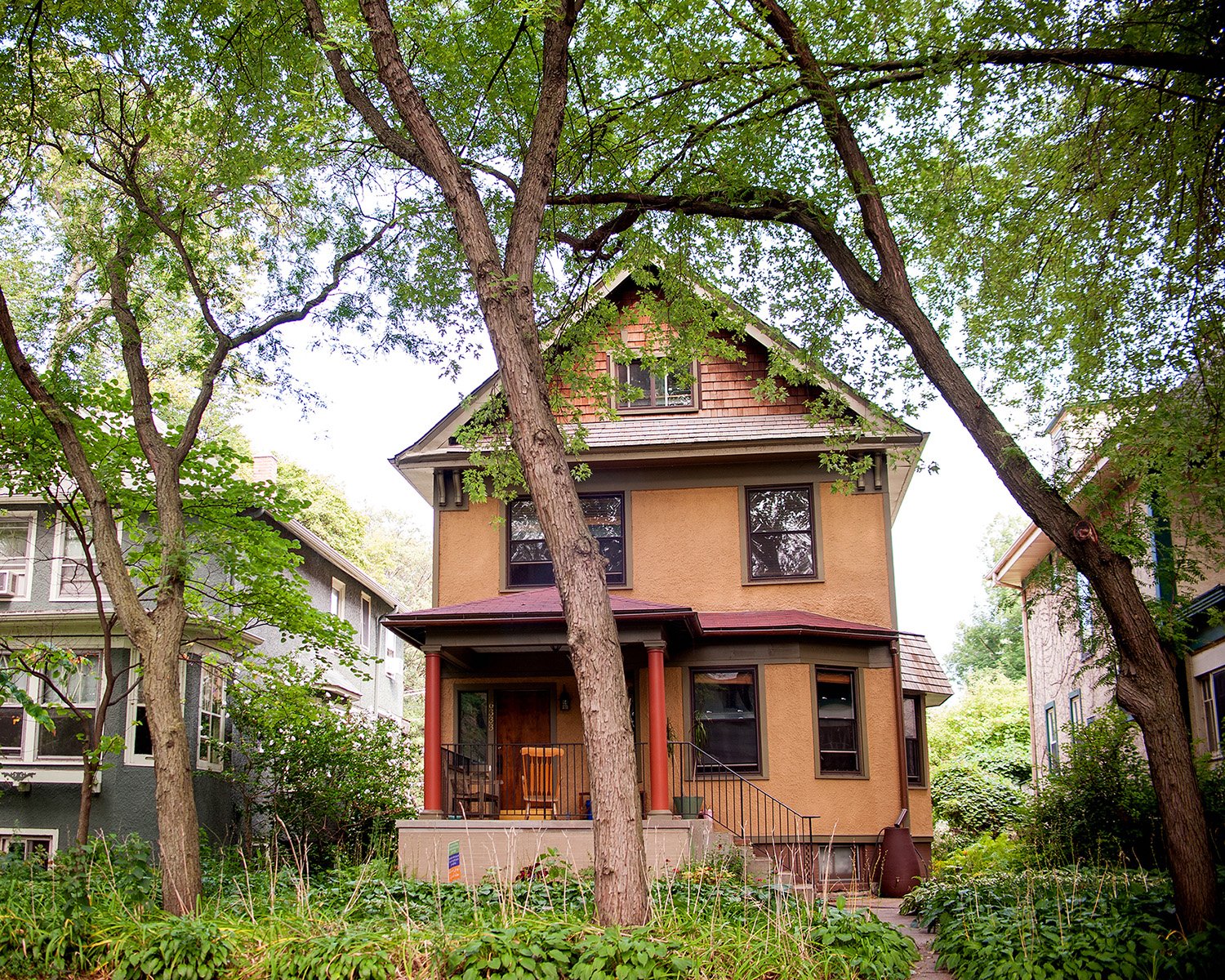
Kicking and Screaming
Noah Baumbach (1995)‘Paralyzed by postgraduation angst, four preppy young men dig in their heels to avoid the adulthood that the women in their lives confidently approach. Instead, they fill their empty days with endless talk that reveals an expert knowledge of high and low culture—and a quiet terror of what lies ahead’
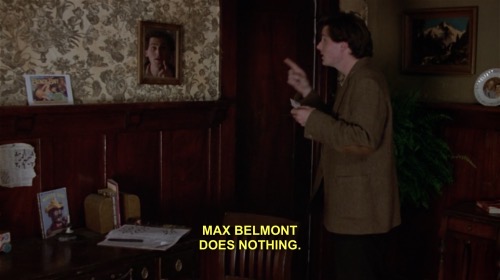
Coalesence
The Glasgow School of Art Exhibitions‘Coalesence is a celebratory exhibition bringing together the creative work of technicians and associated staff at The Glasgow School of Art. Work is from across the disciplines, including sculpture, photography, textiles, painting, printmaking and digital’
Bitches be Bingeing
émergent magazine, Robert Frost on Skylar Haskard.Below UNTITLED, (KNOW YOUR LIMITS), 2022.
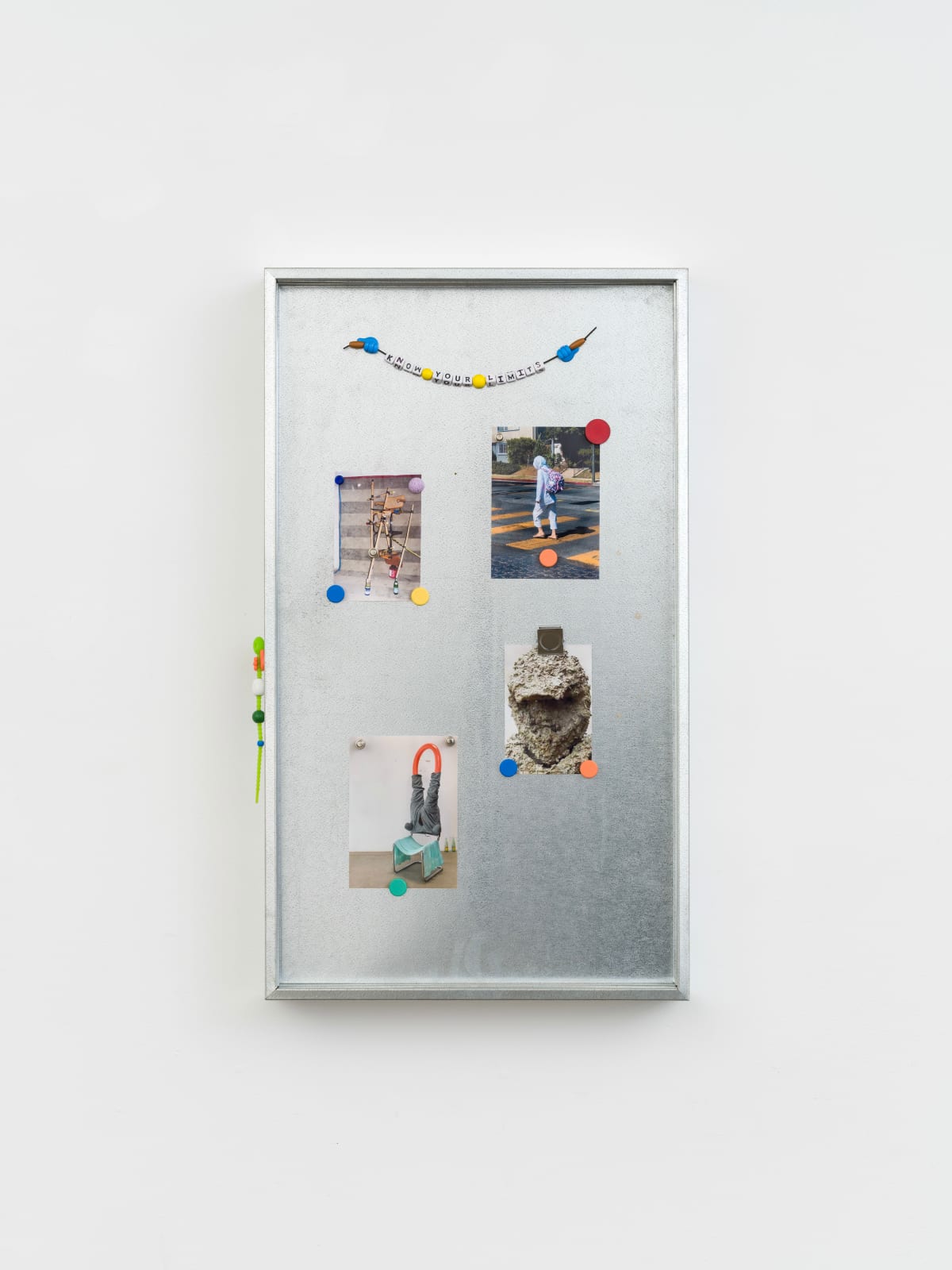
Heart of the Angel
Molly Dineen, 40 Minutes documentary (1989)‘Acclaimed documentary that follows 48 hours in the life of London’s Angel tube station in the days before its refurbishment’ The lift is always broken, the workers are disenchanted.
Interviewer- It sounds like you are depressed.
Derek Perkins (Ticket Seller)- I’m not depressed at all. Realistic, I think, is more the term.
Ray Stocker (Foreman) ‘The whole pace of life is stupid. I get the impression that they’re running out of time’
Ray dreams of living in Yorkshire.
Interviewer- Do you like wild places?
Ray- Mm. Lonely places. (laughs)
He goes on to show photos of paintings he’s done (below)
‘That’s the last one that I done and the wife didn’t like it. So I never done any more’

Jill, uncredited
Anthony Ing (2022)‘At first you do not even notice her, she is one of many. But, little by little, you begin to become aware of her and her special presence. As a background artist, Jill Goldston has worked on countless films.
This collage of fifty years of cinema and television history is a tribute to her and to all the figures in the background without whom those in the foreground would be unable to take centre stage’
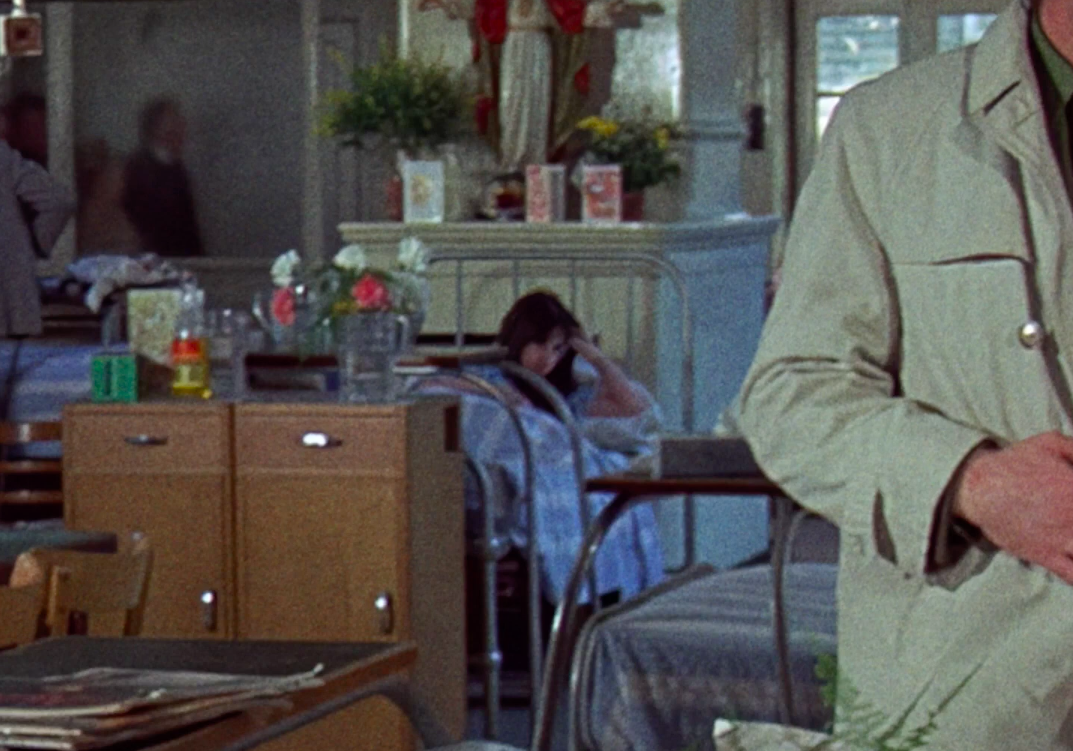
It is fancy which decks reality and if imagination does not lend its charm to that which touches our senses, our barren pleasure is confined to the senses alone, while the heart remains cold - J.J. Rousseau
Paisley Provident Co-Operative Society building
The building was designed by architect Robert B Miller in 1907-8 and considered to be in the free Renaissance style. This style is attributed to English architect, Charles Eastlake (1868-1890) with his tendency for rich surface ornamentation’
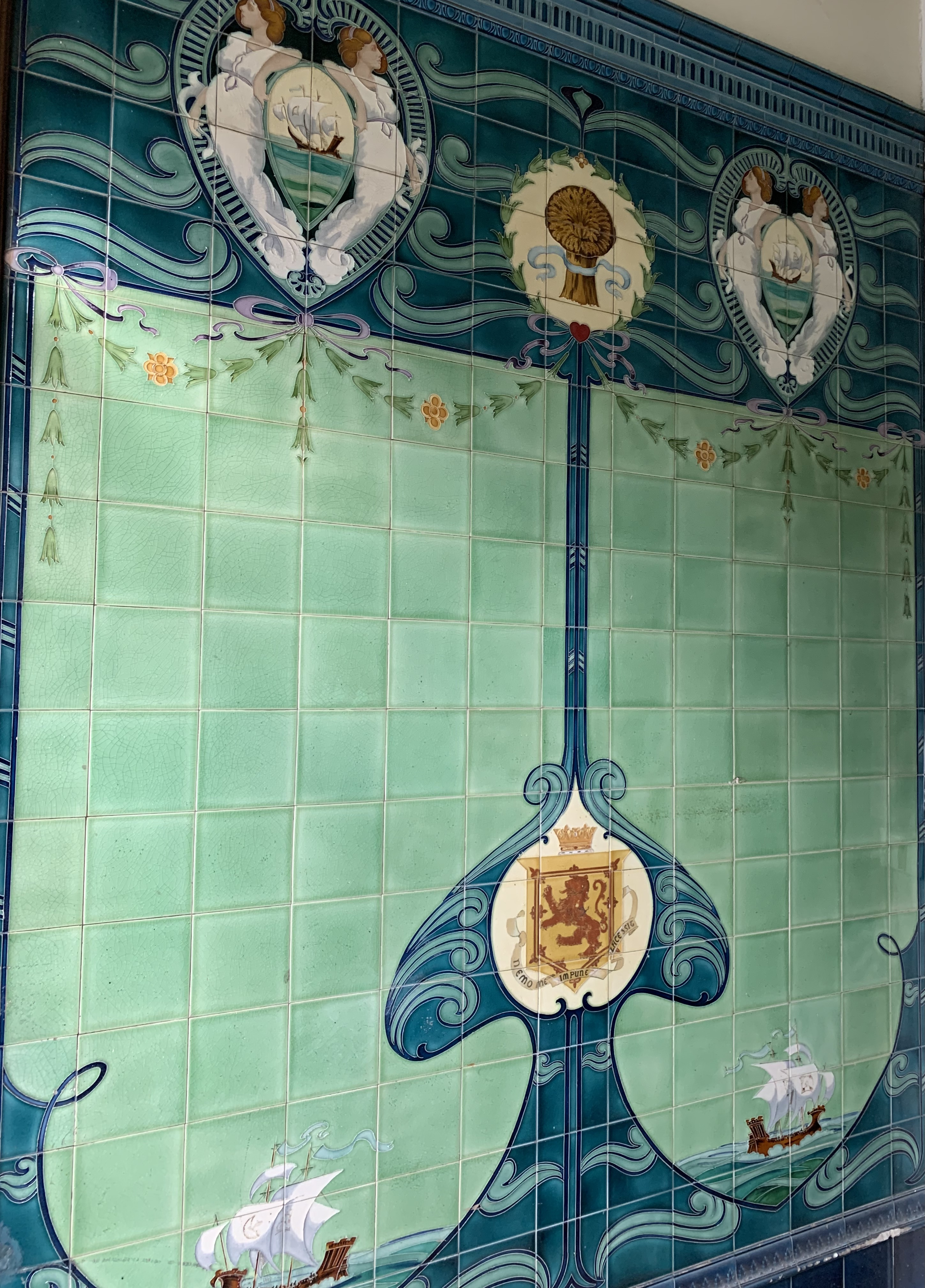
It dropped so low—in my Regard—
Emily Dickinson (1896)It dropped so low — in my Regard
I heard it hit the Ground
And go to pieces on the Stones
At bottom of my Mind
Yet blamed the Fate that flung it — less
Than I denounced Myself,
For entertaining Plated Wares
Upon My Silver Shelf
january
An accidentally entropic collection, especially for a January, 3rd spaces and community no longerexisting due to the global market (The Town that ..., Silicon Glen) and spaces lost or losing (A House in Bayswater, A Bunch of Amateurs) and the fragments of monuments that remain (Apollo Pavilion, Tribune Tower).A few gallery visits including The Scottish Portrait Award opening at our Glasgow Art club and the New Glasgow Society members’ social, but honestly the weather was poor and I was poorer. (Poor Things was grand though, Mr Gray)
Tribune Tower:
Fragments of history
‘Nearly 150 fragments from famous structures and historic sites around the world are embedded in Tribune Tower's first story walls. They include chunks of the Great Wall of China, the Great Pyramid of Cheops and the Berlin Wall. The tradition began in 1914 when Col. Robert R. McCormick, the Chicago Tribune's longtime editor and publisher, was covering WWI. Touring a medieval cathedral in Ypres, France, that had been damaged by German shelling, he grabbed a piece for himself. Many of the pieces were gifts to Col. McCormick and some were brought back to Chicago by foreign correspondents’
Yes, questionable regarding the displacement of architectural features for one man’s endevour, giving British Museum a little bit, but interesting in the idea of ‘borrowing’ elements to concrete an outdoor museum of sorts. Away from the neo-gothic foundations of the Tribune Tower’s design, it’s a collage or collaboration with other elements of buit heritage. One of the more modern additions is a twisted steel beam from the World Trade Centre- I’d be interested to know what the requirements for a new addition are and equally, if they are still adding to it- or is the collaboration now sealed?
The Town that Floored the World
How did the Scottish east coast port town of Kirkcaldy become the world centre for linoleum? The Town That Floored the World traces the history of that 'magic material’
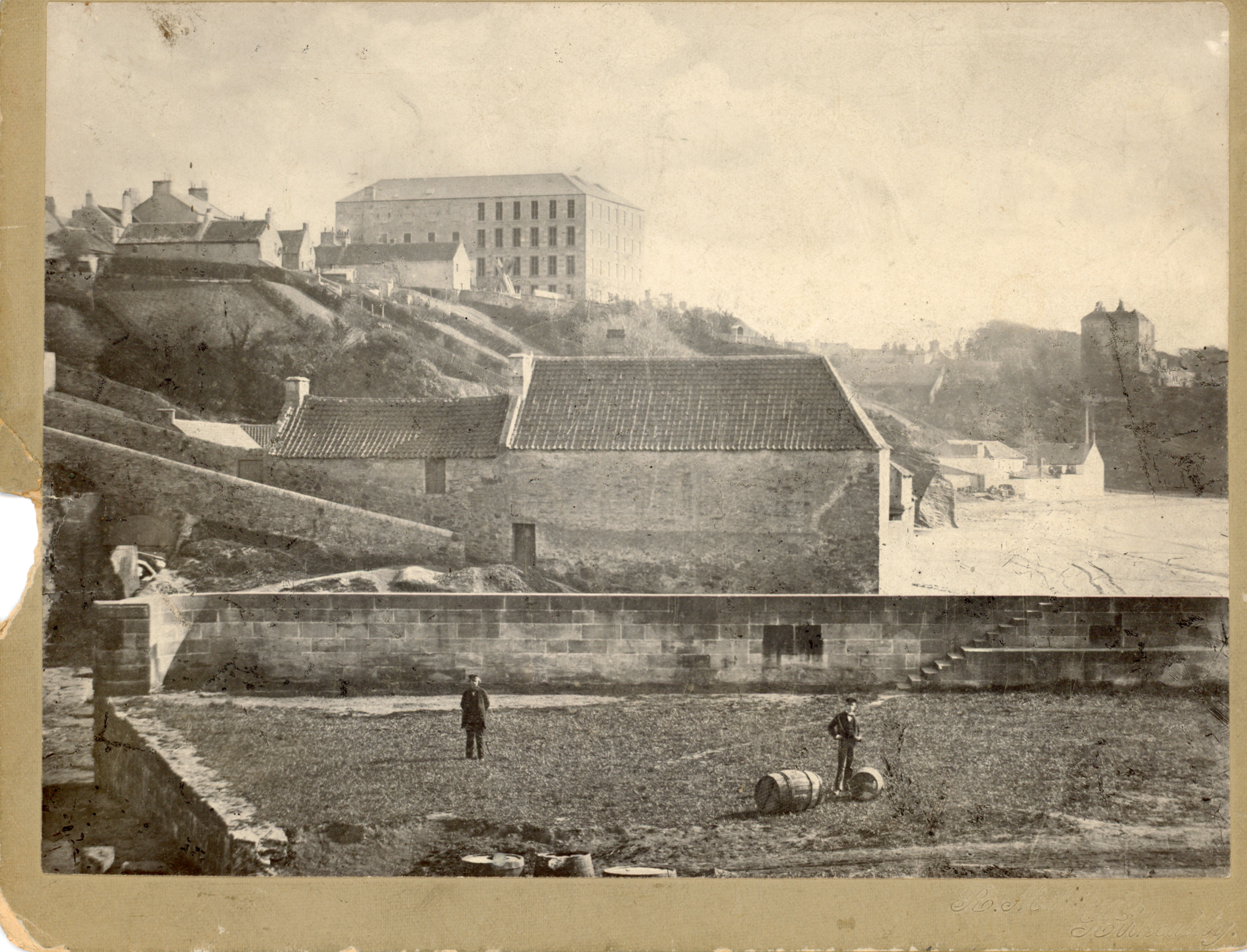
Jennifer Leigh Blaine, Half a Longing
New Glasgow SocietyDescribed by the artist ‘quiet and shadow’, the exhibition was shaped by stills from the film Housekeeping (1987) ‘Based on Marilynne Robinson's 1980 novel Housekeeping, it is about two young sisters growing up in Idaho in the 1950s. After being abandoned by their mother and raised by elderly relatives, the sisters are looked after by their eccentric aunt whose unconventional and unpredictable ways affect their lives’

Frances Ha
Noah Baumbach‘A New York woman apprentices for a dance company and throws herself headlong into her dreams, even as the possibility of realizing them dwindles.’